
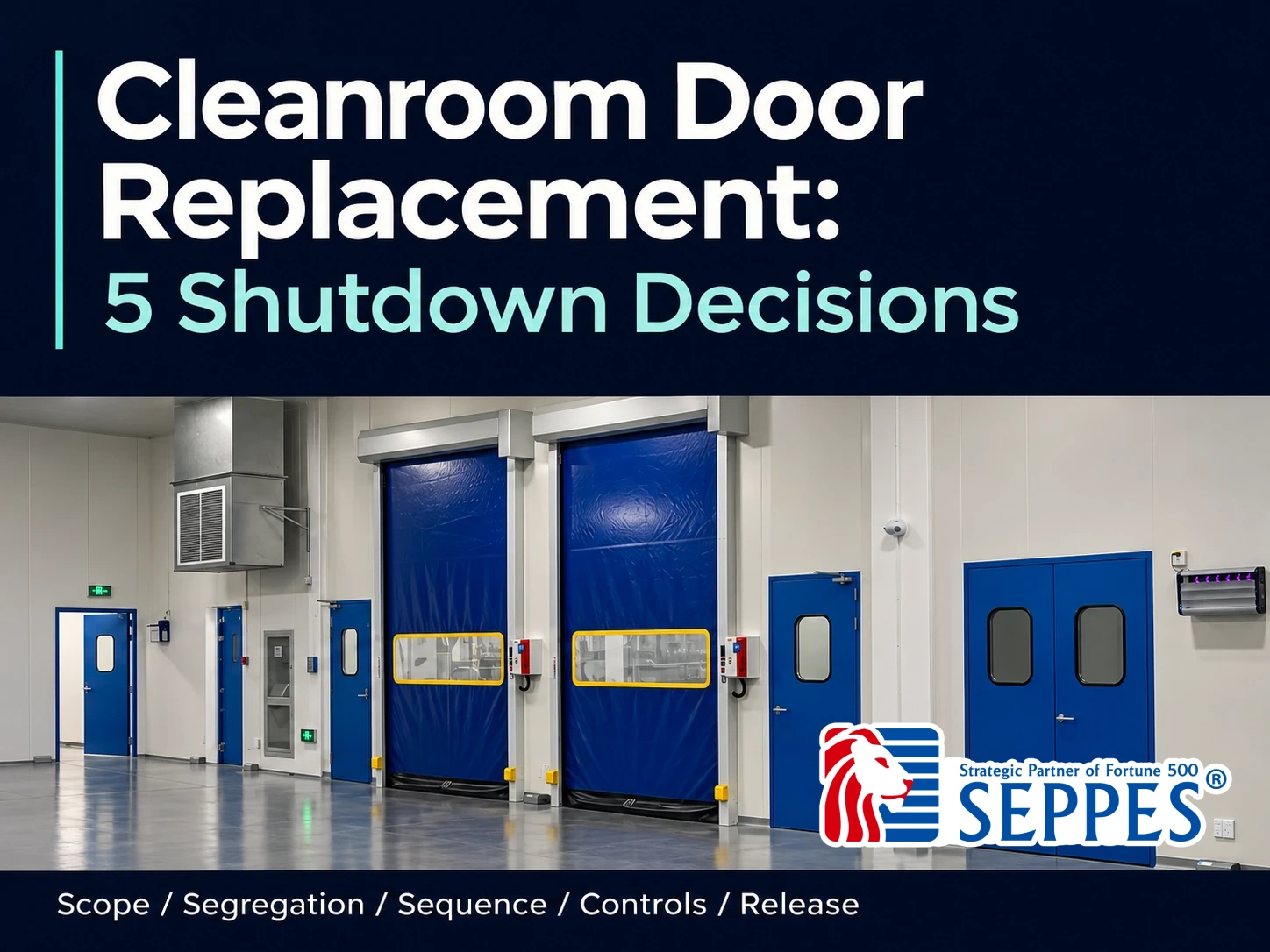

Cleanroom door replacement changes more than the equipment at an opening. Once the existing assembly is removed, the facility must manage a temporarily altered room boundary, construction activity and a different route for people or materials. The project is ready to start when those temporary conditions are understood and the requirements for restoring use are agreed.
Consider a hypothetical packaging corridor where a worn flexible door is scheduled for replacement during a production break. The new door arrives on time, but removing the old guides exposes damaged wall finishes. The mounting work, surface repairs and subsequent cleaning now compete for the same opening. The delivery date was only one part of readiness.
For a SEPPES replacement project, organise the scope around five decisions: what changes, what separates the work, when removal can begin, how connected systems are restored and who releases the area. This approach makes dependencies visible before the old door stops providing its normal function.
1. Define the Full Cleanroom Door Replacement Scope
Begin with the reason for replacement. Repeated curtain damage, an unsuitable opening arrangement and an unsupported control system can lead to different specifications. Record the current problem and the required future behaviour. Otherwise, a new assembly may reproduce the same traffic conflict, inaccessible service position or unsuitable control sequence that prompted the project.
Survey both the clear opening and the space occupied by the complete assembly. Headroom, motor-side clearance, maintenance access and controller location can affect whether the selected door fits. Identify which supports, cables, sensors and wall finishes will remain. Each retained item needs a stated basis for reuse; physical presence alone does not establish compatibility.
The SEPPES high speed roll up door provides a flexible PVC curtain with double-row brush guides in its reference configuration. Use its product information to begin the layout review, then confirm the selected assembly dimensions and interfaces. Changing to a different guide arrangement, such as the SEPPES zipper high speed door, also requires a fresh assessment of the mounting and operating requirements.
Give the quotation a clear boundary: removal, disposal, wall repair, mounting preparation, electrical work, controls integration, cleaning and verification should each have an owner. Cleanroom door shutdown planning becomes more reliable when these activities are included before the downtime window is agreed. An excluded activity still needs time, access and a responsible party.
2. Decide What Separates the Work from the Remaining Facility
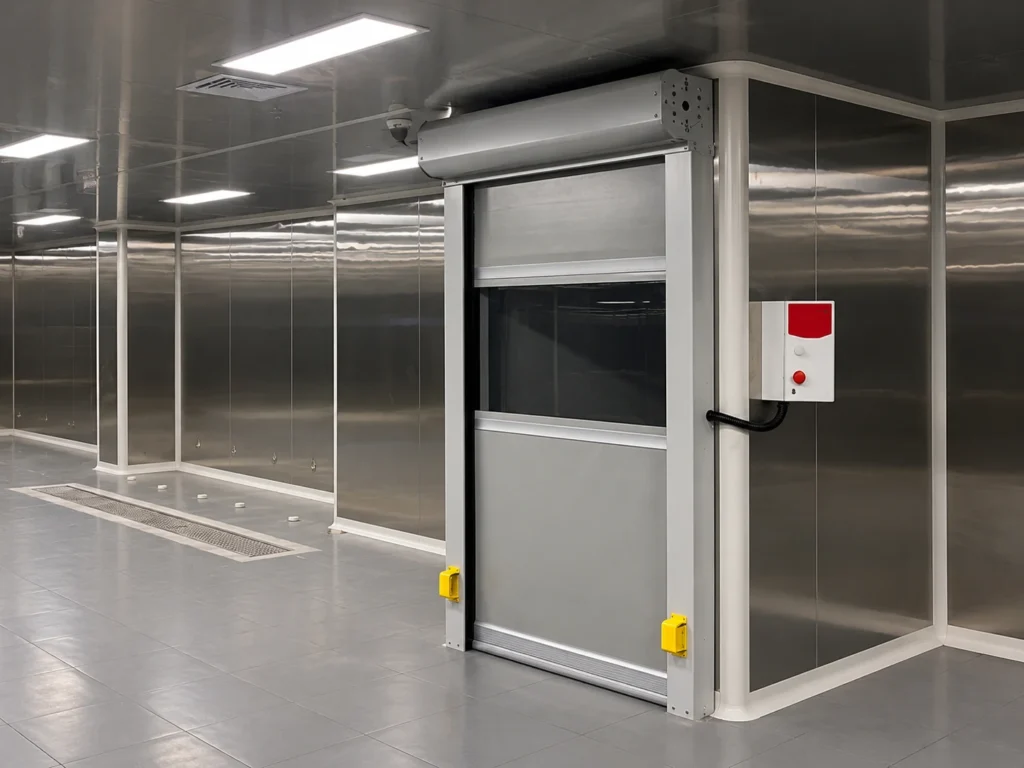
Cleanroom door temporary segregation starts with a practical question: which activities, spaces and routes are allowed to remain in use while the opening is disturbed? Map the work zone, material staging, waste removal and any alternative personnel route. A temporary arrangement must be assessed against the actual contamination-control and access requirements of the facility.
A temporary screen can define a work area without reproducing the function of the original room boundary. Consider its connections to walls, floor and ceiling, the way workers enter and the route taken by removed components. The facility team also needs to review how the temporary condition interacts with ventilation and adjacent rooms before allowing affected operations to continue.
The sequencing of cleanroom door temporary segregation deserves particular attention. If the barrier obstructs the route needed to bring in the new head assembly, the contractor may have to reopen it during the work. Resolve that conflict in advance through an approved access arrangement, a different staging location or a revised shutdown scope.
Treat a relocated boundary as a facility change requiring review. ISO 14644-4:2022 covers the requirements-to-start-up process for new, refurbished and modified cleanrooms. For a cleanroom door replacement, agree who approves the temporary layout, how its condition is checked and what event requires work to stop or the affected area to remain closed.

3. Set the Last Check Before the Old Door Is Removed
The cleanroom door removal sequence should follow an agreed readiness check. Confirm that the replacement assembly has been received and checked against the approved configuration, that essential installation items are available and that the work area can be handed over. Discovering a missing guide or incompatible controller after removal creates a different problem from discovering it beforehand.
Identify the point after which the original door cannot readily resume service. This might occur when a support, cable route or surrounding finish is altered. Before that point, define who can authorise continuation and what happens if newly exposed conditions differ from the survey. A cleanroom door replacement plan needs a workable delayed-completion condition.
In the packaging-corridor example, damaged wall backing becomes visible only after the guide is removed. If the replacement guide needs a sound support in that location, the repair and any required curing or inspection become prerequisites to installation. Adding installers cannot remove those dependencies. The project manager needs an approved repair route and a decision on whether the shutdown must extend.
Plan the cleanroom door removal sequence with the competent installation team and the site’s isolation procedures. Include the effects of disconnecting linked equipment, the handling route for the removed assembly and protection of surfaces that will remain. Keep the method specific to the actual door construction; a generic dismantling order cannot account for every support or stored-energy arrangement.
Allow cleanroom door shutdown planning to distinguish hands-on work from waiting and acceptance activities. Surface preparation, curing where applicable, cleaning access, specialist attendance and review of results may govern the finish time. Put the contingency before the promised restart: an approved temporary closure or an extended shutdown must be decided without relying on reinstalling a door that has already been dismantled.
4. Restore the Control Sequence as Well as the Door
A replacement door can open and close locally while still behaving incorrectly within the facility. Review its relationship with access control, a second door, material-handling equipment and any supervisory system included in the project. Document what each connection means: a request to open, permission to move and confirmation of position are different signals with different purposes.
Retaining an existing cable does not confirm that its signals, voltage or failure behaviour suit the new controller. Have the responsible specialists agree the interface requirements and check the combined sequence. Where an interlock is required, assess the relevant states and recovery behaviour, including what the system should do when a needed status signal is unavailable.
Record the settings and connections that belong to the delivered configuration. This creates a reference for subsequent service and helps distinguish an installation issue from a later change. HSE’s powered-door guidance emphasises the way components operate together in their circumstances of use. Reusing selected parts therefore calls for an assessment of the resulting system.
Keep functional acceptance distinct from permission to resume production. The installation team can demonstrate the agreed door functions, while the facility’s designated personnel review the environmental and operational conditions. Cleanroom door return to service should bring those conclusions together, with unresolved conditions clearly assigned rather than disappearing into a general completion signature.
5. Agree the Evidence Needed to Release the Area
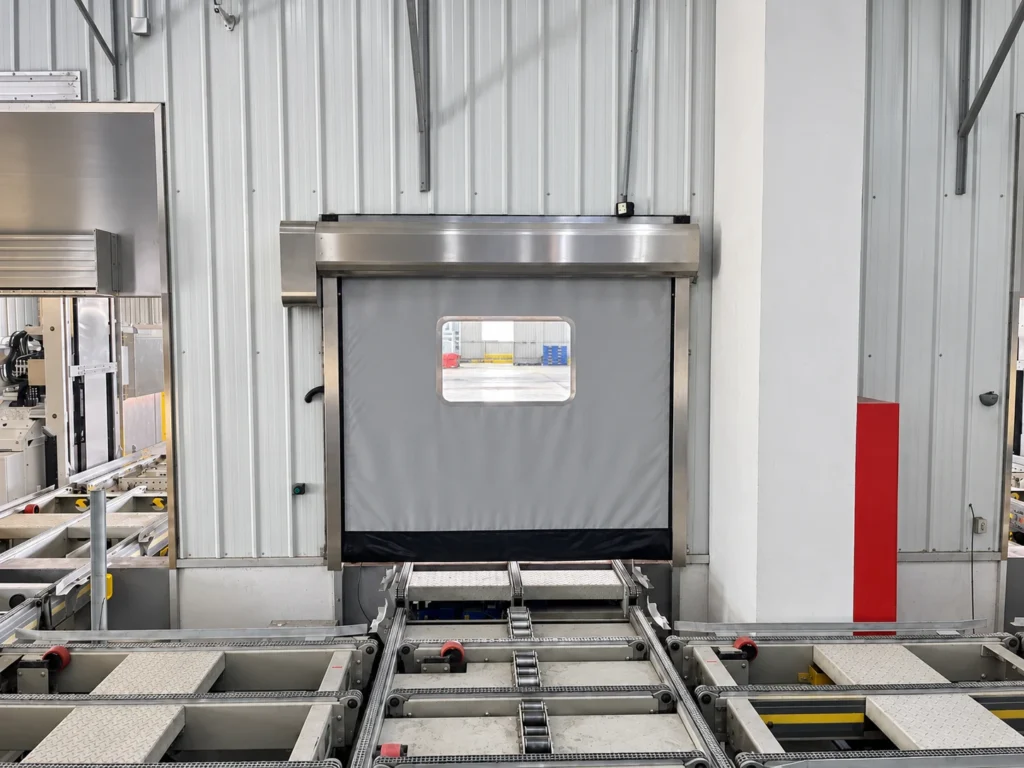
Define cleanroom door return to service before the shutdown starts. The required evidence depends on what the work disturbed and the facility’s procedures. It may include inspection of repaired surfaces, completion of cleaning, confirmation of door functions and assessment of affected room conditions. Set the review scope with the relevant facility and quality personnel instead of deciding it after installation.
A single stable room reading does not answer every release question. Identify which operating condition the reading represents and whether the evidence covers the actual disturbance. Also check the order of the final activities: removing a temporary partition after final cleaning can introduce further work into the area and may change what needs to be inspected or cleaned again.
Make the handover responsibilities explicit. The following allocation is an example to adapt to the site’s organisation; it does not assign every activity to the door supplier.
| Handover item | Responsible function to confirm | Evidence to retain |
|---|---|---|
| Door assembly and interfaces | Installer and controls specialist | Installed configuration and agreed function checks |
| Surrounding finishes and work zone | Facilities or construction lead | Repair inspection and work-area clearance |
| Cleaning and affected room conditions | Site-designated cleaning, facilities and quality personnel | Required completion and verification records |
| Permission to resume use | Facility’s designated release authority | Decision, scope and any remaining restrictions |
Close the cleanroom door replacement project with the final configuration, relevant records, outstanding restrictions and the named release decision. If a condition remains unresolved, record the permitted interim use or continued closure. This gives operations a clear instruction and gives future maintenance a reliable description of what was actually installed.
Prepare a SEPPES Replacement Enquiry Around the Existing Opening
Send SEPPES the existing door photographs, measured opening and surrounding clearances, replacement reason and components proposed for reuse. Add the required operating sequence, site access constraints and the scope allocated to other contractors. These details help turn a product enquiry into a review of the assembly and interfaces that the project actually needs.
Start with the SEPPES high speed roll up door product details and request confirmation of the configuration for your opening. A well-defined cleanroom door replacement connects product selection with removal readiness, facility recovery and an agreed handover. That is the basis for a shutdown plan the installation team and the operating team can both use.
