


Cleanroom door surface damage should be assessed by the component affected, the condition of the material and the consequences for the opening. A pale mark on a flexible curtain, a loose coating edge on a frame and a separation beside a vision window can look similar in a phone photograph. They call for different questions before a repair or replacement is specified.
The practical aim is to establish whether the assembly remains intact, can be cleaned as required and continues to perform its intended function. Visible appearance is one part of that assessment. It does not establish how much material has been lost, whether particles are being released or whether the door still meets a specified leakage requirement.
For a SEPPES door, begin with the supplied model and its component specification. The following four decisions help a maintenance team turn an observation into a useful service enquiry while keeping the facility’s cleanliness and access requirements in view.
1. Locate Cleanroom Door Surface Damage on the Correct Component
Identify the material beneath the mark before naming the defect. The flexible curtain, transparent window, guide finish and bottom seal have different constructions and duties. Confirm them from the delivered specification or manufacturer records. A metallic appearance does not establish stainless steel, and a coloured surface does not tell you whether you are looking at paint or the curtain material itself.
When recording suspected cleanroom door curtain abrasion, distinguish a surface scuff from a cut, missing material or exposed reinforcement where reinforcement is present. Include its position relative to a guide, reinforcement strip and normal traffic height. A narrow repeated line near a running interface deserves a different investigation from an isolated mark in the middle of the curtain.
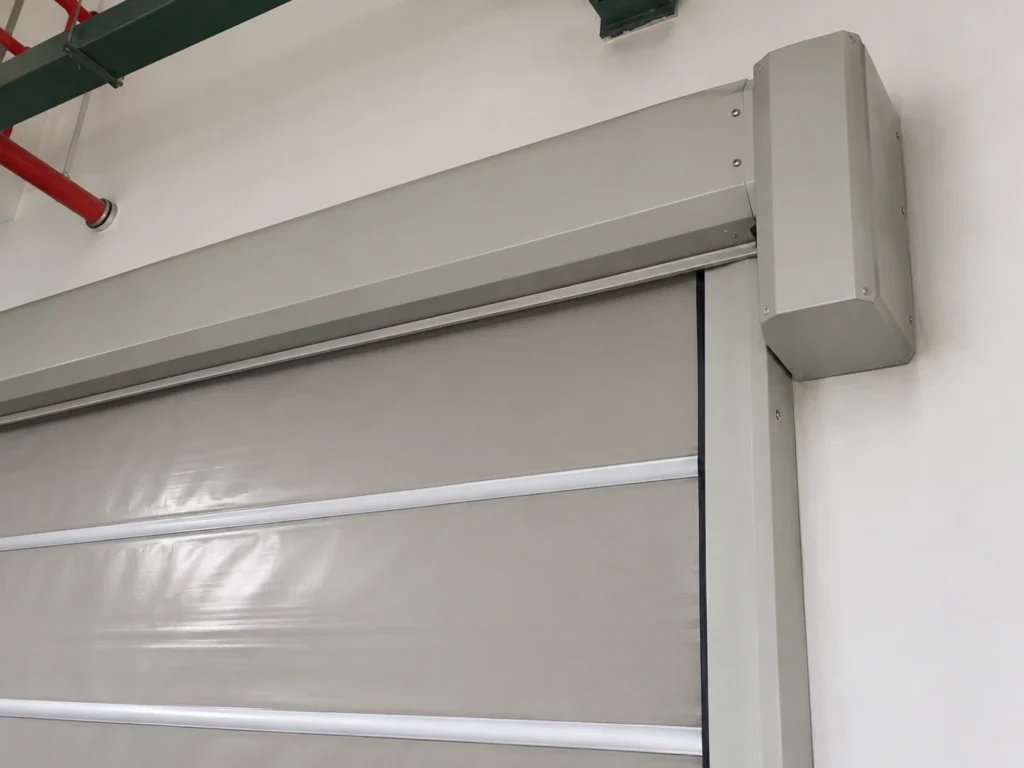
For cleanroom door coating damage, establish which coated component is involved. A scratch in a head cover and a loose edge beside a guide opening have different opportunities for contact and material release. Record any visible lifting, flaking or underlying discoloration without assuming that a stain is corrosion or that every scratch penetrates the finish.
The current SEPPES high speed roll up door lists painted steel components in its reference configuration and offers stainless steel as an option. The SEPPES stainless steel high speed door specifies stainless steel guides and a head cover. Match the installed package to those records; the material of one visible component does not identify every part of the assembly.

2. Decide Whether the Finding Changes Cleanability or Operation
A surface can look marked while remaining continuous, or look almost unchanged while a small edge is lifting. Review continuity, accessible crevices, loose material and the effect on the normal cleaning procedure. If a mark could be residue, use only the approved cleaning method before comparing its appearance. Escalating to a stronger solvent can change the surface and obscure the original finding.
Separate the condition of the component from measured surface cleanliness. ISO 14644-9:2022 addresses assessment of particle cleanliness on solid surfaces; its scope excludes material characteristics and process-specific surface suitability. A photograph of a scratch therefore cannot establish a surface particle level or provide a universal acceptance limit for that scratch.
Consider two hypothetical findings: a stable scuff away from the guides and a small loose flap at a moving edge. Similar visible dimensions would not make their consequences equivalent. The second finding may interact with the guide during travel or leave material exposed to repeated contact. Review the location and behaviour, not just the apparent size.
Repeated cleanroom door curtain abrasion also warrants a review of the contact source. Check the relationship with trolley loads, approach paths and the relevant guide condition through an approved inspection. Replacing the curtain without resolving repeated contact can leave the cause in place. Record any change in closing position, unusual rubbing or interrupted movement alongside the surface observation.
Escalate cleanroom door surface damage when loose material, an opening tear or affected movement raises a concern for the facility’s process or safe access. The responsible site personnel should decide on restricted use or isolation while the condition is assessed. A generic photograph cannot justify continued operation for every cleanroom or every duty.
3. Assess the Vision Window and Its Junction Separately
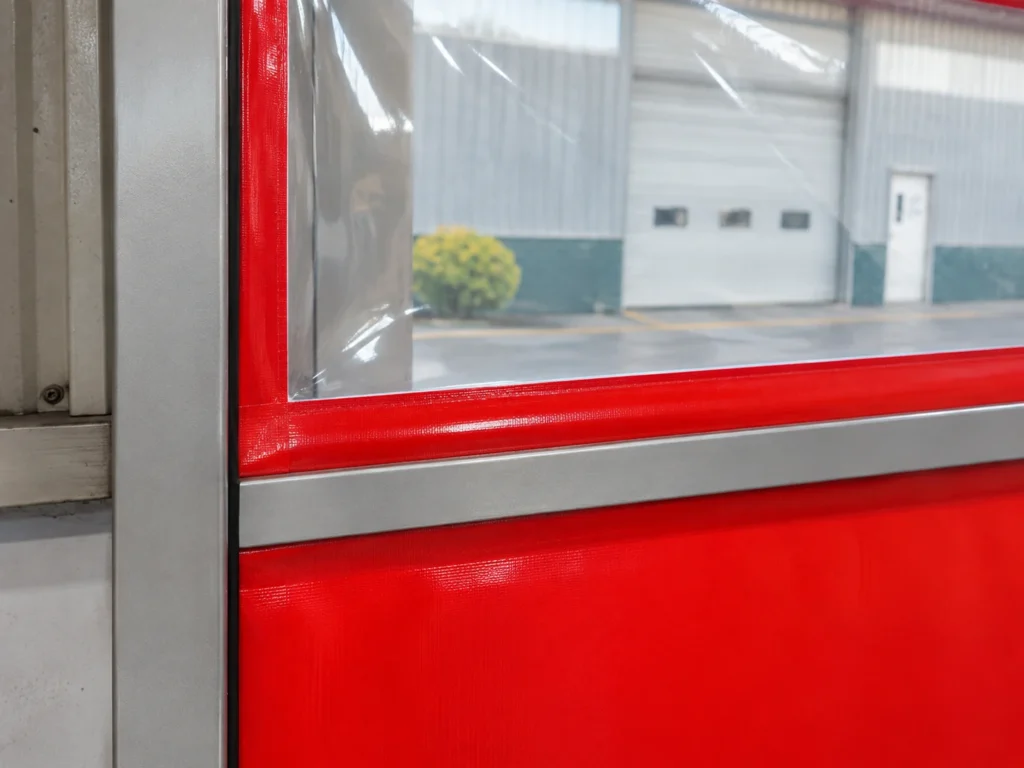
The cleanroom door window bond is the joint between the transparent panel and surrounding curtain; its construction must be confirmed for the supplied model. Do not infer from appearance whether it is welded, bonded or otherwise formed. The inspection question is whether the specified junction remains continuous and behaves as intended with the curtain.
Record whitening, a visible gap, an irregular edge or a change concentrated at a corner. Reflections, overlapping materials and original manufacturing details can complicate interpretation. Compare with an earlier image or an unaffected equivalent junction where available. Do not peel or pull the edge to demonstrate a suspected separation; that would change the condition being assessed.
A cleanroom door window bond concern should be reviewed alongside visibility through the panel. Haze or scratches may hinder a user’s view without proving that the joint has failed; a local separation may be present while the central panel remains clear. Describe these as separate observations so the service response addresses both the window function and its attachment.
For cleanroom door surface damage at a window, an adhesive patch is a proposed modification that needs manufacturer review. Its effect on flexing, guide passage, cleanability and material compatibility must be considered. Ask whether the approved remedy concerns the window area, a curtain section or the complete curtain, and what inspection is required afterwards.
4. Document Cleanroom Door Surface Damage Before Choosing a Remedy
Useful cleanroom door inspection photographs connect detail with location. Start with the whole opening, then show the affected component and a close view. Identify the side of the door and its position when recorded. Follow the site’s safe access procedures; reaching into a moving assembly to obtain a clearer image is unnecessary.
Include a known reference for size when it can be positioned safely, and keep the camera angle and lighting comparable in follow-up images. Note whether the surface was photographed before or after approved cleaning. A brighter reflection or a different camera distance can create an apparent change that does not represent progression of the defect.
Add the door identification, affected material, first observation date, relevant contact event and cleaning history. Include any recorded functional change. These facts help distinguish an isolated incident from a recurring pattern without claiming that the sequence of events proves the cause. Keep the original files so later reviewers can examine the same evidence.
Use cleanroom door inspection photographs to request a defined disposition: further inspection, a manufacturer-approved repair or a specified replacement. Agree the conditions for any interim use, the person responsible for the decision and the checks needed before unrestricted use resumes. Avoid turning a remote visual opinion into an open-ended permission to operate.
Prepare a SEPPES Service Enquiry with a Complete Record
For a SEPPES service enquiry, send the identification and photograph set with the delivered material specification and observed change in operation. If cleanroom door coating damage is involved, identify the actual coated part. For curtain or window findings, include the guide arrangement and the location of reinforcement and transparent panels. This makes a replacement-part enquiry more precise.
Review the SEPPES roll-up door product details alongside the records for your installed door, then request the applicable inspection and replacement procedure. A useful response to cleanroom door surface damage connects the observed condition, its operating consequences and the selected remedy. It also addresses the cause of recurring damage so the next component is not exposed to the same unresolved contact.
