

In the fast-paced world of global logistics, maintaining the integrity of temperature-sensitive goods is a challenge that requires precision at every touchpoint. For facilities operating in extreme climates, such as those in Saudi Arabia or the wider Middle East, the loading dock is often the most vulnerable link. This is where inflatable dock shelters for cold chain applications become indispensable. By creating an airtight seal between the warehouse and the delivery vehicle, these systems ensure that the cold chain remains unbroken, drastically reducing energy loss and protecting the quality of everything from pharmaceuticals to fresh produce.
The Challenge: Thermal Leakage in Extreme Heat
In regions where ambient temperatures frequently soar above 40°C, the “thermal bridge” created during the loading and unloading process can be devastating. When a cold storage warehouse opens its doors to a truck, the heavy, cooled air rushes out while hot, humid air flows in.
Standard mechanical dock seals often leave gaps at the corners or along the sides of the trailer, especially when dealing with various truck sizes. These small openings lead to:
Skyrocketing Energy Costs: Cooling systems must work overtime to compensate for lost air.
Product Spoilage: Fluctuations in temperature can compromise the shelf life and safety of perishable goods.
Equipment Strain: Constant cycling of refrigeration units leads to premature wear and tear.
Why Inflatable Dock Shelters are the Superior Choice
Unlike traditional foam-filled seals, inflatable dock shelters for cold chain logistics utilize high-strength, motorized blowers to inflate the header and side bags around the perimeter of the truck. This technology offers several distinct advantages:
1. The “Perfect Seal” Concept
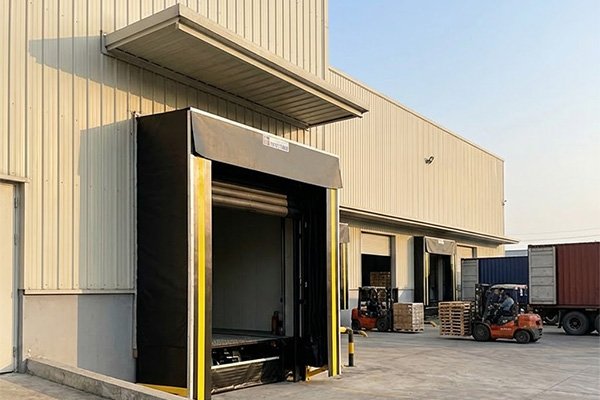
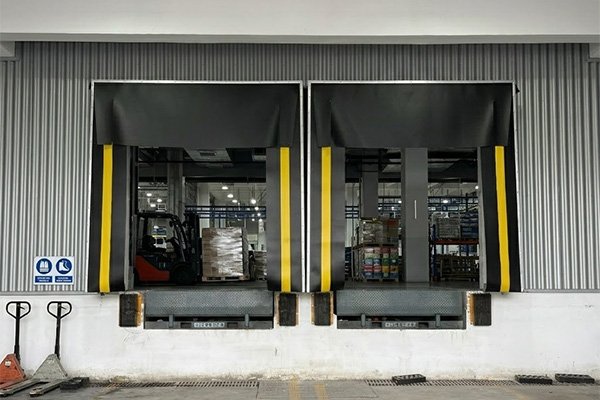
As seen in the provided case study from a Saudi logistics hub, inflatable shelters provide a wrap-around seal that conforms perfectly to the contours of the vehicle. Once the truck is parked, the bags inflate within seconds, closing all gaps that standard seals might miss. This is particularly vital for refrigerated trailers that may have irregular rear-door hardware.
2. Versatility for Diverse Fleets
Modern logistics centers rarely serve a uniform fleet. You might have a large 40-foot container one hour and a smaller delivery van the next. Inflatable shelters are designed to accommodate a wide range of vehicle heights and widths, ensuring that the energy-saving seal is just as effective for a small truck as it is for a heavy-hauler.
3. Durability Against the Elements
High-quality inflatable shelters are constructed from heavy-duty, reinforced fabrics (often PVC-coated polyester) that are resistant to UV radiation and extreme heat. In the context of “Saudi logistics,” where sand and intense sun are daily factors, the durability of the material ensures a long service life with minimal maintenance.
Energy Saving: Impact on the Bottom Line
The primary driver for installing inflatable dock shelters for cold chain management is the Return on Investment (ROI) through energy conservation.
Statistical Insight: Studies show that an unsealed dock door can lose as much as 15% to 25% of a facility’s cooling energy. By implementing an inflatable system, a facility can recover those costs within 18 to 24 months through reduced utility bills alone.
Furthermore, by maintaining a constant temperature, companies avoid the massive financial losses associated with rejected shipments due to temperature excursions—a common hurdle in pharmaceutical and food-grade logistics.
Enhancing Hygiene and Safety
Beyond temperature control, these shelters act as a barrier against external contaminants. In a cold chain environment, moisture control is critical. If hot, humid air enters the cold zone, it condenses, leading to:
Slippery Floors: Creating a safety hazard for warehouse staff and forklift operators.
Ice Buildup: Which can damage cooling coils and structural components.
Pest and Dust Entry: Maintaining a “clean room” standard is much easier when the dock is hermetically sealed against the outside environment.
Case Study Focus: Saudi Logistics Success
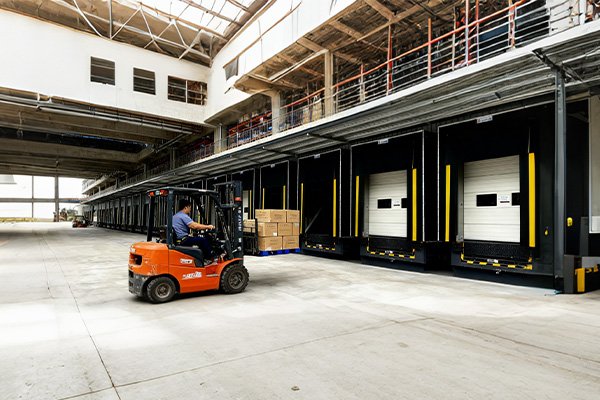
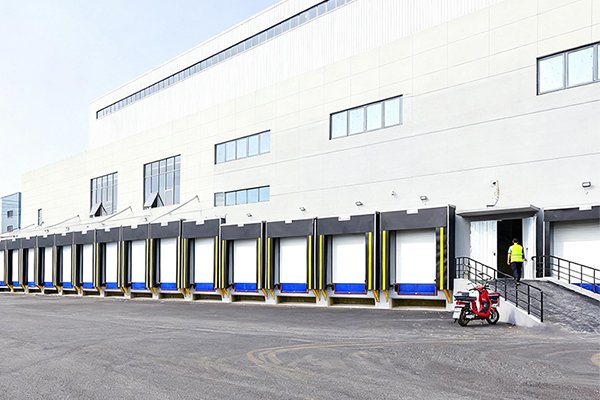
The image accompanying this article highlights a real-world application in the Saudi Arabian logistics sector. In a region known for its aggressive heat, the transition to inflatable dock shelters for cold chain efficiency has become a standard for “Grade A” warehousing. By integrating these shelters with high-speed doors and insulated dock levelers, Saudi facilities are setting a global benchmark for sustainable cold chain operations in desert climates.
Installation and Best Practices
To maximize the benefits of your inflatable dock shelters, consider the following integration tips:
Interlock Systems: Connect the shelter’s blower to the dock door’s control panel. This ensures the shelter inflates automatically as soon as the door begins to open.
Proper Lighting: As shown in the case study, internal dock lights are essential for safety once the shelter has “darkened” the loading area by creating its tight seal.
Regular Inspections: While low maintenance, checking the fabric for punctures and ensuring the blowers are clear of debris will ensure the system operates at peak efficiency for years.
Conclusion: Investing in a Greener, Cooler Future
As the global demand for fresh food and temperature-sensitive medicine grows, the pressure on logistics providers to be both efficient and sustainable increases. Inflatable dock shelters for cold chain energy saving represent a “win-win” technology. They protect the environment by lowering carbon footprints through energy reduction, and they protect the business by ensuring product quality and lowering operational costs.
For any cold storage facility looking to modernize, the loading dock is the best place to start. Investing in superior sealing technology isn’t just an infrastructure upgrade—it’s a commitment to cold chain excellence.
