
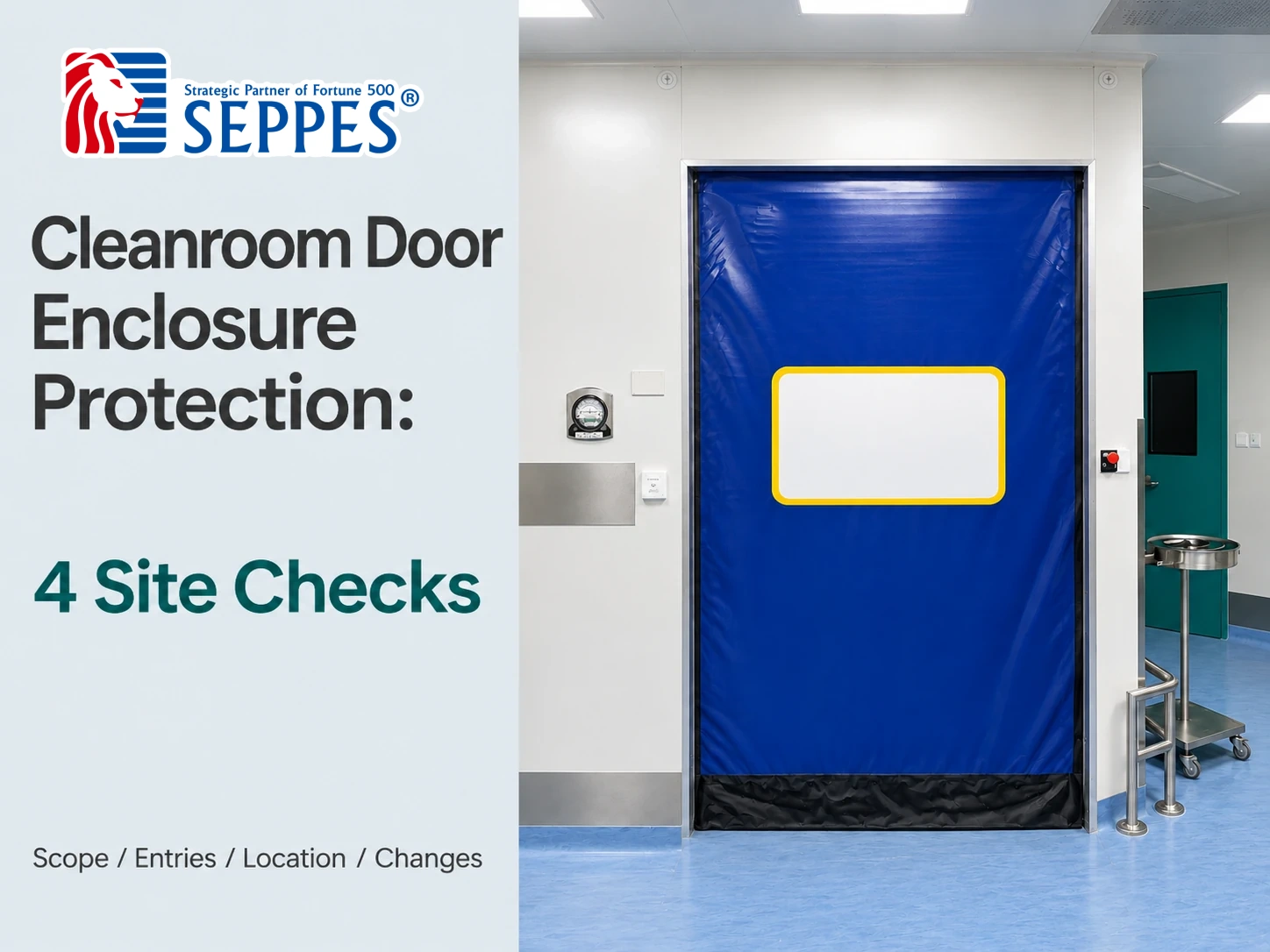

Cleanroom door enclosure protection depends on what the rating covers and how the electrical equipment is installed. A control cabinet may arrive with a declared protection category, yet the project still needs to resolve its cable entries, mounting position and connections to field devices. Those details determine whether the delivered arrangement matches the arrangement being relied on.
Consider a hypothetical material-transfer doorway. The main controller sits beside the door, a push-button station is mounted on the opposite wall, and an access reader is added during installation. A single IP entry in the quotation leaves several questions unanswered: which enclosure was assessed, which accessories were included, and who confirms the changes made on site?
For a SEPPES cleanroom door project, reviewing these interfaces early makes the electrical scope easier to specify and the completed installation easier to check. The following four site checks turn a broad protection requirement into questions that the supplier, installer and facility team can answer together.
1. Define the Scope of Cleanroom Door Enclosure Protection
IEC 60529 classifies protection provided by enclosures for electrical equipment. Its subject is the enclosure. A practical consequence for door purchasing is that a cabinet’s IP designation should not be treated as a statement about air leakage through the doorway or the cleanliness classification of the room.
Ask the supplier to name the rated item precisely: an empty housing, an assembled controller or a specified combination of housing and accessories. Request the model reference, applicable documentation and installation conditions. A statement linked to an identifiable assembly is more useful than a protection category copied into a general door specification.
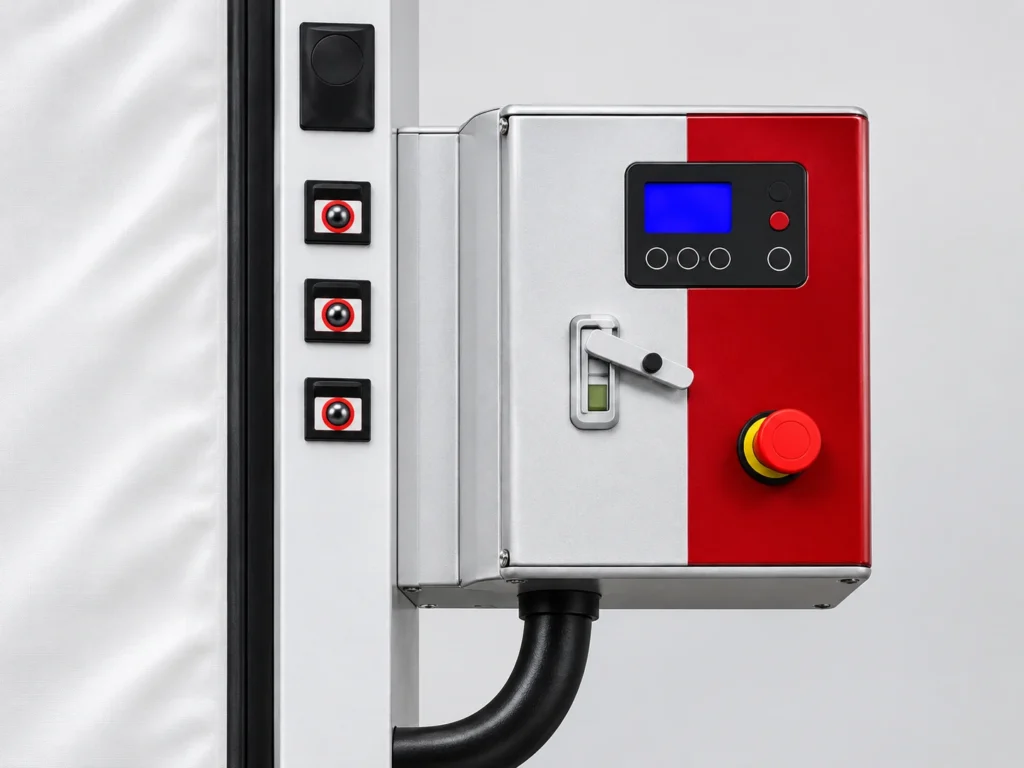
Separate the main cabinet from the motor terminal enclosure, local switches, access devices and sensor connections. Each item has its own location and exposure. A cleanroom door control box ingress review should identify which items are covered by the supplied documentation and which require separate confirmation. This prevents a gap between the main controller and the equipment distributed around the opening.
Material selection is another separate decision. The SEPPES stainless steel high speed door specifies stainless steel guides and a head cover. That information helps define the door structure; the electrical enclosure and its accessories still need their own material and protection details in the project quotation.
2. Check the Cable Entry as a Complete Connection
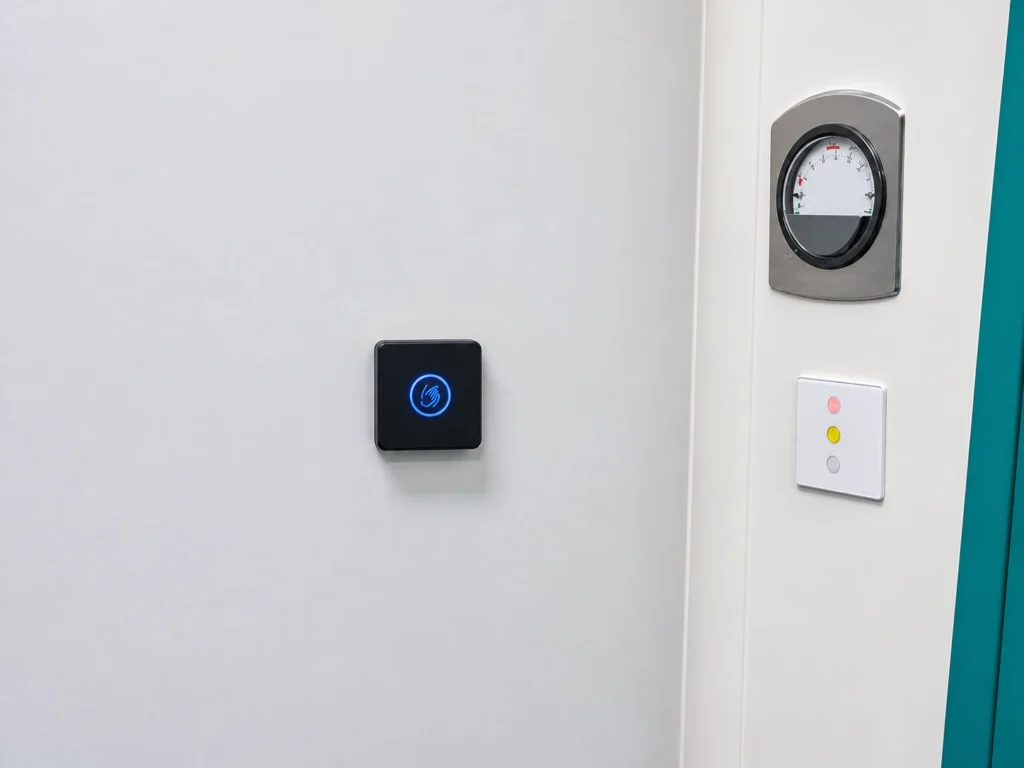
Cleanroom door cable entry sealing deserves its own drawing detail. Identify the cable, the entry fitting and the enclosure interface together. The gland’s connection thread and its cable clamping range describe different dimensions. LAPP’s cable-gland guidance explains that the clamping range must match the cable’s outside diameter to support the specified sealing and strain relief.
For the selected assembly, ask how sealing is provided at the enclosure wall as well as around the cable. Confirm the entry plate, sealing accessories and fitting instructions as a package. The review should establish what the installer must reproduce, rather than rely on the appearance of a tightly fitted nut.
A useful hypothetical change is replacing a hard-wired sensor with a device supplied with a factory-fitted connector. The connector may require a different entry arrangement from the cable alone. Resolve the approved connection method before cutting a larger opening, and record whether the revised entry belongs to the door supplier’s package or the installation contractor’s scope.
Cleanroom door cable entry sealing also has to remain practical during maintenance. Show where a cable can be disconnected, how the cover opens and what supports the cable outside the box. Ask which parts must be renewed after disturbance and which checks are required after reconnection. These are configuration questions to settle before routine service becomes a field modification.
Keep the wall penetration distinct from the control-box entry. If a cable passes through a cleanroom partition before reaching the controller, ask for both details. Approval of the enclosure connection does not resolve how the surrounding room boundary is finished, cleaned or maintained. The two interfaces should have clearly assigned owners.
3. Match the Enclosure Location to Actual Exposure
Cleanroom door electrical enclosure location should be reviewed on an elevation or site photograph, with the cleaning route and nearby equipment marked. Room classification alone does not describe what reaches a particular cabinet. Identify routine wiping, possible splash sources, overhead services and the access needed to inspect the enclosure without obstructing the transfer route.
Compare two proposed positions for the same controller: beside equipment that is cleaned frequently, and on a nearby service-side wall. Moving the enclosure may reduce one exposure while adding cable length, partition crossings or access constraints. The better position is the one that resolves the combined requirements, with any relocation accepted by the door supplier.
Moisture inside a cabinet also needs interpretation. Rittal’s guidance on enclosure condensation explains how humid air and cold surfaces can produce condensate. This is a reason to review temperature and humidity changes alongside possible water entry, rather than assume every internal droplet proves the same failure mechanism.
Include normal operation, shutdown and cleaning periods in the exposure description. Any proposed heater, ventilation device or relocation should be reviewed for the selected controller and housing. Cleanroom door enclosure protection must work with the equipment’s thermal requirements; adding a cover or sealing an opening without that review can leave another requirement unresolved.
Record the final cleanroom door electrical enclosure location in the handover documents. Include service clearance, nearby cleaning activity and the agreed method for cleaning its exterior. Chemical compatibility and access for cleaning need their own confirmation; an enclosure protection label should not be used as a substitute for those answers.
4. Recheck Cleanroom Door Enclosure Protection After Site Changes
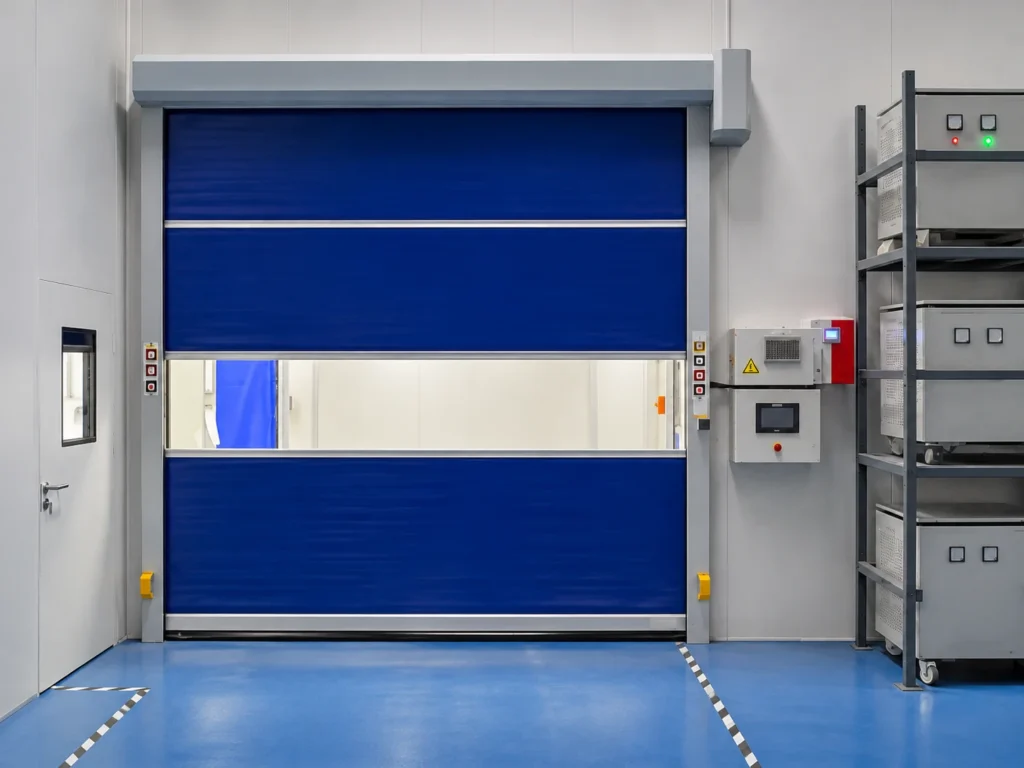
Cleanroom door enclosure penetrations often change when the project adds an access reader, an interlock connection or a communication cable. Review the proposed entry before work begins. Ask who approves the opening, who supplies its fitting and who confirms the completed configuration against the protection requirement.
The SEPPES high speed roll up door lists I/O connections and 485 communication, with several activation options. These are useful starting points for integration planning. The project still needs to specify the selected devices, their cable routes and the physical interfaces included in the delivered control arrangement.
Keep a simple register of cleanroom door enclosure penetrations showing factory entries, site additions and unused openings. For each, identify the fitting or closure, drawing reference and acceptance record. A photograph helps locate the item; it does not replace the documentation for the selected assembly or establish its protection performance.
A final cleanroom door control box ingress review should reconcile the quotation, approved layout and installed condition. Any difference needs a recorded resolution, including who accepted it and what verification was required. Later service changes should follow the same logic so that the handover record remains useful throughout operation.
Specify the Complete SEPPES Door Control Arrangement
When requesting a SEPPES proposal, send the door location, cleaning exposure, preferred cabinet position and list of connected devices together. Ask for the exact enclosure designation, included accessories, cable-entry responsibilities and installation conditions. This gives the quotation a defined scope and helps compare proposals on the same basis.
Use the SEPPES door product details to select the starting configuration, then confirm the electrical package for the actual opening. Effective cleanroom door enclosure protection connects the stated rating to an identifiable assembly, an agreed location and documented site work. That connection is what makes the requirement usable after installation.
