
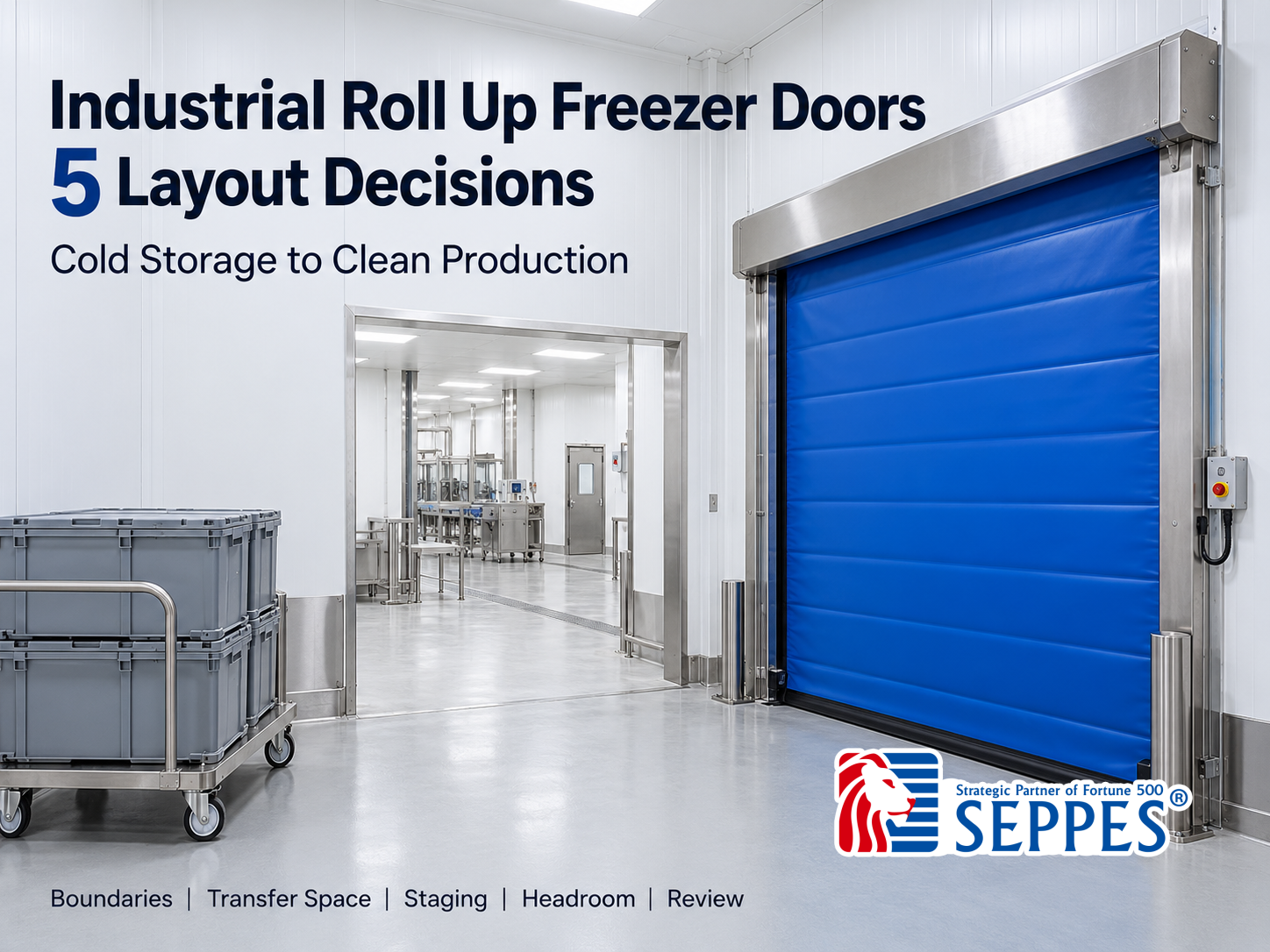

Industrial roll up freezer doors work within a transfer route, not in isolation. A well-sized opening can still become an awkward handover point when the next trolley has nowhere to wait, a load needs inspection or the adjoining clean area is not ready to receive it. For a cold store serving clean production, plan the space around the door alongside the door itself. The aim is a route that allows complete transfers, appropriate environmental separation and clear responsibilities at each boundary. A rapid movement cycle is only one part of that arrangement. The five decisions below help buyers compare layouts before requesting a final proposal. They are planning considerations, not a prescribed cleanroom design or a universal rule for every refrigerated facility.
1 Define Where Cold Storage Ends and Clean Transfer Begins
Start with the material rather than the doorway. Identify its storage requirements, packaging condition and destination. Then mark where outer packaging is removed, where a different trolley may be required and where the receiving team takes responsibility. These points may sit on different sides of the same corridor. Separate the temperature boundary from the cleanliness boundary on the drawing. A freezer entrance may lead into a preparation area, followed by a controlled transfer opening. Alternatively, a project may combine some functions at one location. That choice needs agreement from the teams responsible for the product, room conditions and operating procedure.
When reviewing high performance overhead cooler doors alongside freezer options, identify the actual operating conditions for each opening. A product category name does not resolve the required temperature range, cleaning routine or adjoining-room requirements. Record the intended duty in plain language, such as “frozen material storage to preparation space.” This description helps SEPPES and the facility designer discuss the same opening, instead of treating every door on a cold-to-clean route as an identical assembly.
2 Choose Direct Access or a Transfer Space
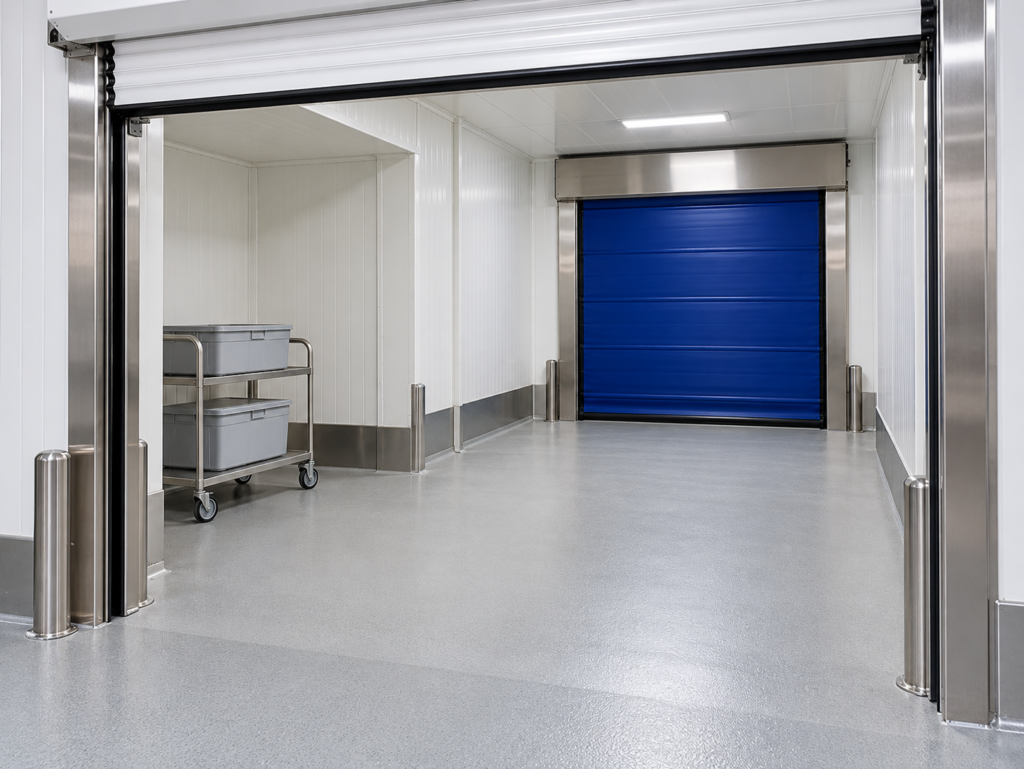
A direct opening keeps the route simple and avoids adding another handover area. It may be worth evaluating where the approved process permits direct movement and the room conditions can be maintained under representative traffic. The drawing should still show what happens when the receiving side is temporarily unavailable. A separate transfer space creates another place to manage the sequence. It also needs room for the entire load, its handling equipment and safe clearance from both closures. A small enclosure that leaves a trolley across one threshold has not solved the transfer problem.
For an automatic high speed freezer door paired with an inner door, agree which system permits each opening and how interrupted movements are handled. Where an interlocked sequence is required, specify it with the responsible controls team and preserve the applicable safety and emergency arrangements. The Australian Government refrigeration guide recommends rapid-close automatic doors for cold rooms with regular access. That supports considering controlled opening time, but it does not establish that every project requires a vestibule or a particular number of doors. Australian Government refrigeration guidance.
3 Put Waiting and Inspection Outside the Through Route
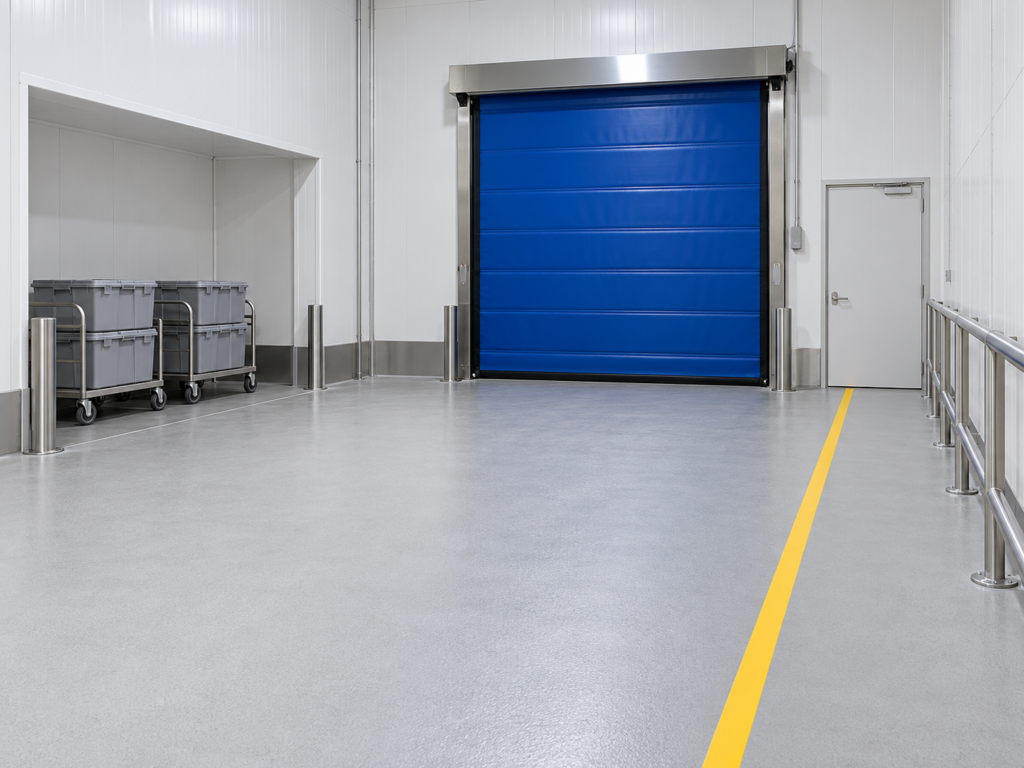
Draw the standing positions as carefully as the travel path. A trolley waiting for paperwork, inspection or a receiving operator needs an agreed place that does not obstruct a door, a pedestrian route or an emergency exit. Choose that location with the product team. Moving all waiting activity to the warmer side may simplify traffic while creating an unacceptable exposure condition for the material. Moving it inside the store may interfere with storage access. The appropriate position depends on the approved handling limits and available space.
Include return traffic. Empty containers and rejected loads should have a defined route instead of being left beside the opening until someone finds a place for them. Keep any required segregation or cleaning steps visible in the layout. Where powered handling equipment is used, review personnel access separately. UK HSE guidance recommends separating pedestrian and vehicle routes and providing separate doors wherever possible. Apply that guidance in its workplace-safety context, with the local site assessment determining the arrangement. HSE guidance on separating pedestrians and vehicles.
4 Match Door Movement to the Available Building Space
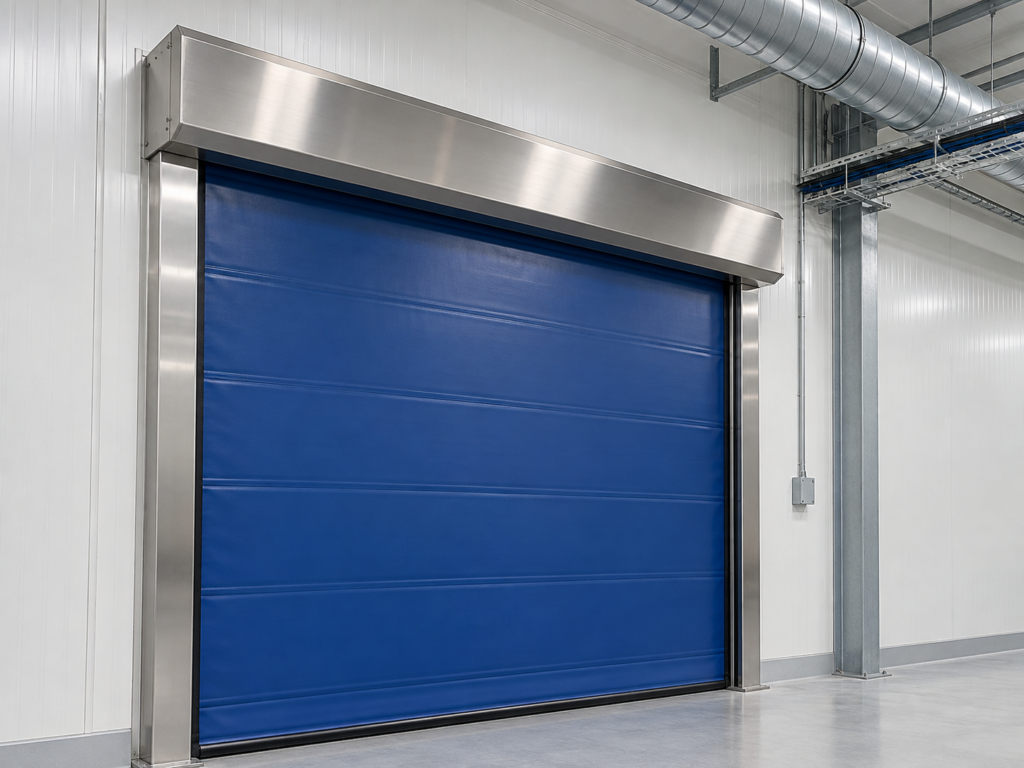
Opening width and height describe only part of the installation. Include the header, side guides, motor arrangement and maintenance access in the space review. Nearby ducts, cable trays and insulated wall joints can affect the usable position of the assembly. If high speed cold storage folding doors are also being considered, compare their actual installation drawings with the proposed roll-up configuration. Check where the curtain collects when open, what projects into the passage and how service components are reached. Use model-specific dimensions rather than assuming one motion type always requires less space.
SEPPES describes a sub-zero insulated model with synchronized dual-shaft drive, zipper-guided sealing, a multilayer curtain and frame heating in its 2026 catalogue. These features provide concrete items for the layout discussion: locate the drive, identify service access and agree the necessary electrical provision. Also review how the door frame meets the wall and floor. The designer should coordinate those interfaces with the refrigeration envelope and cleaning requirements. Keep future access to removable covers clear; a neat installation is less useful if a fixed obstruction prevents routine service.
5 Review Industrial Roll Up Freezer Doors Against Real Tasks
Before freezing the layout, walk through several operating situations with the people who will use it. A useful review follows the complete load from storage to its receiving position, then checks the return movement. Consider the following hypothetical scenarios. They organize the discussion; they are not acceptance criteria or evidence that a particular design has passed.
| Operating situation | Layout question |
|---|---|
| Normal transfer | Can the complete load clear the opening and reach its assigned receiving position? |
| Busy transfer period | Where does the next load wait without blocking another route? |
| Receiving side unavailable | Can the load remain in an approved holding condition while the doorway closes? |
| Inspection or return | Is there a designated place and route for the exception? |
Record unresolved points on the drawing before the order is finalized. A cold storage high speed door supplier needs the load envelope, route, room conditions and installation constraints to prepare a meaningful proposal. A doorway photograph alone cannot show all of those requirements. Once installed, verification should use agreed representative conditions and the relevant site approvals. The review may cover clearance, protective devices, the operating sequence and the environmental conditions specified by the facility team. Do not expose sensitive stock to an unapproved trial simply to demonstrate throughput.
Bring the Layout to SEPPES Before Finalizing the Door
A practical project brief combines a marked floor plan, photographs of each side, load dimensions and the expected transfer routine. Add the environmental requirements, cleaning method and known building-service obstructions. This gives SEPPES a clear basis for discussing the relevant insulated door configuration. Ask for a proposal that connects the equipment to the layout: door position, clear opening, installation envelope, controls and responsibilities at adjoining interfaces. Keep the freezer-door duty and clean-area requirements explicit, even when one supplier is coordinating several openings.
The right starting point is not simply a faster door. It is a complete route in which the load can move, wait and be received without turning the threshold into a storage or inspection station. Share that route with SEPPES to begin a project-specific review.
