


High performance industrial doors should be evaluated for the sound they produce and the sound they allow into a cleanroom. Those are different problems. A brief noise during curtain travel may need a different response from machinery that becomes audible whenever the opening is clear.
For a facilities team, the useful starting point is not a promise of a quieter door. It is a record of where the sound occurs, when people hear it and what else is operating. This guide explains how to turn that record into a practical SEPPES project brief without treating a product name as an acoustic rating.
Locate the Sound Before Selecting a New Door
Imagine two illustrative complaints. At one doorway, staff hear a short rattle while the curtain moves. At another, the door moves smoothly, but a production machine in the adjacent room becomes much more noticeable when the door opens. These are hypothetical examples, not SEPPES customer cases. Replacing both doors with the same specification would skip the most important question: what is the actual source?
Record whether the sound occurs during opening, travel, the open period, closing or while the assembly is stationary. Compare observations from fixed, safe positions on both sides where access is permitted. Keep observers and equipment outside the travel path. Note nearby fans, process equipment and vehicle movement rather than automatically attributing every sound to the door.
A new rattle, scrape or impact warrants competent inspection under the supplier’s maintenance procedures. It is not a reason for an operator to open a guard or adjust a fixing. NIOSH recommends addressing maintenance before selecting engineering noise controls. Its guidance also explains that vibration can pass into surrounding structures. NIOSH engineering controls.
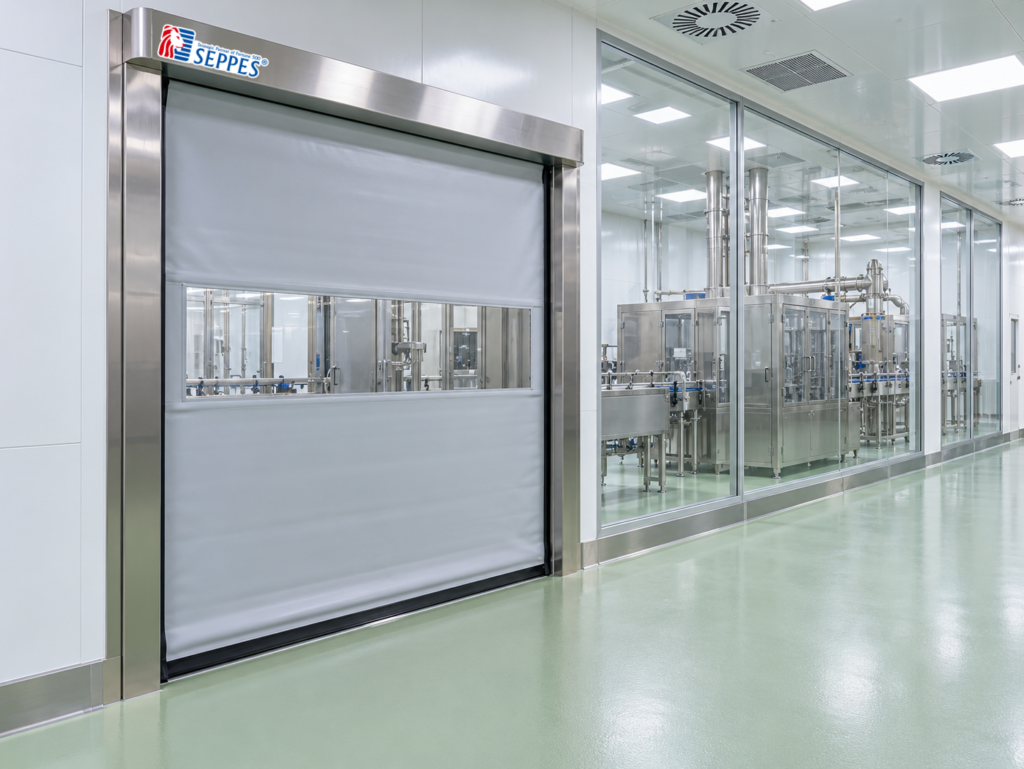
Measure a Representative Operating Cycle
A phone recording can help describe a complaint, but it is not automatically a compliant noise assessment or reliable product comparison. Have a competent assessor select the instrument, settings and measurement method. Keep normal ventilation and essential process protections operating. Any specially controlled test must be planned and authorized by the responsible site team.
NIOSH distinguishes area or equipment measurements with a sound level meter from personal exposure assessment using a dosimeter. A brief doorway measurement does not describe a worker’s full shift. If occupational exposure is the concern, involve the site’s safety specialist and apply the requirements relevant to that location. NIOSH noise measurement guidance.
Use the following six-field record to preserve context. It is an editorial planning checklist, not a replacement for an applicable acoustic test method.
| Record | What to Capture |
|---|---|
| Observation point | Side of opening, microphone position and distance. |
| Door phase | Opening, travel, open dwell, closing or stationary. |
| Traffic pattern | Typical passage frequency and vehicle or trolley activity. |
| Background conditions | Ventilation, adjacent machinery and room operating state. |
| Measurement details | Instrument, calibration, metric, settings and duration. |
| Assembly and method | Door configuration, operating profile and test procedure. |
Compare High Performance Industrial Doors Using the Right Data
First separate noise emission from sound insulation. Emission describes sound generated by operating equipment. Insulation describes how an assembly limits sound transmission under stated test conditions. A result for one is not evidence for the other. A cleanroom suitability statement, a fast opening speed or an air leakage figure does not establish either acoustic performance.
Sound pressure and sound power are also different quantities. Do not place two numbers in the same comparison column simply because both use decibels. Ask for the reported quantity, test method, operating conditions, measurement positions where relevant and uncertainty. HSE’s manufacturer guidance identifies these details as important parts of noise information; it sits within a UK machinery framework, not a universal cleanroom certification scheme. HSE noise information guidance.
When comparing fabric roll up doors, request evidence for the complete proposed assembly, not just a sample of curtain material. For high speed vinyl roll up doors, the material description alone likewise cannot establish a sound-insulation rating. Check whether the documented size, guides, seals, drive and operating profile match the quotation. Ask the supplier to identify differences and explain how they affect the relevance of the evidence.
Choose Noise Controls That Suit a Cleanroom
If inspection identifies a door-related issue, the first task is restoring the approved operating condition. If the dominant source is adjacent machinery, the project may need a review of that source, the transmission path and the location of affected workstations. A door replacement should be one option to assess, not the automatic answer to every noise complaint.
Cleanroom constraints matter when discussing acoustic treatment. Exposed absorbent foam, improvised frame packing or an added lining may introduce cleaning, particle-shedding, fire-performance or service-access concerns. Materials and installation details need review by the relevant engineering and quality teams. Do not attach a treatment simply because it is sold as sound absorbing.
NIOSH notes that hard surfaces can reflect sound and that vibration isolation needs appropriate design. Its guidance also discusses cleanable acoustic-treatment options, but this does not make every proposed panel suitable for a particular cleanroom. Any changes to supports or surrounding construction require competent review. Do not alter protective devices, reduce necessary ventilation or change door-control settings merely to obtain a lower reading. NIOSH engineering controls.
Review the SEPPES Configuration Without Assuming a Noise Rating
SEPPES’s 2026 catalogue describes servo control and soft start/stop for its PVC high-speed-door range. These are useful subjects for a configuration discussion because the motion profile belongs in the assessment. They are not, by themselves, proof of a particular decibel level, sound-insulation class or measured noise reduction. Confirm which features apply to the model being offered.
A purchasing brief for industrial high speed roll up doors should identify the receiving work area, the complaint being investigated and the intended operating pattern. Ask SEPPES for available model-specific noise information and the conditions behind it. Where published data does not answer the site’s question, agree what further assessment is needed before treating an acoustic objective as a contractual promise.
Bring cleaning requirements, traffic needs and safety responsibilities into the same conversation. A proposal that appears quieter in an isolated demonstration may not address the actual production route. Review the relevant SEPPES cleanroom door solution alongside the acoustic brief so the project remains a cleanroom application decision, not a comparison of one headline number.

Define Acceptance and Follow Up After Installation
Agree the acceptance question before ordering. Is the objective to investigate an intermittent operating sound, reduce sound at a particular workstation or limit transmission between rooms? Each question may need different evidence. Define who measures, which method applies, what conditions must be recorded and how the result will be reviewed. Avoid a bare requirement such as “the door must be quiet.”
After installation, use the agreed procedure under representative conditions and document any differences from the baseline. Where before-and-after comparison is appropriate, keep positions and operating conditions comparable; the assessor should explain remaining limitations. HSE’s quieter-equipment purchasing guidance recommends checking performance after delivery and installation, because supplier information alone may not describe the workplace result. HSE buying quieter equipment.
Retain the accepted configuration and establish a route for reporting changes in sound. Share the six-field record, the proposed opening arrangement and the required evidence with SEPPES for project review. A credible cleanroom door solution starts with an understood source and finishes with documented expectations, not an unsupported promise of silence.
