

A fast door can form part of an environmental improvement project at a cleanroom facility, but opening speed alone cannot establish its sustainability. A proposal may discuss reduced exposure time or a durable curtain while leaving the energy baseline, replacement assumptions and material recovery route unexplained.
The useful question is specific: compared with which alternative, providing what service, over what period? For a SEPPES project, keep the required cleanroom conditions and safe operating functions fixed, then examine the evidence behind the environmental case. The following six checks help purchasing, engineering and sustainability teams ask the same questions before a claim becomes part of an approval.
1 Define the Fast Door Comparison Before Counting Benefits
Start with the function, not a green label. Record the opening dimensions, permitted traffic, operating calendar, environmental requirements and cleaning regime. Compare alternatives that can provide that service. A doorway serving an adjacent warehouse should not be treated as equivalent to one directly controlling access to a classified production room. When weighing the advantages of high speed roller shutter doors, distinguish operational convenience from an environmental result. Faster movement, a particular material or a compact assembly can be useful features without proving a lower total impact. Name the outcome you want to evaluate, such as electricity consumption or the amount of material replaced.
Choose a study period and state what is included. Manufacturing, transport, use, maintenance and end-of-life handling may all matter. EPA’s sustainable materials guidance takes this broader life-cycle view; it does not reduce the question to recycling after use. EPA sustainable materials management. Keep unavailable inputs visible. A missing material quantity or unknown replacement interval should remain an open assumption, not quietly become zero.
2 Separate Energy Potential from Verified Savings
An energy statement needs a defined measurement boundary. Door-drive electricity, standby consumption and any change in heating or cooling demand are different quantities. Decide which ones the project will assess and how interactions will be handled. A reduction in the building’s bill does not, by itself, identify the contribution of a single doorway. Record baseline conditions before making changes. Include the traffic pattern, time spent open, operating hours and relevant indoor and outdoor conditions. After installation, compare an appropriate period and account for material changes in production or weather. DOE’s measurement and verification guidance distinguishes component-level approaches from whole-building methods and explains the role of measured data and adjustments. DOE measurement and verification options.
If a proposal uses the description climate-control airtight high-speed door, ask for the applicable leakage evidence and the conditions under which it was obtained. That description is not an annual energy result. Do not obtain an apparent saving by relaxing required ventilation, pressure control or protective functions. The environmental comparison must preserve the service the facility actually needs.
3 Ask What the Material Evidence Actually Covers
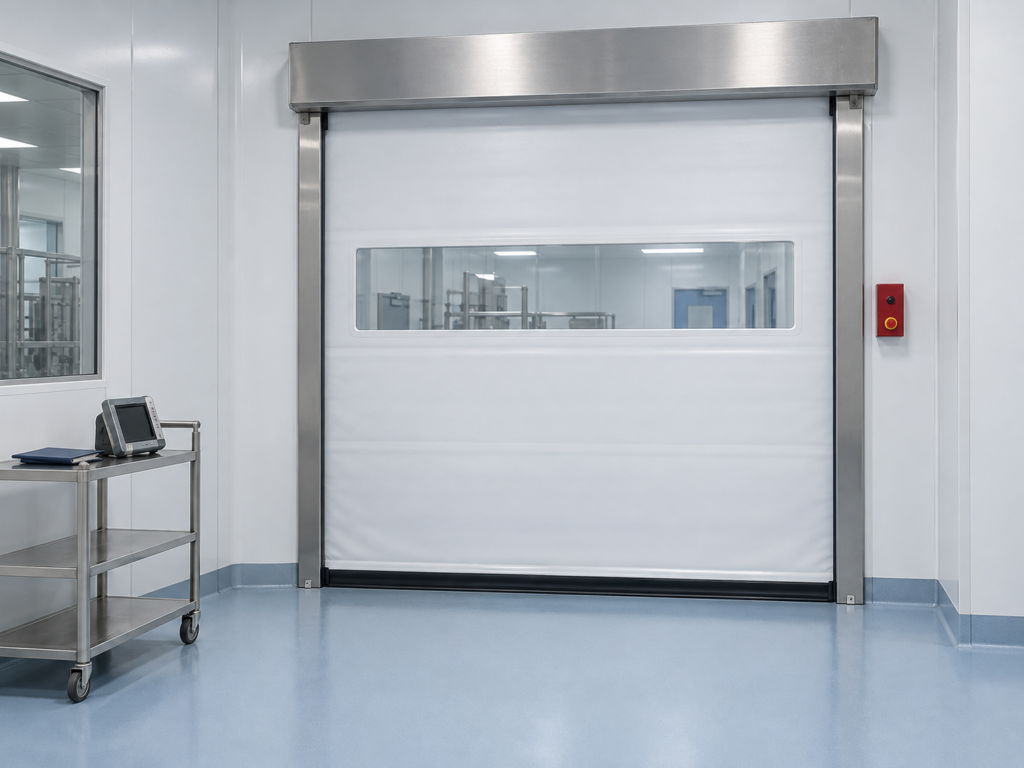
A useful discussion of environmental sustainability and high-speed warehouse doors starts with the supplied assembly. Request a breakdown of the relevant curtain or panels, frame, guides, seals, drive and controls. Include packaging and delivery where these fall within the assessment boundary. Recycled content and recyclability answer different questions. One concerns material already used in making the product; the other concerns what may happen after use. Neither, alone, establishes the environmental performance of the whole door. For a coated fabric or composite component, ask about its actual construction instead of assigning the properties of one ingredient to the entire assembly.
If a supplier provides an environmental product declaration or life-cycle study, check the covered model, declared unit, included stages, assumptions and review information before comparing results. Different boundaries can make apparently similar figures unsuitable for direct comparison. ISO 14040 provides a framework covering study goals and scope, inventory, impact assessment and interpretation. Its existence is not a certification of an individual door. For a SEPPES review, request the evidence available for the proposed configuration and identify any information that still needs confirmation. ISO 14040 overview.
4 Examine Repairability Before Assuming a Long Service Life
A long service-life claim is more useful when the project understands how the door will remain serviceable. Ask which wear items can be identified and replaced, what work requires specialist attendance and how the installation allows access. Cleaning compatibility belongs in this discussion because the proposed materials must tolerate the approved maintenance regime. SEPPES’s cleanroom-specific catalogue describes a zipper-guided curtain, smooth guides and an automatic curtain-reset feature. These details support a model-specific discussion about inspection and recovery after an incident. They do not establish that damage is harmless, that every incident can be reset or that replacement parts will never be needed.
Consider a hypothetical repair: a worn seal is replaced while the remaining suitable assembly stays in use. Compare the material and service requirements of that repair with the proposed alternative. Include any necessary cleaning and return-to-service checks. Do not assume repair is always the lower-impact option without examining its scope and frequency. Confirm parts information and expected support arrangements with SEPPES for the project location. Keep supplier commitments separate from the owner’s planning assumptions.
5 Confirm a Real Recovery Route for Removed Materials
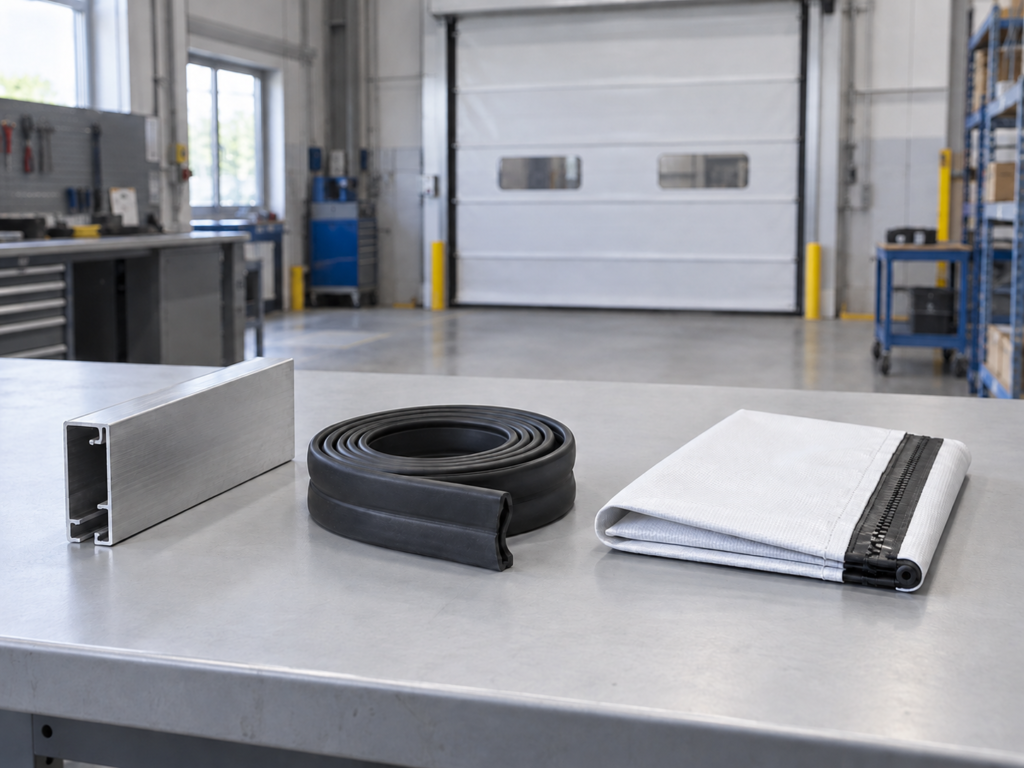
A recovery plan needs more than a recycling symbol. Identify what would be removed, who can separate it and which local service can accept it in its actual condition. Metal sections, coated curtains, seals and electronic controls may need different handling routes. The presence of a recyclable material does not prove that a complete mixed assembly will be accepted. For high speed roll doors for warehouses adjoining clean production, distinguish ordinary service components from items whose use history requires additional assessment. Follow the facility’s approved handling process; do not assume that equipment removed near a cleanroom is automatically suitable for unrestricted reuse or ordinary recycling.
Ask whether packaging can be reduced or returned, but confirm that any arrangement still protects the product during transport. Treat a supplier take-back service as available only when it has been explicitly agreed for the project. Record the intended destination and the evidence needed at removal. A practical route that the site can verify is more useful than an unsupported statement that everything is recyclable.
6 Turn the Findings into a SEPPES Evidence Brief
Keep the approval record short enough to maintain. For each environmental statement, record the proposed configuration, supporting source, applicable conditions and unresolved questions. Use the same structure for competing suitable options so that missing information is visible.
| Proposed statement | Evidence to identify |
|---|---|
| Lower operating energy | Baseline, measurement boundary, method and comparable conditions |
| Reduced replacement material | Component scope, expected repair pattern and basis for the assumptions |
| Recoverable materials | Actual composition, separation requirements and confirmed receiving route |
Send SEPPES the opening schedule, cleanroom requirements, operating pattern and cleaning conditions alongside this record. Ask which product details and supporting documents can be confirmed, then assign site measurements and end-of-life arrangements to the teams responsible for them.
A fast door should be selected for its required duty first. Its environmental case becomes credible when the evidence covers the proposed installation, acknowledges uncertainty and can be updated with operating records. That is a stronger basis for a SEPPES cleanroom solution than a broad green claim or an unqualified savings percentage.
