

In modern industrial environments, particularly in food processing, pharmaceuticals, and cold-chain logistics, maintaining a stable temperature is not just about quality control—it is about energy efficiency and cost-saving. Insulated High-Speed Doors for Cold Storage have become the gold standard for facilities that need to balance high-traffic access with strict thermal insulation.
As a professional manufacturer, SEPPES offers two flagship solutions: the SE-LKKSM-L200 (Stacking Type) and the SE-LKKSM-L350 (Dual-Shaft Type). While both are designed to prevent energy loss, they utilize different technologies to solve specific environmental challenges.
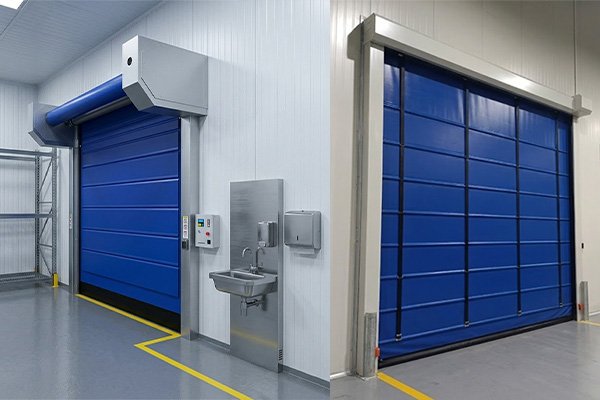
Understanding the Stacking Type: SE-LKKSM-L200
The SE-LKKSM-L200 is a robust, airtight insulated stacking door designed for reliability and heavy-duty performance.
Key Technical Features
The Power of Thickness: This model features a curtain assembly with a total thickness of 14mm. It uses a double-layer 0.8mm PVC curtain filled with 10mm of high-density insulation material.
Lifting Mechanism: Unlike standard roll-up doors, the L200 uses a stacking fold-up method assisted by back-belts. This allows the door to withstand higher wind pressure (Level 4) and provides a tight seal.
Precision Engineering: Equipped with the German brand FROG PUPIL control system and motor, it ensures smooth operation with an opening speed of up to 0.8m/s.
Why Choose the L200?
The L200 is ideal for larger openings where wind resistance and physical durability are priorities. Its 304 stainless steel frame ensures that the door remains corrosion-resistant even in humid cold-storage environments.
The Innovation of the Dual-Shaft Type: SE-LKKSM-L350
When it comes to advanced Insulated High-Speed Doors for Cold Storage, the SE-LKKSM-L350 represents the cutting edge of temperature-control technology.
The Anti-Freeze Solution
The most significant feature of the L350 is its integrated heating and anti-freeze mechanism. In environments reaching as low as -28°C, ice buildup on tracks can cause operational failure. The L350 solves this with:
Heated Tracks: Prevents frost formation on the aluminum alloy rails.
Dual-Shaft Roll-up: A sophisticated lifting style that allows for faster cycles and better space management.
Superior Multi-Layer Insulation
While the curtain is slightly thinner (12mm) than the L200, it utilizes a “Triple-layer 0.8mm PVC + Dual-layer Aluminum Foil” structure. This multi-reflective layer system is exceptionally effective at reflecting radiant heat, keeping the cold air where it belongs.
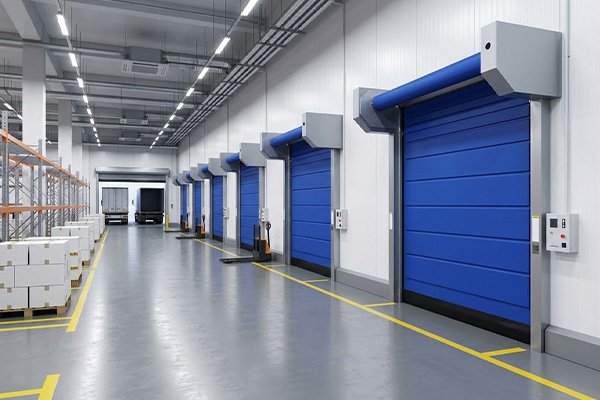
L200 vs. L350: A Comparative Analysis
To help you decide which Insulated High-Speed Doors for Cold Storage suit your factory, let’s look at the critical differences:
| Feature | SE-LKKSM-L200 (Stacking) | SE-LKKSM-L350 (Dual-Shaft) |
| Best For | Large openings & wind resistance | Deep freeze (-28°C) & high frequency |
| Curtain Structure | 14mm thick (PVC + 10mm Insulation) | 12mm thick (PVC + Dual Aluminum Foil) |
| Space Required | 1000mm Headroom | 500mm Headroom |
| Heating System | Not Standard | Included (Tracks & Anti-freeze) |
| Lifting Style | Folding/Stacking | Dual-Shaft Rolling |
How to Choose the Right Door for Your Factory?
Scenario A: Large External Loading Docks
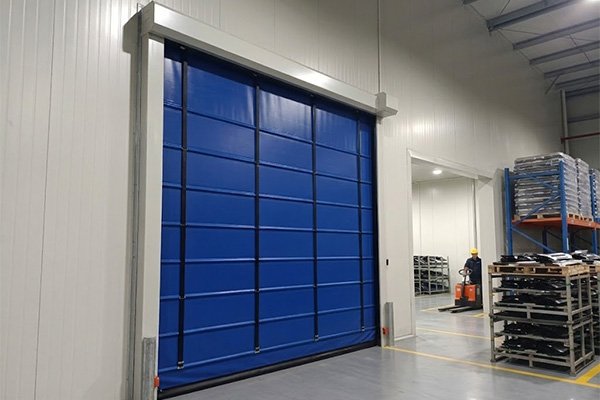
If your cold storage area opens directly to a loading bay or an outdoor area with high wind speeds, the SE-LKKSM-L200 is your best bet. Its Level 4 wind resistance and stacking mechanism ensure it won’t “blow out” of its tracks, and the 14mm thick curtain provides a massive thermal barrier.
Scenario B: High-Frequency Interior Cold Rooms
For interior doors separating a “chill room” from a “deep freeze” area, the SE-LKKSM-L350 is the superior choice. The dual-shaft design is built for high-cycle speeds, and the anti-freeze heating system ensures the door never jams due to condensation or ice, which is the leading cause of maintenance issues in cold chain logistics.
Scenario C: Limited Installation Space
Space is often a luxury in existing warehouses. The L350 requires only 500mm of headroom, making it much easier to retrofit into buildings with low ceilings or existing overhead piping.
Conclusion: Investing in Quality with SEPPES
Choosing the right Insulated High-Speed Doors for Cold Storage is about more than just closing a hole in the wall; it is about protecting your product and reducing your electricity bill.
Both the L200 and L350 are equipped with high-end safety features, including infrared sensors and IP54-rated control boxes, ensuring they meet international safety standards. Whether you need the rugged durability of the L200 stacking door or the high-tech anti-freeze capabilities of the L350 dual-shaft door, SEPPES provides the reliability your business demands.
Ready to upgrade your facility’s efficiency? Contact our specialists today for a customized technical consultation and find the perfect fit for your industrial needs.
