

A sectional door is an industrial or commercial door made of multiple horizontal panels that move vertically along tracks and rest under the ceiling when opened. Compared with traditional swing doors or sliding doors, a sectional door saves space, improves sealing performance, and offers better safety for factories, warehouses, logistics centers, workshops, and loading areas. For companies that need reliable daily access, thermal insulation, and long-term durability, a sectional door is one of the most practical and widely used door solutions.
At SEPPES, sectional doors are designed not only as building access equipment, but also as part of an efficient industrial workflow. A well-designed door helps control indoor temperature, reduce dust and noise, protect goods and equipment, and support frequent vehicle movement. This is why sectional doors are commonly used in manufacturing plants, cold-chain warehouses, logistics parks, automobile workshops, food processing facilities, and large commercial buildings.
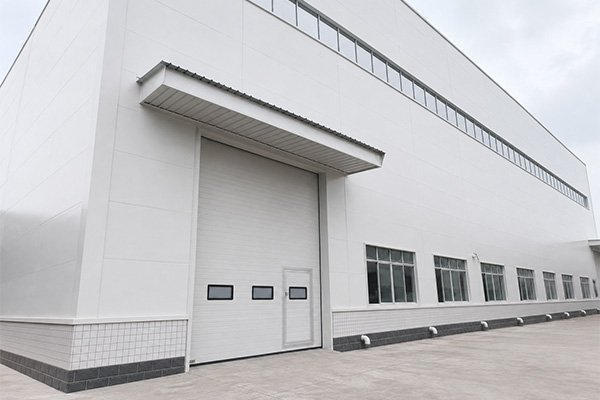
How Does a Sectional Door Work?
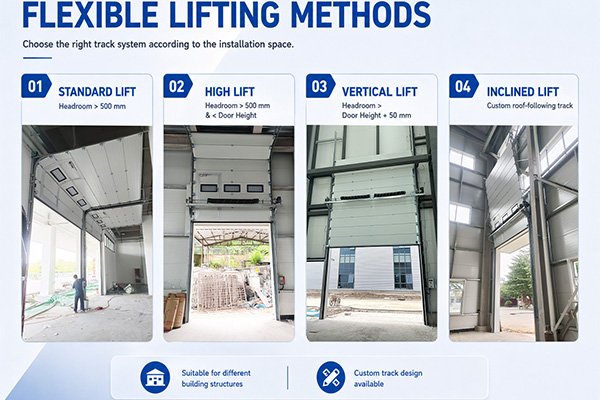
A sectional door is composed of several connected door panels. These panels are joined by hinges and guided by side tracks. When the door opens, the panels move upward section by section instead of swinging outward. Depending on the building structure and available headroom, the door can use different lifting methods, such as standard lift, high lift, vertical lift, or inclined lift.
This vertical opening method is one of the biggest advantages of a sectional door. It does not occupy the space in front of the doorway, so forklifts, trucks, and workers can move more efficiently. For warehouses with limited exterior space or loading docks where vehicles need to stop close to the entrance, this design is especially useful.
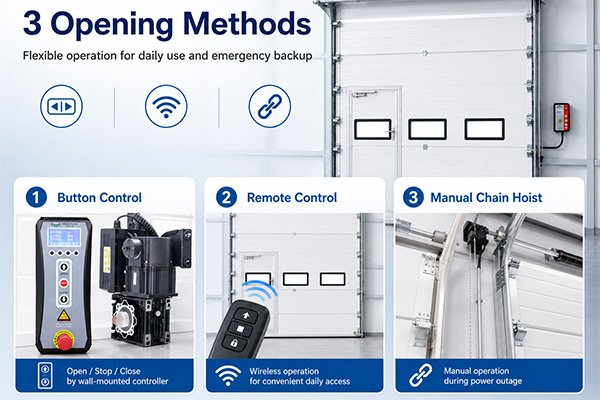
SEPPES sectional doors can be operated by push button, remote control, or integrated control systems. The motor can be installed on the left, right, middle, or rear position according to the site conditions. This flexible installation makes the door easier to adapt to different building layouts.
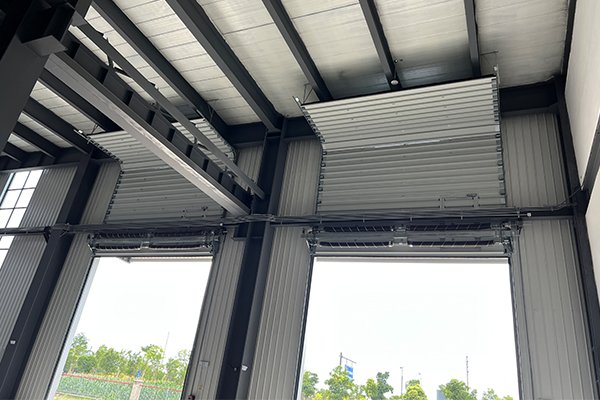
Main Structure of a SEPPES Sectional Door
A high-quality sectional door depends on the strength and coordination of its main components. SEPPES sectional doors are built with insulated panels, reinforced tracks, torsion spring balancing systems, sealing systems, safety devices, and optional window or wicket door configurations.
The standard door panel uses a 40 mm PU sandwich panel. The panel is made with a steel skin and polyurethane foam core, providing a balance of strength, insulation, and appearance. Polyurethane insulation helps reduce heat transfer and supports stable indoor conditions, which is important for warehouses, production areas, and workshops where temperature control matters.
The available door panel thickness can also include 50 mm options for non-hand-clamp panel structures. Depending on project requirements, SEPPES can provide different surface materials, such as 0.5 mm color steel plate, 0.7 mm aluminum alloy, or 0.5 mm stainless steel. These material options allow the sectional door to match different application environments, from standard industrial buildings to more demanding sites that require corrosion resistance or a premium appearance.
Door Panel Design and Color Options
The standard SEPPES sectional door panel can be supplied in white, which is clean, professional, and widely used in industrial buildings. For projects with specific branding or architectural requirements, the door color can be customized according to RAL color numbers.
Panel appearance is not only about aesthetics. In many industrial parks and commercial facilities, doors are part of the building facade. A customized sectional door can help maintain a consistent visual identity while still meeting functional requirements. SEPPES also supports different panel textures and surface finishes, such as orange peel texture or smooth plate styles, depending on the selected configuration.
Sealing Performance: EPDM Sealing for Better Protection
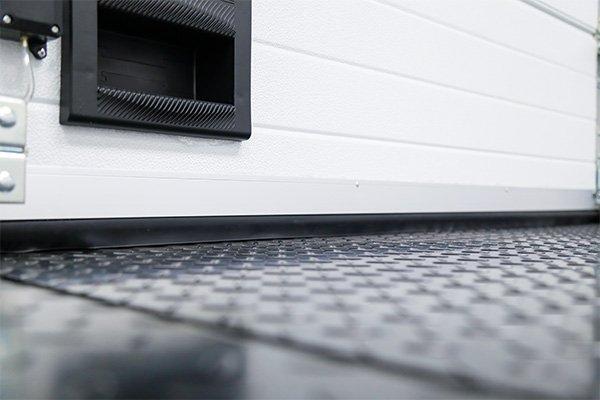
Sealing is a key factor when choosing a sectional door. Poor sealing can lead to air leakage, dust entry, water seepage, noise transmission, and energy loss. SEPPES sectional doors use sealing strips at the bottom, top, and both sides of the door. A three-sided sealing structure helps the door fit tightly against the opening and track system.
The sealing material can be EPDM, a durable rubber material commonly used for industrial sealing applications. EPDM sealing provides good resistance to aging, weather, and temperature changes. For warehouses, food factories, electronics workshops, and production areas, this sealing system helps maintain a cleaner and more stable indoor environment.
The bottom seal also helps compensate for small unevenness on the floor. This is especially important in industrial sites where floors may be exposed to forklifts, trucks, and heavy equipment over long periods of use.
Track, Hardware, and Torsion Spring System
The track system guides the sectional door during opening and closing. SEPPES standard tracks can use 2.0 mm galvanized steel plate, providing strength and corrosion resistance for daily industrial operation. A stable track system helps the door move smoothly and reduces unnecessary vibration or noise.
The torsion spring system balances the weight of the door panels. This makes the door easier to open and reduces the load on the motor. SEPPES can provide 60Si2Mn spring steel as a standard configuration, with 82B spring steel available as an optional configuration. The torsion spring service life is around 30,000 cycles, depending on usage conditions and maintenance.
For a facility that opens and closes the door many times per day, spring quality is extremely important. A reliable torsion spring system improves operational safety, supports smoother movement, and extends the service life of the entire sectional door system.
Lifting Types for Different Building Conditions
Not every building has the same ceiling height, roof structure, or doorway design. That is why lifting type selection is important for sectional door projects.
SEPPES sectional doors can support different lifting methods, including standard lift, high lift, vertical lift, and inclined lift. A standard lift is usually suitable when the lintel height above the door opening is more than 500 mm. High lift is suitable when the lintel height is above 500 mm and less than the full door opening height. Vertical lift is used when the lintel height is greater than the door opening height plus 50 mm. Inclined lift can be used for special roof structures or sloped ceiling conditions.
Choosing the right lifting type helps make full use of the building space. For example, a high-lift sectional door can keep the track closer to the roof and leave more usable space near the opening. In logistics warehouses or industrial workshops with cranes, pipelines, or ventilation systems, this kind of design flexibility is very valuable.
Safety Devices for Industrial Use
Safety is one of the most important considerations for any industrial door. A sectional door is large and heavy, so it must include reliable safety devices to protect people, vehicles, and goods.
SEPPES sectional doors can be equipped with multiple safety systems, including door panel anti-drop protection, spring break protection, track end buffer devices, and safety bottom edge protection. These devices help reduce risks during operation.
The safety bottom edge is especially useful in active industrial environments. If the door touches an obstacle while closing, the system can help prevent damage or injury. Spring break protection is also important because it helps prevent sudden door falling if a torsion spring fails. For warehouses and factories with frequent forklift traffic, these features are not optional luxuries; they are essential for daily operation.
Window Options and Wicket Door Configuration
A sectional door can be customized with windows to improve visibility and natural light. SEPPES offers transparent window options, including single vision windows, double-layer acrylic panel windows, and full-view window sections. These options allow workers to see whether people or vehicles are on the other side of the door before opening it.
Window size and layout can be selected according to the project. A common window option is 800 mm x 1800 mm, and the size can also be customized. For some buildings, a glass vision panel can improve both safety and appearance.
A wicket door, also known as a pedestrian pass door, can also be installed within the sectional door. This allows people to enter and exit without opening the entire door. In facilities where workers frequently pass through the doorway, a wicket door can reduce energy loss, improve convenience, and extend the operating life of the main door system.
Operation and Control Options
SEPPES sectional doors can be opened by button control or remote control. For more advanced projects, the door can also be integrated with access control systems, radar sensors, loop detectors, traffic lights, or warehouse management systems.
The motor system can be selected according to door size, opening frequency, and project requirements. A properly selected motor improves reliability and reduces long-term maintenance problems. For industrial projects, SEPPES focuses on matching the door system with the actual operating conditions rather than simply providing a standard product.
Emergency operation is another practical feature. In case of power failure or system interruption, the door can be manually operated with an emergency chain. This helps ensure that the facility can continue basic movement even when electricity is unavailable.
Where Are Sectional Doors Commonly Used?
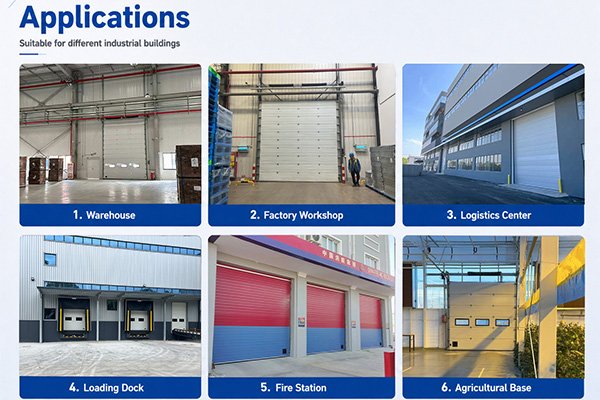
Sectional doors are widely used in industrial and commercial buildings. In logistics centers, they are installed at loading bays and warehouse entrances to support truck movement and goods handling. In factories, they help separate production areas, protect equipment, and improve environmental control. In cold storage or temperature-sensitive warehouses, insulated sectional doors help reduce energy loss.
They are also commonly used in automobile service centers, aircraft hangars, pharmaceutical plants, food processing facilities, electronics workshops, and commercial garages. Because the sectional door opens vertically and offers good sealing, it is suitable for both new construction projects and renovation projects.
From SEPPES project experience, customers often choose sectional doors when they need a door that combines insulation, safety, appearance, and long-term operational stability. For example, a logistics warehouse may prioritize fast access and sealing performance, while a manufacturing workshop may focus more on durability, safety devices, and integration with daily production flow.
Why Choose a SEPPES Sectional Door?
A sectional door may look simple from the outside, but its performance depends on many technical details: panel thickness, spring quality, track strength, sealing design, lifting method, motor configuration, and safety protection. SEPPES provides sectional door solutions based on project conditions, door opening size, building structure, usage frequency, and environmental requirements.
With 40 mm PU insulated panels, EPDM sealing, multiple window options, flexible lifting types, and reliable safety devices, SEPPES sectional doors are built for real industrial use. They are suitable for customers who need more than a basic door; they need a system that can support daily operations, protect the working environment, and reduce maintenance concerns.
Conclusion
A sectional door is a vertical-opening industrial door made of connected insulated panels, designed to save space, improve sealing, and support safe and efficient access. For factories, warehouses, logistics centers, and commercial buildings, it offers a strong combination of practicality, durability, and customization.
When selecting a sectional door, buyers should consider panel structure, insulation performance, sealing material, lifting type, safety devices, window options, and control methods. SEPPES sectional doors are engineered with real industrial requirements in mind, offering 40 mm PU panels, EPDM sealing, strong track systems, torsion spring balance, multiple lifting methods, optional vision windows, wicket doors, and safety protection devices.
For businesses looking for a reliable industrial door solution, a SEPPES sectional door can help improve building efficiency, safety, and long-term operational performance.
