
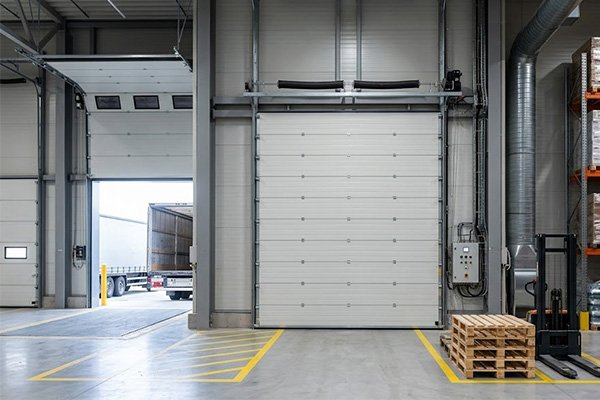

When managing a large-scale warehouse, cold storage unit, or manufacturing plant, the efficiency of your building envelope is paramount. Many facility managers and business owners often find themselves asking, “what are the best insulated front doors” to ensure they are balancing operational speed with rigorous climate control. In the industrial sector, the “front door” is more than just an entryway; it is a critical piece of infrastructure—specifically, the industrial sectional overhead door—that determines your facility’s energy footprint and security.
The Critical Role of Insulation in Industrial Openings
In an era of rising energy costs and strict sustainability mandates, a standard door is no longer sufficient. High-quality insulated front doors serve as a thermal barrier that prevents the “chimney effect” in large buildings. Without proper insulation, heat escapes during the winter, and cool air leaks during the summer, forcing HVAC systems to work overtime and driving up overhead costs.
Choosing the “best” door requires looking beyond the surface. It involves understanding the synergy between material science, engineering precision, and airtight sealing technologies.
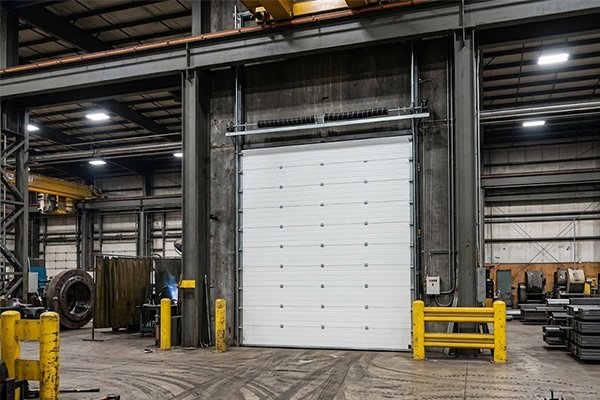
Key Features of Top-Tier Insulated Sectional Doors
To identify the best options for your facility, you must evaluate several technical components that define performance.
1. High-Density Polyurethane (PU) Foam Core
The gold standard for industrial insulation is the sandwich panel construction. The best doors feature panels filled with high-density, CFC-free polyurethane foam.
Thermal Resistance: Look for panels with a thickness of at least 40mm to 50mm.
R-Value and U-Value: A high R-value (thermal resistance) and a low U-value (thermal transmittance) are the primary indicators of a door’s ability to keep heat out or in.
2. The Thermal Break Design
Even a thick door can fail if it lacks a “thermal break.” This is a structural element made of low-conductive material placed between the inner and outer steel skins of the door panel. It prevents “thermal bridging,” where temperature is conducted through the metal frame itself, causing condensation or frost on the inside of the door.
3. Advanced EPDM Sealing Systems
Insulation is useless if air leaks through the gaps. The best insulated doors utilize EPDM (Ethylene Propylene Diene Monomer) rubber seals on all four sides:
Top Seal: Closes the gap between the top panel and the lintel.
Side Seals: Flexible flaps that maintain contact with the tracks.
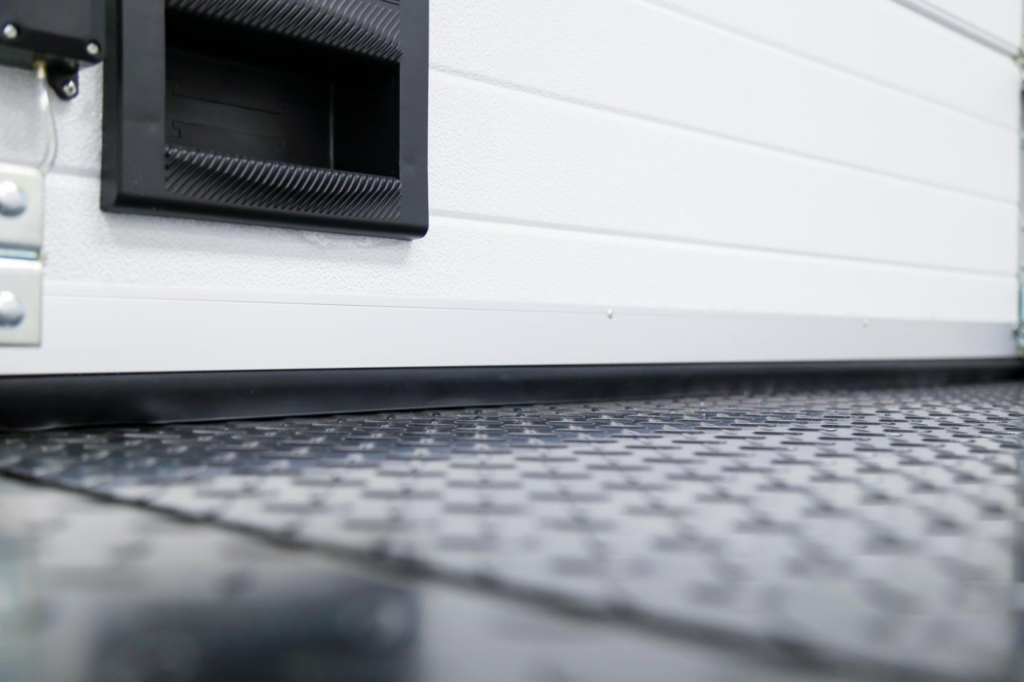
Bottom Seal: A heavy-duty, multi-chambered bulb seal that compensates for uneven flooring.
Comparing Materials: Why Steel-Faced Sectional Doors Win
While there are various materials available, the industrial “front door” of choice is almost always the steel-faced sectional door.
| Feature | Steel Sandwich Panels | Single-Skin Aluminum | PVC High-Speed Doors |
| Insulation Power | Excellent (PU Foam Core) | Poor | Moderate (if double-layered) |
| Durability | High (Impact Resistant) | Medium | Low |
| Security | High | Medium | Low |
| Best Use Case | External Loading Docks | Internal Partitions | High-Traffic Logistics |
For an external “front” application, the steel sandwich panel provides the best ROI by combining structural strength with superior thermal retention.
Beyond Thermal Performance: Security and Durability
The best insulated front doors do not compromise on security. Because these doors represent the primary entry point for goods, they must be robust.
Wind Resistance: In coastal or high-wind areas, doors should be rated for Class 3 or Class 4 wind loads. This prevents the panels from buckling under pressure, which would break the thermal seal.
Hardware Quality: The tracks, rollers, and torsion springs must be galvanized or made of stainless steel to prevent corrosion, which can cause the door to hang unevenly and leak air.
Safety Mechanisms: Look for integrated cable-break and spring-break protection to ensure the heavy insulated panels never pose a risk to personnel.
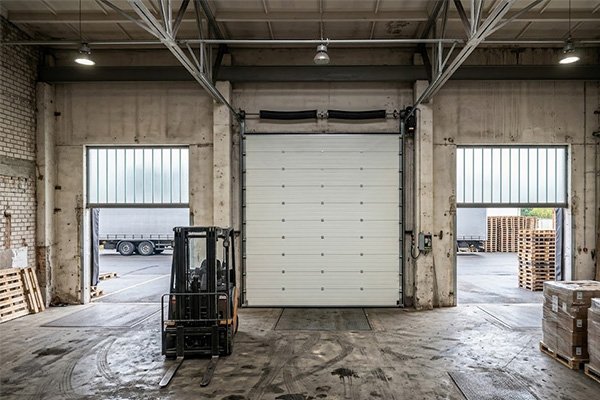
How to Choose the Best Door for Your Specific Needs
To determine which insulated door is right for you, consider the following logical framework:
Analyze the Climate Delta: What is the average temperature difference between the inside and outside of your facility? The larger the delta, the thicker the insulation required.
Assess Traffic Frequency: If the door opens every five minutes, you may need a high-speed insulated door or a docking system that minimizes the “open time.”
Calculate Total Cost of Ownership (TCO): A cheaper, non-insulated door may save money upfront but will cost thousands more in energy bills over a 10-year lifespan.
Conclusion: Investing in Efficiency
When searching for what are the best insulated front doors, it is clear that the answer lies in high-performance industrial sectional doors. By prioritizing high-density PU foam, integrated thermal breaks, and superior EPDM sealing, you protect your inventory, your equipment, and your bottom line.
At SEPPES, we specialize in engineering industrial door systems that meet these rigorous standards. Our sectional doors are designed for the most demanding environments, ensuring that your facility remains energy-efficient, secure, and operationally seamless.
Ready to upgrade your facility? Contact our technical team today for a customized consultation on the best insulated solutions for your industrial openings.
