
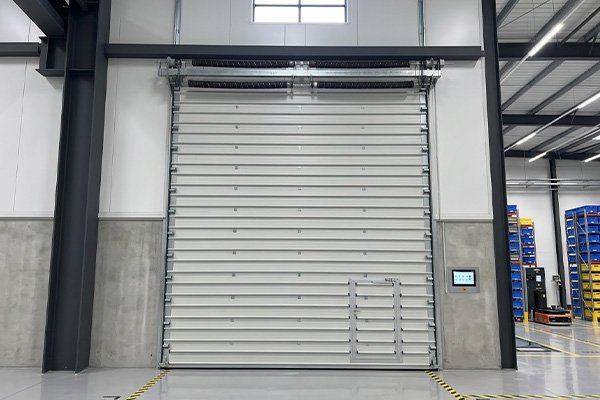

When designing or upgrading an industrial facility, selecting the appropriate Sectional Overhead Door Lift Types is a foundational decision that impacts both workflow and storage capacity. Sectional doors are not a “one-size-fits-all” solution; the track configuration must be precisely matched to the building’s internal headroom and the presence of overhead obstructions like cranes, HVAC ducts, or lighting systems.
By understanding the mechanics of Standard Lift, High Lift, and Vertical Lift systems, facility managers can ensure they are utilizing every square inch of their vertical space while maintaining long-term hardware reliability.
1. Standard Lift: The Universal Solution
The Standard Lift is the most common configuration found in commercial garages and warehouses with limited headroom. In this setup, the door travels vertically for a very short distance before turning into a horizontal track that runs parallel to the ceiling.
Best For: Buildings with standard ceiling heights (usually less than 2 feet of headroom above the door opening).
Mechanism: Uses a radius curve in the track to transition the door panels from vertical to horizontal.
Pros: Cost-effective, requires minimal headroom, and is easy to maintain.
2. High Lift: Maximizing Vertical Clearance
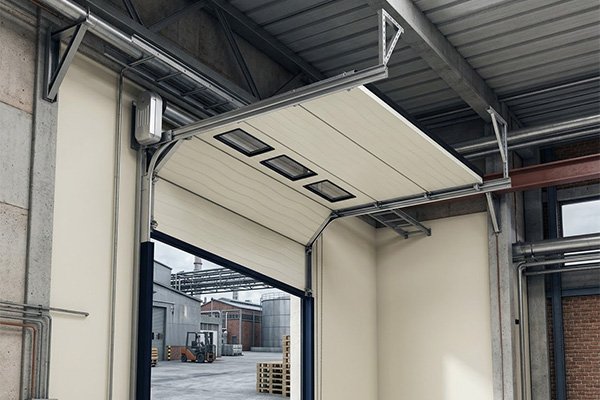
The High Lift configuration is an evolution of the standard lift designed for facilities with high ceilings. Instead of turning immediately, the door travels further up the wall vertically before curving into the horizontal position. This “breaks” the door higher up, leaving the space above the door opening clear for taller equipment or pallet racking.
Best For: Warehouses where forklifts need high clearance or where overhead utilities are positioned high on the wall.
Mechanism: Features an extended vertical track and a specialized high-lift drum to manage the cable tension as the door transitions.
Pros: Clears out “dead air” space, allowing for better light distribution and more efficient use of vertical storage.
3. Vertical Lift: The Space Optimizer
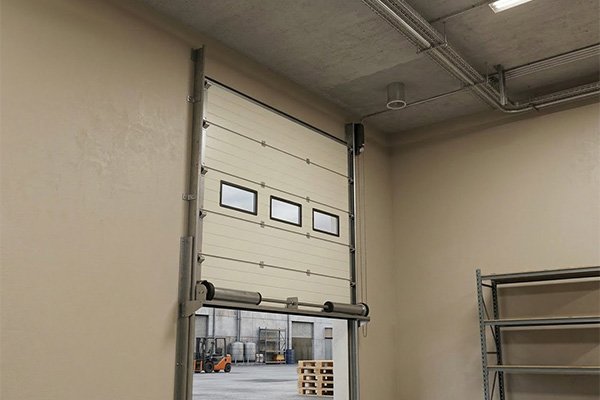
In a Vertical Lift setup, the door does not turn at all. It slides straight up the wall, resting flat against the wall surface above the door opening. This is often considered the “gold standard” for heavy-duty industrial applications where ceiling space must remain entirely unobstructed.
Best For: Very high buildings or “big box” distribution centers where the ceiling height is at least twice the height of the door.
Mechanism: Uses a straight vertical track and tapered vertical-lift drums. Since there is no horizontal track, there is no risk of hitting the door with high-reaching machinery.
Pros: Maximum safety and durability; eliminates horizontal tracks that could interfere with overhead cranes or lighting.
Key Factors for Choosing Your Lift Type
Selecting between these Sectional Overhead Door Lift Types requires a careful audit of your facility’s dimensions. Consider the following:
| Feature | Standard Lift | High Lift | Vertical Lift |
| Headroom Required | Low (approx. 400mm+) | Medium (Variable) | High (Door height + 500mm+) |
| Track Design | Curve to horizontal | Vertical extension + curve | Straight vertical |
| Primary Benefit | Low cost / Low ceiling | Better clearance | Maximum space utilization |
| Maintenance | Low | Moderate | Low (Few moving parts) |
Professional Recommendation
For most modern logistics centers, the High Lift offers the best balance of cost and space optimization. However, if your architecture allows for a Vertical Lift, it is the superior choice for reducing the risk of accidental impact and maximizing your “cubic footage” for storage.
Conclusion
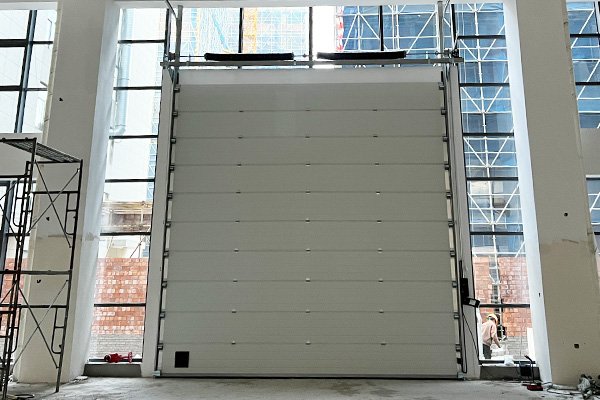
Understanding these Sectional Overhead Door Lift Types is the first step toward a more efficient loading dock. By matching your door’s movement to your building’s unique architecture, you reduce wear and tear on the hardware and create a safer environment for your team.
