
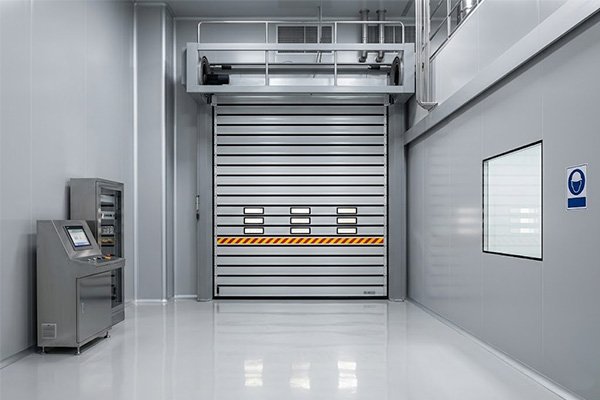

In the fast-paced world of logistics and manufacturing, downtime is the enemy of productivity. Aluminum alloy hard high-speed doors are essential for maintaining climate control, security, and workflow efficiency. However, what happens when the power goes out? Understanding the Manual Emergency Release for Hard High-Speed Doors is critical for facility managers to ensure safety and operational continuity. This manual override system allows for the swift opening of heavy-duty spiral doors even when the electrical grid fails, preventing bottlenecks and ensuring emergency egress.
Why the Manual Override is Essential
Hard high-speed doors are engineered with high-strength aluminum slats and powerful motors. While their automated performance is seamless, a power failure can turn an asset into a barrier. The manual emergency release serves three primary purposes:
Safety and Egress: In the event of a fire or emergency during a blackout, personnel must be able to exit the building quickly.
Workflow Continuity: Critical shipments cannot wait for the power to return. Manual operation allows for the continued movement of goods.
Security: If a door is stuck in the open position during a failure, the manual device allows staff to close and lock the facility securely.
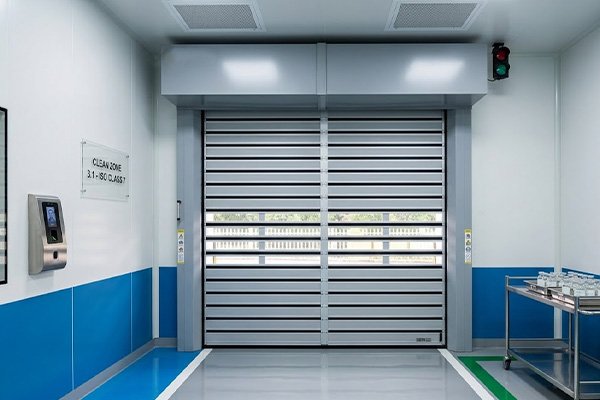
Types of Manual Opening Mechanisms
Depending on the specific model of your aluminum spiral door, the manual emergency release system generally falls into one of three categories:
1. The Manual Hand Crank
This is the most common device found on hard high-speed doors. It involves a removable handle that connects directly to the motor’s worm gear or output shaft. By rotating the crank, the user can manually drive the door leaf up or down. While it requires some physical effort, the gear ratio is designed to make lifting the heavy aluminum slats manageable for a single person.
2. Manual Chain Hoist
For exceptionally tall or heavy industrial doors, a chain hoist is often installed. Similar to a standard rolling shutter, this system uses a continuous loop chain. Pulling the chain engages the drive sprocket, allowing the door to be raised steadily.
3. Brake Release with Counterweight Assistance
Many high-end aluminum high-speed doors feature a “brake release” lever. When pulled, this lever disengages the motor’s electromagnetic brake. Because these doors are often equipped with tension springs or counterweights, the door will automatically glide open (or be very easy to push up) once the brake is released.
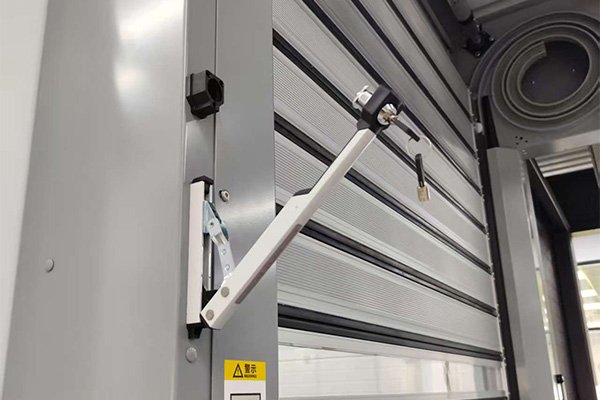
Step-by-Step: How to Operate the Manual Release
When the power fails, follow these steps to use the manual emergency release for hard high-speed doors safely:
Step 1: Cut the Power. Ensure the main power switch is turned off to prevent the door from suddenly moving if the electricity is restored while you are cranking it.
Step 2: Locate the Release Device. Find the red handle (brake release) or the crank insertion point located near the motor assembly at the top of the door frame.
Step 3: Engage the System. Insert the crank or pull the release cord. If using a brake release, be prepared for the door to move upward due to spring tension.
Step 4: Secure the Door. Once the door is at the desired height, ensure it is stable before allowing vehicles or personnel to pass through.
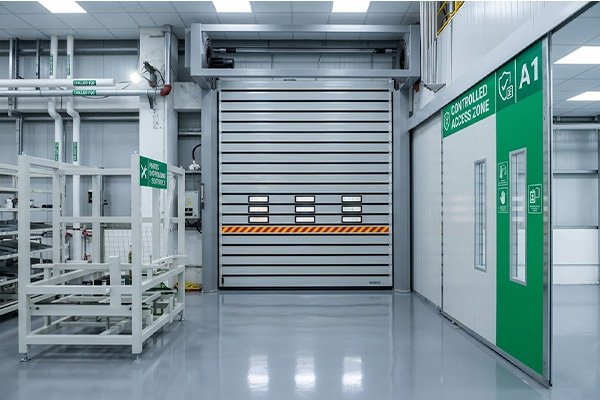
Maintenance Tips for Emergency Systems
A manual release is only useful if it works when you need it. Regular maintenance is vital:
Lubrication: Keep the manual gear ports and chain hoists lubricated to prevent rust and seizing.
Quarterly Drills: Have your maintenance team perform a “dry run” every three months to ensure the release lever isn’t stuck and that the crank handle is easily accessible.
Spring Tension Check: Since many manual systems rely on counterbalance springs, ensure these springs are professionally balanced. If the springs are too loose, the manual crank will be nearly impossible to turn.
Conclusion
The Manual Emergency Release for Hard High-Speed Doors is a vital safety feature that bridges the gap between high-tech automation and physical reliability. By choosing a door with a robust manual override and keeping it well-maintained, you protect your facility against the unpredictability of power outages.
Does your current facility maintenance plan include a scheduled check of your high-speed door’s emergency systems?
