
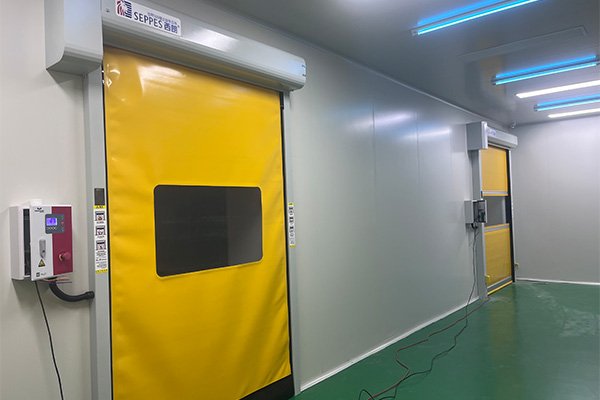

In the fast-paced world of industrial logistics and manufacturing, selecting the right entrance solution is critical for maintaining operational efficiency, temperature control, and safety. When evaluating high-speed door options, the debate often centers on Insulated Rapid Doors vs. Zipper Rapid Doors. Both serve the primary purpose of facilitating quick traffic flow, but their structural designs and functional priorities differ significantly. Understanding these nuances is essential for facility managers looking to optimize their energy consumption and workflow.
Understanding Insulated Rapid Doors
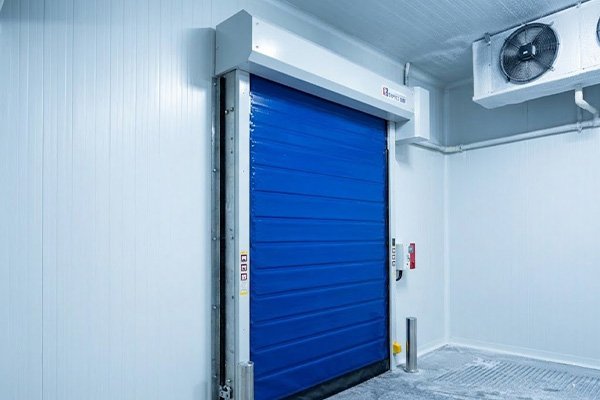
Insulated Rapid Doors are specifically engineered for environments where thermal regulation is the highest priority. These doors typically feature a multi-layer curtain—often a “sandwich” construction—consisting of durable PVC or aluminum skins filled with insulating foam or specialized thermal blankets.
Key Features:
Thermal Resistance: Their primary strength is preventing heat transfer. By using materials with low thermal conductivity, they maintain a consistent internal temperature.
Robust Construction: Because of the insulation layers, these curtains are thicker and heavier than standard rapid doors.
Energy Efficiency: They are the gold standard for cold storage, helping to reduce the workload on refrigeration systems and lowering electricity costs.
Understanding Zipper Rapid Doors
Zipper Rapid Doors, also known as self-repairing high-speed doors, are defined by their unique edge-locking mechanism. Instead of traditional rigid wind bars, the side of the curtain is fitted with a flexible “zipper” or “teeth” system that runs within a dedicated track.
Key Features:
Self-Repairing Function: If a vehicle impacts the door, the “zipper” simply pops out of the track. Upon the next cycle, the door automatically resets itself into the guide rails, eliminating downtime and repair costs.
Superior Airtightness: The continuous zipper seal provides an exceptionally tight closure, making them ideal for cleanrooms or dust-sensitive areas.
High Frequency: Their lightweight design allows for extremely high opening and closing speeds, often exceeding 1.5m/s.
Detailed Comparison: Insulated vs. Zipper Doors
To determine which door fits your specific application, we must look at how they perform across several critical metrics.
1. Thermal Insulation and Energy Savings
This is where Insulated Rapid Doors shine. In a cold chain warehouse, the temperature difference between the interior and exterior can be 30°C or more. An insulated door uses materials with a high R-value to block conduction.
While Zipper Doors provide a great seal to prevent air leakage (convection), they usually lack the thick internal insulation needed to stop heat conduction through the curtain material itself.
2. Impact Resistance and Maintenance
Zipper Rapid Doors are the undisputed winners in high-traffic areas prone to accidental collisions. In a busy logistics center where forklifts move constantly, a rigid insulated door might suffer permanent damage to its panels or tracks upon impact. A zipper door, however, “gives” under pressure and heals itself, drastically reducing the Total Cost of Ownership (TCO).
3. Sealing and Environmental Control
For pharmaceutical or electronic manufacturing, maintaining a pressurized environment is vital. The zipper track provides a nearly seamless seal from top to bottom. While insulated doors have brushes or rubber seals, they rarely achieve the same level of airtightness as the specialized zipper track.

4. Wind Resistance
Insulated doors often utilize horizontal wind ribs to withstand external pressure. Zipper doors rely on the tension of the curtain and the strength of the side tracks. For high-pressure external openings, a heavy-duty insulated door might offer more structural stability, whereas zipper doors are often preferred for internal partitions.
Comparison Summary Table
| Feature | Insulated Rapid Doors | Zipper Rapid Doors |
| Primary Benefit | Thermal Retention | Self-Repairing & Airtightness |
| Curtain Type | Multi-layer Insulated Foam | Single-layer PVC with Zipper Edge |
| Repairability | High (Requires parts/labor) | Excellent (Automatic reset) |
| Speed | 0.8 – 1.2 m/s | 1.0 – 1.5 m/s |
| Best For | Cold Storage, Freezers | Logistics, Cleanrooms, Food Prep |
| Airtightness | Moderate | High |
Which Should You Choose?
The choice between Insulated Rapid Doors vs. Zipper Rapid Doors ultimately depends on your facility’s “Pain Point.”
Choose Insulated Rapid Doors if: Your primary goal is to stop the ice from melting or to keep a climate-controlled zone stable. If the temperature differential is the biggest threat to your product quality, the R-value of an insulated door is non-negotiable.
Choose Zipper Rapid Doors if: Your facility experiences high forklift traffic and frequent “fender benders.” If you need to maintain a dust-free environment (Cleanroom) or if operational uptime is your metric for success, the self-repairing zipper design is the superior investment.
Conclusion
Both Insulated Rapid Doors and Zipper Rapid Doors are essential tools in modern industrial architecture. By analyzing your traffic patterns, temperature requirements, and budget for maintenance, you can select the door that not only protects your goods but also enhances your bottom line through energy savings and reduced downtime.
Are you looking to install these doors for an internal partition, or will they be used as an external entrance facing high wind loads?
