
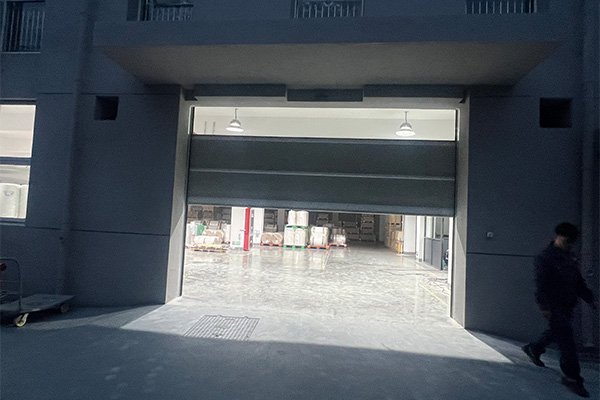

In the specialized field of plastic packaging and color printing, maintaining a controlled environment is not just a preference—it is a requirement for quality assurance. Implementing high speed doors for printing industry applications has become a standard solution for facilities looking to balance high-traffic accessibility with strict environmental sealing. We recently completed an installation for a major plastic printing manufacturer, replacing traditional slow-moving doors with advanced rapid-acting systems to optimize their production passage.
Why the Printing Industry Demands Rapid Door Solutions
Printing and packaging workshops face unique challenges that make standard industrial doors insufficient:
Dust & Contaminant Control: Even microscopic dust particles can ruin a high-quality print run. The brush-sealed tracks of high-speed doors provide a superior perimeter seal to keep pollutants out.
Temperature & Humidity Stability: Printing inks and plastic substrates are sensitive to fluctuations in the air. Rapid opening and closing speeds (up to 1.2m/s ) minimize air exchange, preserving the internal climate.
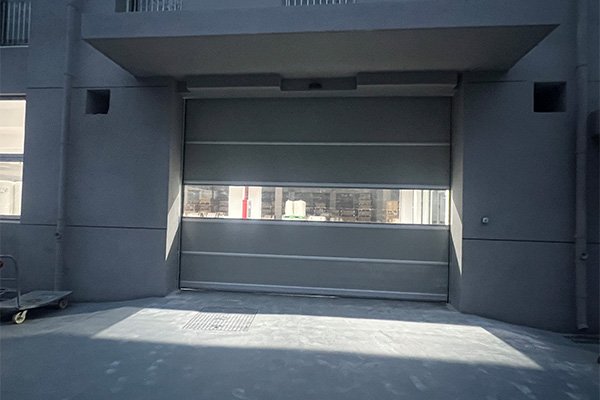
High-Frequency Logistics: In this project, the door was installed in a main external passage. With constant forklift and personnel movement, a slow door becomes a bottleneck; a high-speed door ensures a seamless flow of finished goods.
Project Overview: Technical Specifications
For this specific project, the goal was to secure an external workshop passage while ensuring hands-free operation for efficiency.
| Feature | Specification |
| Product Type | Brush-Sealed High Speed Door |
| Dimensions | 4490mm×3330mm |
| Activation Type | Double-sided Radar Induction |
| Key Benefit | Automatic sensing for seamless forklift entry/exit |
Performance in Action
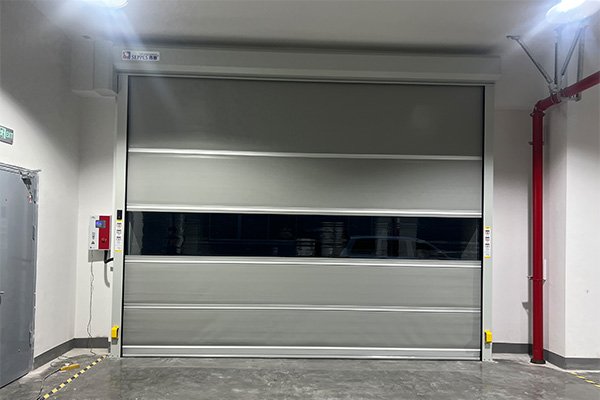
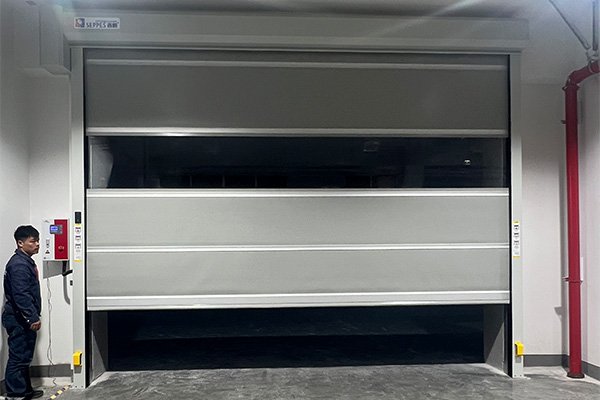
The installation features a grey reinforced PVC curtain with a large vision window, allowing workers to see oncoming traffic from the other side—a critical safety feature for busy external passages.
The double-sided radar induction system allows the door to open automatically as a vehicle approaches and close immediately after it passes. This “hands-free” logic significantly reduces the time the workshop is exposed to the outside environment, directly contributing to energy savings and pest control.
Conclusion
This project highlights why high speed doors for printing industry facilities are a critical investment. By upgrading to a SEPPES rapid door system, the manufacturer successfully improved their logistics speed while fortified their cleanroom standards. For any printing or packaging facility handling sensitive materials, these doors are the first line of defense in maintaining product integrity.
