
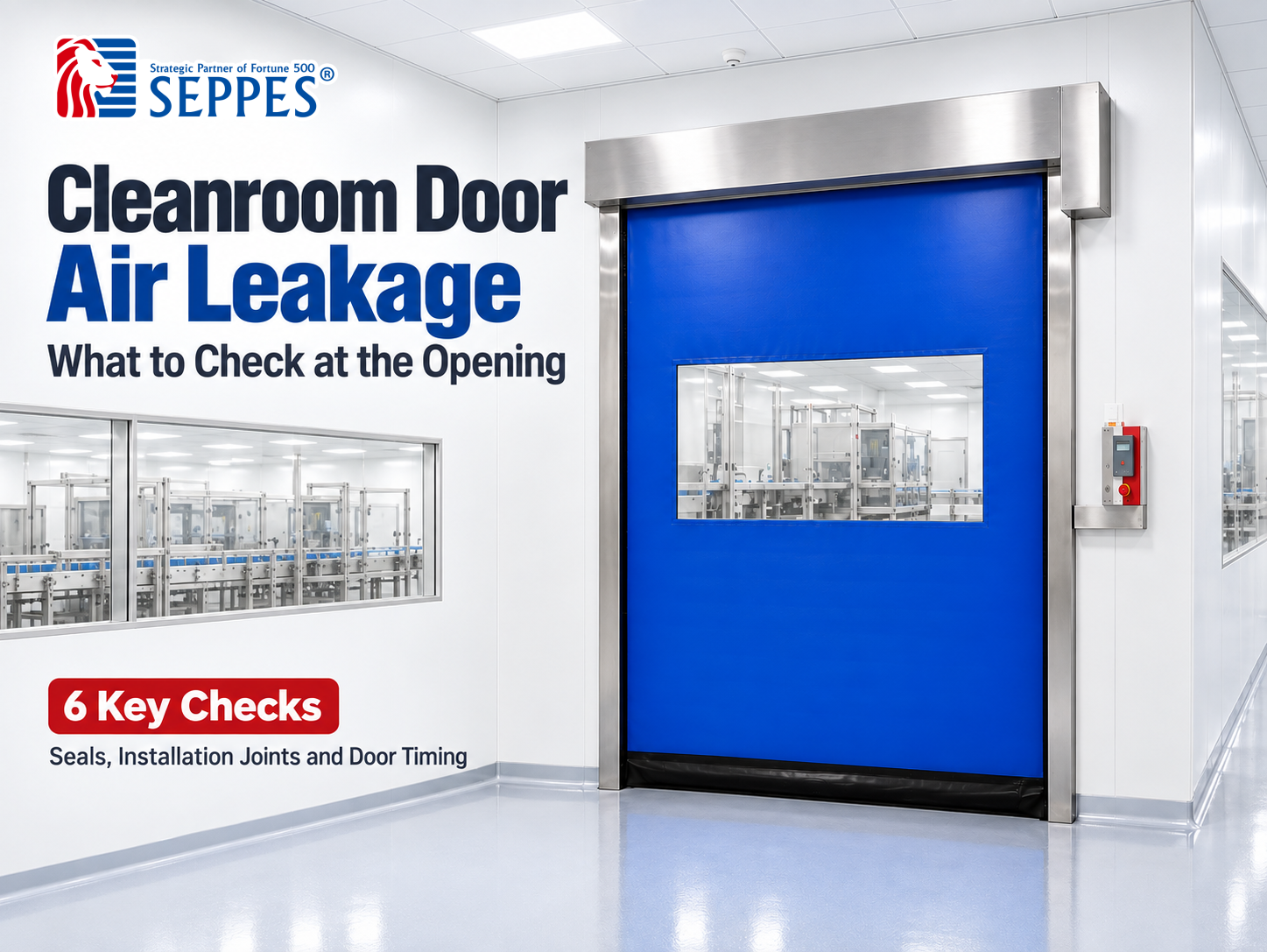

Cleanroom door air leakage is worth investigating when pressure becomes difficult to maintain or air movement is suspected around a closed doorway. Start by separating leakage through the closed assembly from air exchange during normal passage. Then inspect the seals, installation joints and operating cycle in that order. For pharmaceutical, electronics and laboratory facilities, this approach helps turn a general concern into a clear request for repair, adjustment or a more suitable SEPPES door configuration.
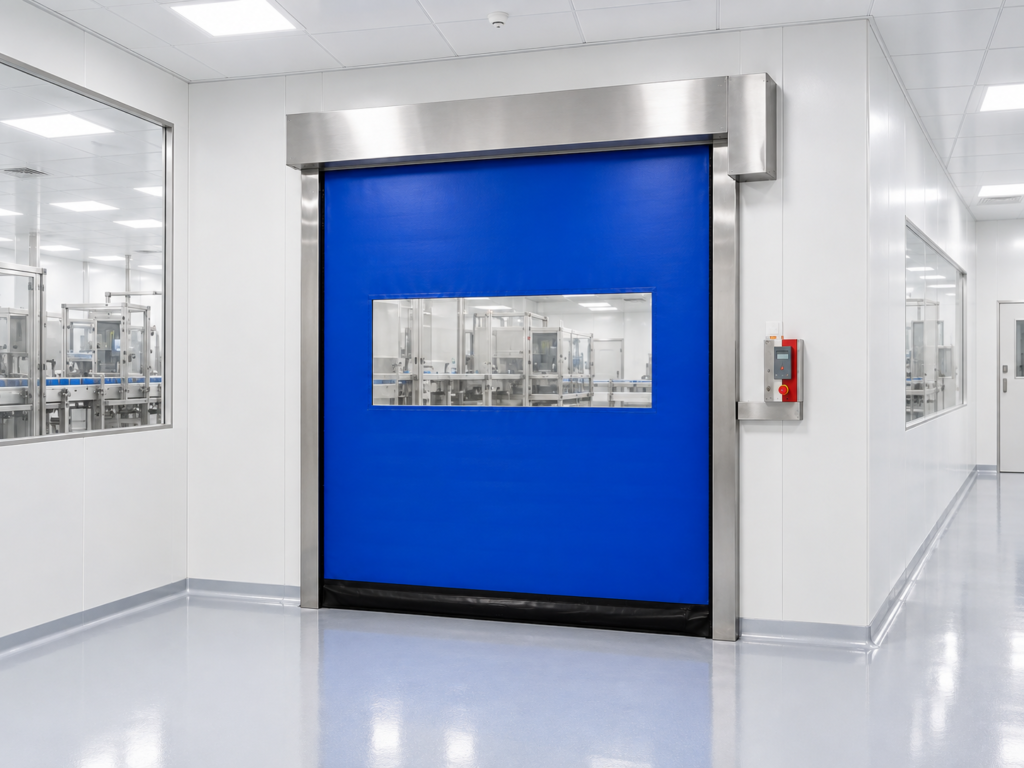
1. Understand When Cleanroom Door Air Leakage Occurs
Start by comparing the cleanroom pressure differential before, during and after door movement. In a room designed for positive pressure, leakage generally sends conditioned air outward; if the pressure relationship reverses, air may enter from the adjacent zone. A change during passage is different from a persistent problem with the door closed.
FDA guidance for aseptic processing distinguishes between open-door and closed-door conditions and recommends controlling how long doors remain ajar. Use your facility’s design and qualification records to establish the appropriate pressure and recovery criteria.
2. Inspect the Side Guides and Bottom Seal
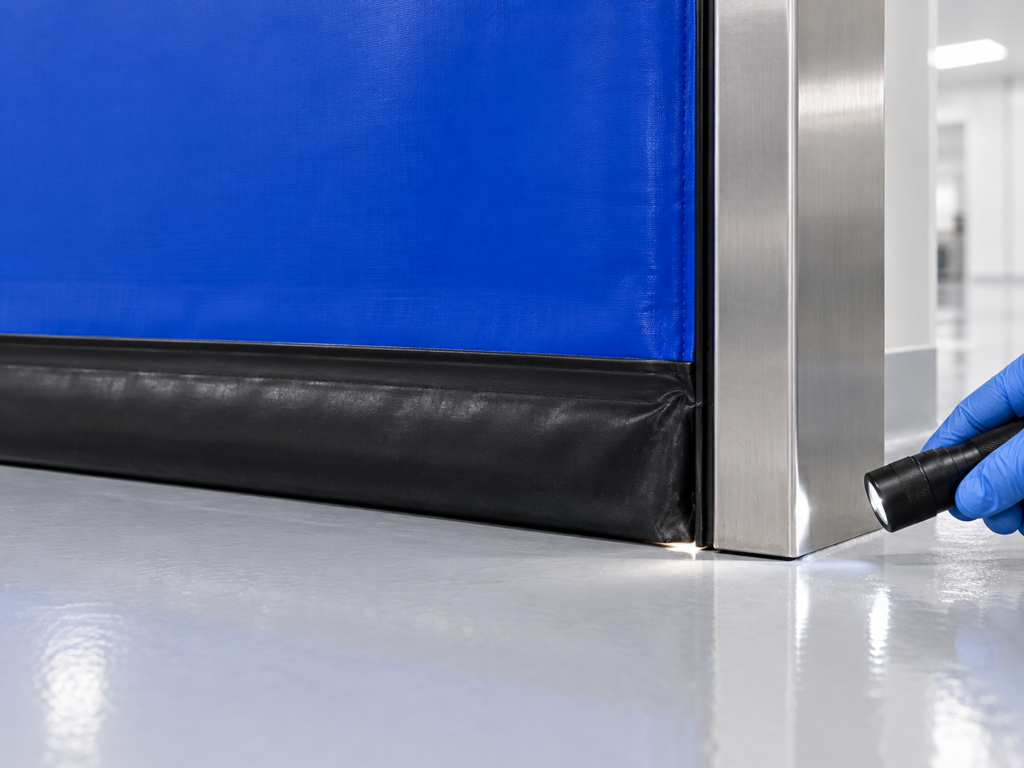
Inspect cleanroom door sealing with the door stationary and secured against unexpected movement. Look for damaged curtain edges, displaced guide seals, hardened rubber, trapped residue and an uneven contact line along the floor. Pay particular attention to the two lower corners, where the side guides meet the bottom seal.
Check whether the curtain sits correctly in both guides after a previous impact. Photograph the same areas from inside and outside, and note whether the defect is continuous or limited to one spot. A visible gap identifies a place to investigate; it does not measure the leakage rate or prove the cause of a pressure alarm.
3. Follow the Frame-to-Wall Connection
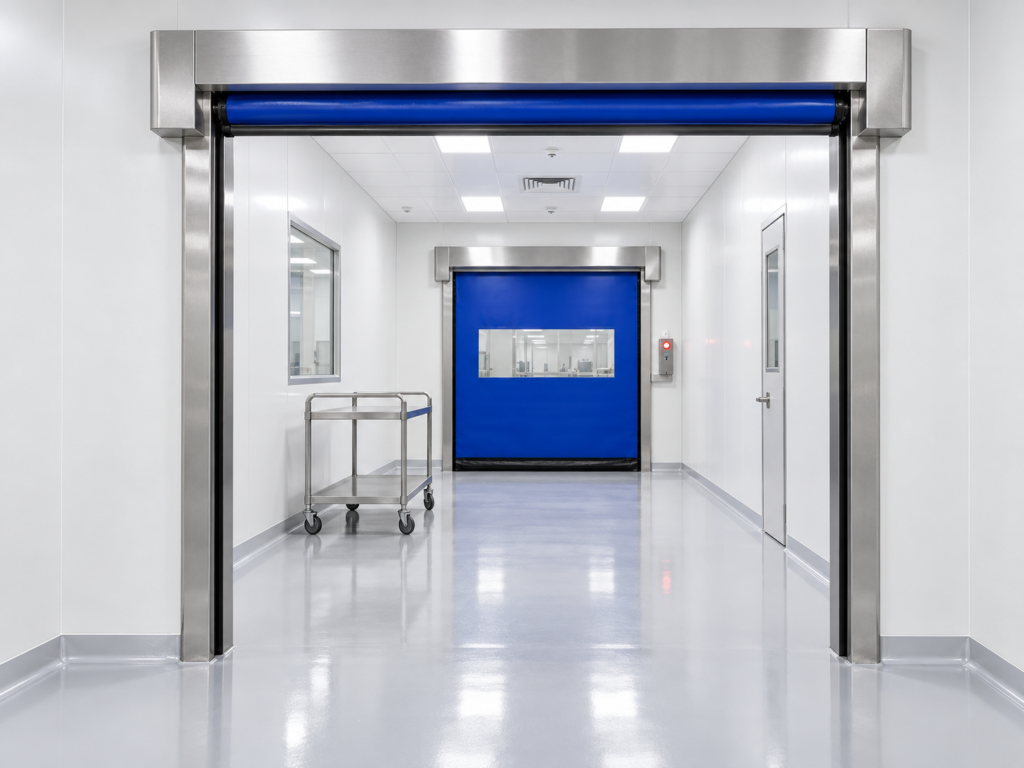
Continue around the installed assembly, including the frame-to-wall joints and the area above the door. Look for cracked joint material, unfinished panel connections, exposed penetrations and changes in the floor level. Record whether these conditions appeared after building work, equipment movement or a door replacement.
A curtain repair will not address a separate opening around the frame. Compare the installation with the approved detail before requesting corrective work, including the specified joint material and its cleaning compatibility. Avoid adding makeshift strips or sealant where they could obstruct the curtain, sensors or access needed for servicing.
4. Watch a Complete Traffic Cycle
Observe the door during normal production traffic. Record when activation occurs, when the person or trolley clears the opening, and when the curtain finishes closing. An excessive door closing delay, repeated sensor activation or a trolley parked within the detection area deserves investigation.
Have a qualified technician review settings against the actual traffic pattern while retaining the required safety functions. Where two doors form an airlock, also check their normal opening sequence and whether loads fit fully between them. FDA guidance identifies airlocks and interlocking doors as measures that support air-balance control in aseptic facilities.
5. Turn Observations into a Targeted Action
Group the findings by what you actually observed. Local seal damage calls for component inspection; an incomplete perimeter joint calls for installation review; repeated reopening calls for a closer look at activation and traffic. If pressure remains outside the site’s criteria after the door closes correctly, involve the ventilation team and review the wider room boundary.
Change one identified condition at a time, then repeat the observation under comparable conditions. This creates a useful before-and-after record without assuming that every pressure fluctuation requires a new door. Where leakage performance must be demonstrated, request a defined test method and acceptance criteria.
6. Plan the Right SEPPES Door Configuration
When specifying a controlled environment high speed door, discuss the opening as a complete assembly. SEPPES offers zipper-guided door designs that connect the curtain with its side tracks to improve sealing. The appropriate configuration still depends on the opening dimensions, pressure conditions, cleaning routine and traffic.
Send SEPPES photographs of the full opening and seal details, a short operating video, the required clear opening and available pressure records. Ask the team to review the curtain guidance, bottom contact, mounting arrangement and activation options for your site. Explore the SEPPES cleanroom door solution to turn those findings into a project-specific configuration and quotation.
