
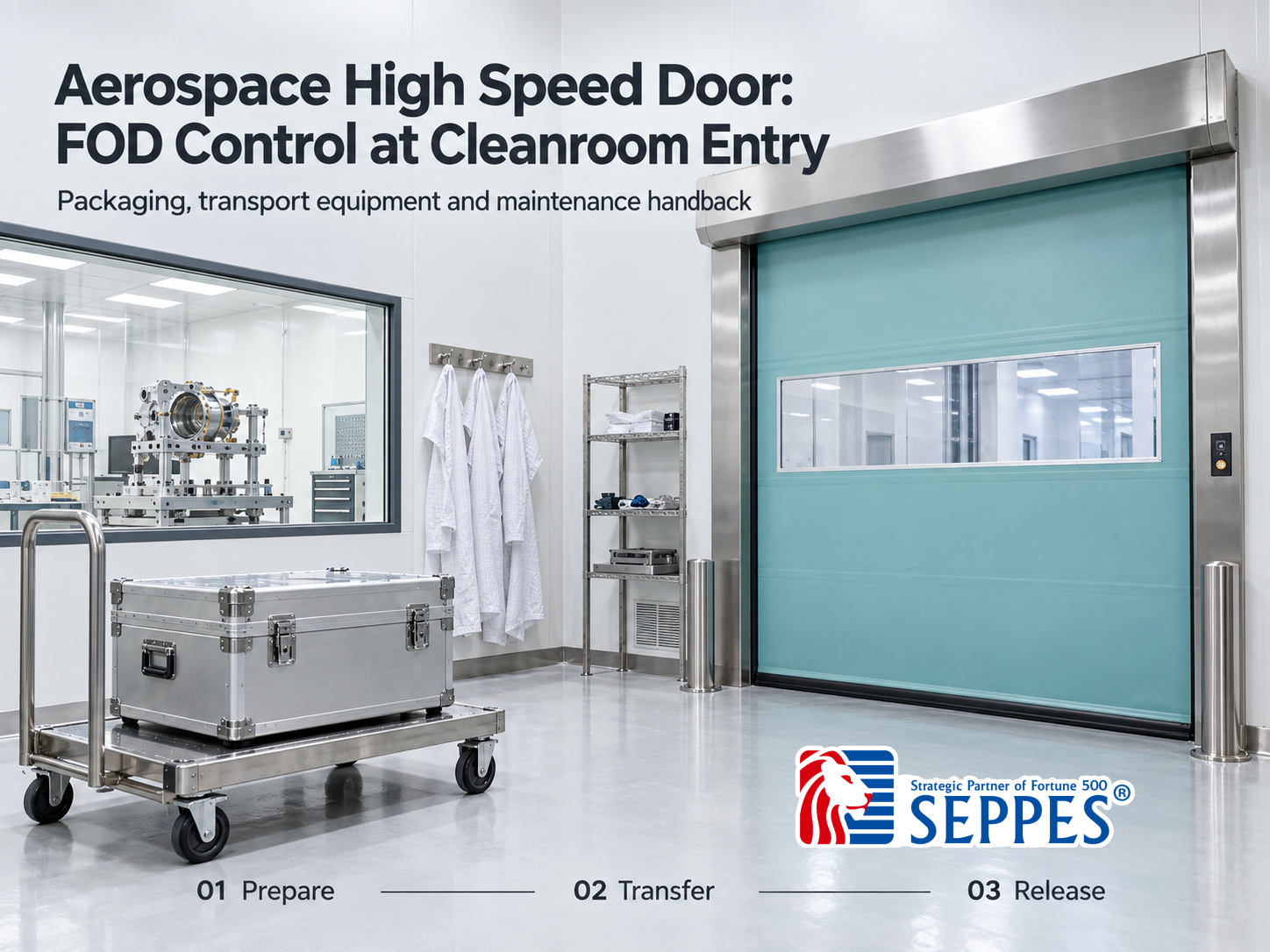

An aerospace high speed door belongs in the material-transfer procedure, not just the building schedule. Imagine a covered component arriving at the cleanroom entrance on a transport cart. The doorway is clear and the door operates correctly, but a loose packaging tab is still attached to the case. Faster passage would not resolve that problem.
This illustrative situation shows why door selection and foreign object debris, or FOD, prevention need to be considered together. NASA’s MSFC standard distinguishes FOD prevention from environmental contamination control: the two are related, but a FOD-sensitive area is not automatically a cleanroom. Each project must define its own applicable controls. Source: MSFC-STD-3598D.
Start With the Package
Decide where external transport packaging is removed and where the protected item is accepted for entry. Keep that preparation activity outside the active doorway. The procedure should identify approved packaging, the condition required before transfer and who can accept the load. NASA’s published contamination-control guidance discusses cleaning and verifying incoming equipment and protecting hardware during transport. Source: GSFC guidance.
Translate that principle into the actual route. Where will a rejected case wait? Where will removed wrapping go? Can an operator complete the check without leaving the door open? These practical details keep unfinished preparation away from the entrance.
Include the Cart in the Review
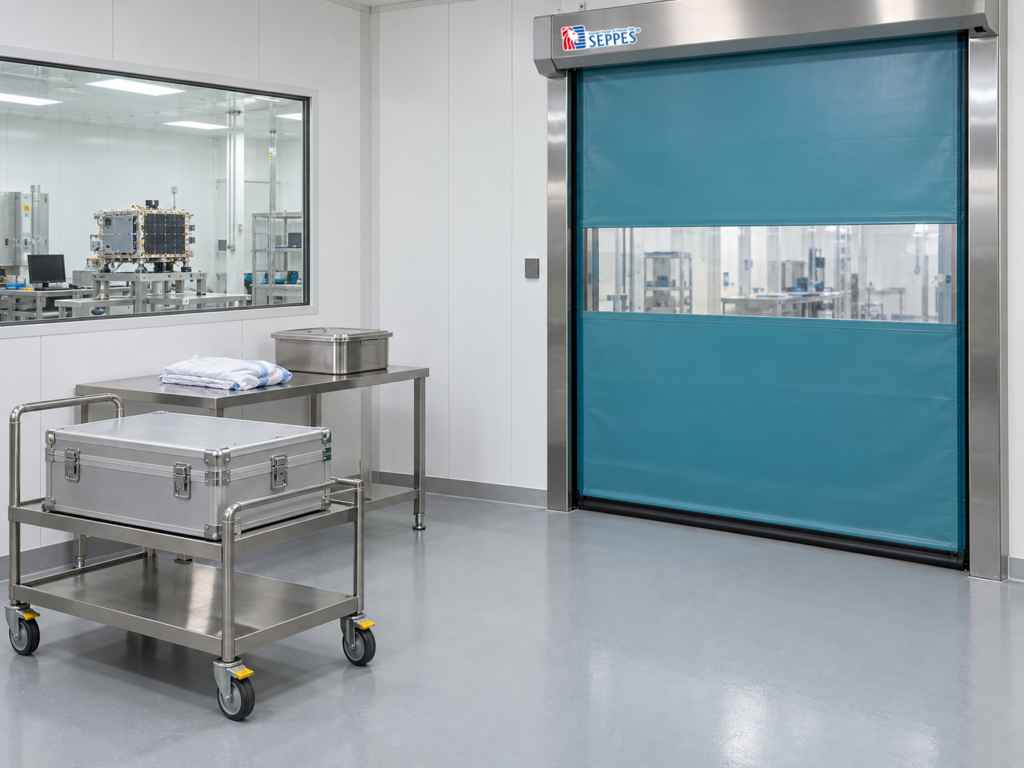
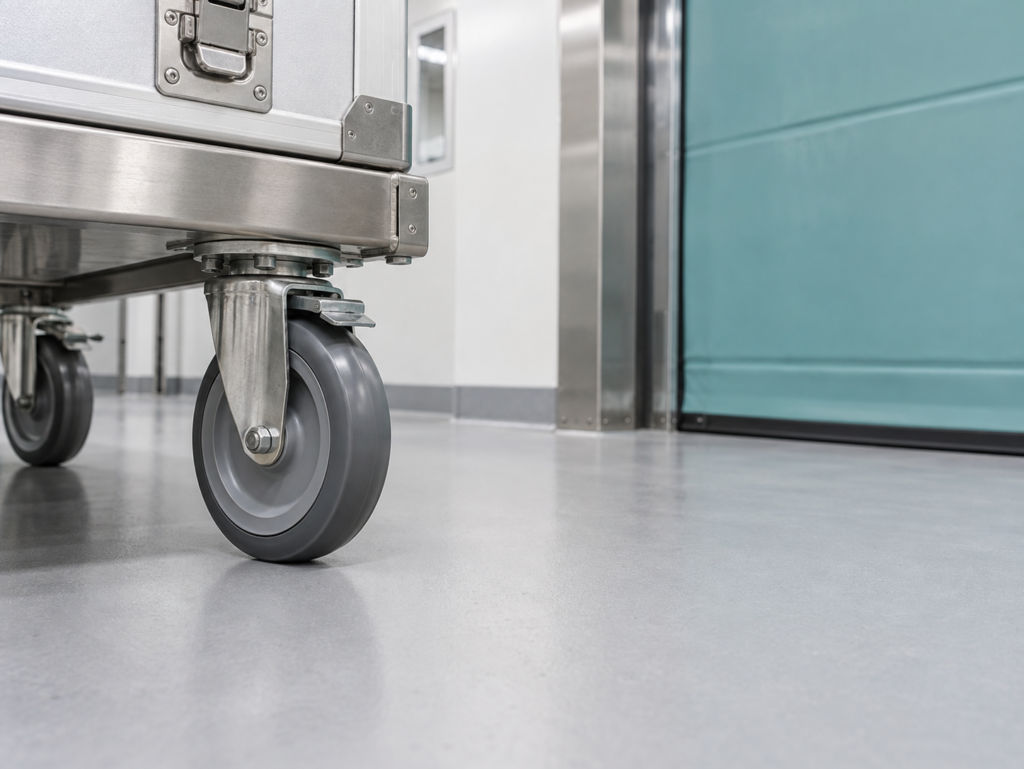
The load is only part of the transfer. Review the cart deck, casters, handles and any removable restraints against the site’s entry procedure. Ask whether one cart crosses the boundary or the load changes to dedicated equipment. That decision changes the space and handling arrangements required on each side.
Use the real cart and its largest approved load when reviewing the doorway. Include covers, handles and protruding fixtures in the clearance check. A nominal opening dimension is not enough if an operator has to tilt the case or lift a protective cover to pass through. Record the agreed transfer arrangement alongside the door specification.
Specify an Aerospace High Speed Door Around the Process
SEPPES provides a useful starting point in its 2026 catalog: the cleanroom-specific design includes zipper-engaged guides, a tensioning arrangement, a flush vision window and interlock logic. Discuss these features in relation to the transfer procedure. For example, the window can support a visual check of the opposite side, while the required opening sequence can be reviewed where two doors serve a transfer space.
When comparing interior high speed fabric doors, ask for the proposed materials and cleaning instructions as well as dimensions and controls. If custom high speed PVC roll up doors are proposed, record the selected curtain and window materials in the approved configuration. Where the aerospace process imposes outgassing, electrostatic or particle-generation requirements, request supporting evidence. Neither the product name nor a smooth-looking curtain demonstrates compliance.
Finish Maintenance Before Releasing the Route
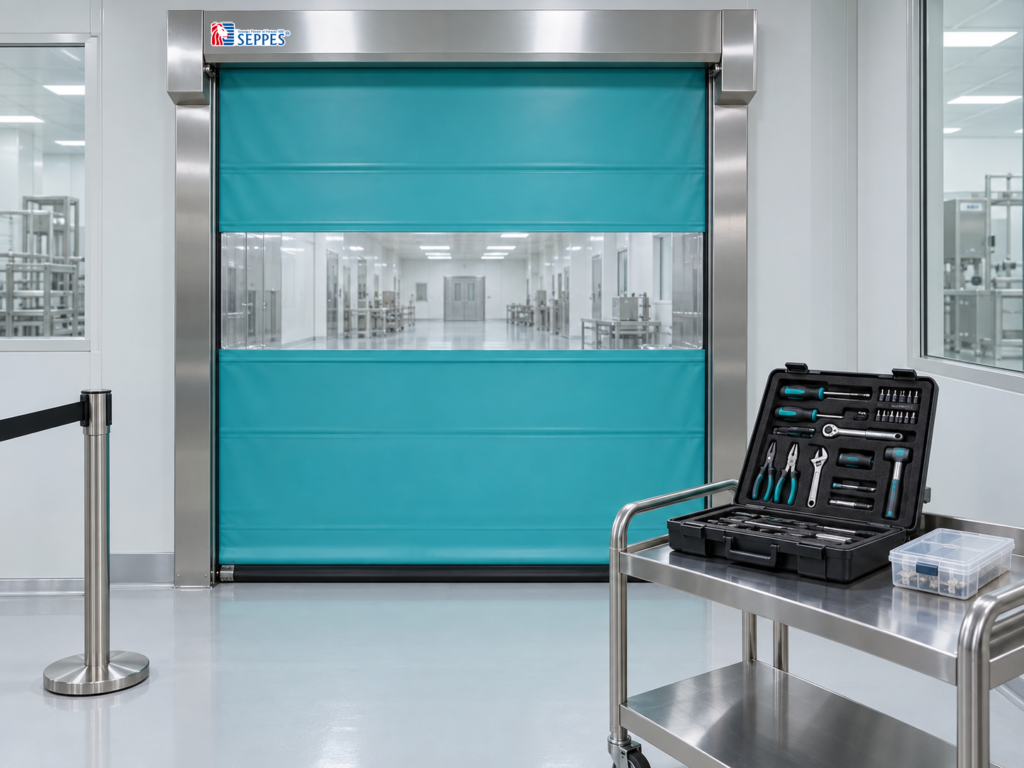
Door servicing introduces tools, replacement parts and packaging into the area. NASA’s historical FOD prevention practice highlights housekeeping and tool accountability. Apply the site’s current approved maintenance and isolation procedures, then make tool reconciliation, debris removal and acceptance of the area part of the handback. Source: NASA FOD prevention practice.
For fabric overhead doors, include accessible curtain edges and guide areas in the agreed inspection scope. Investigate new rubbing marks or unexplained fragments before normal transfers resume. A completed operating cycle confirms movement, but does not by itself confirm that the work area is ready for sensitive hardware.
What Are High Speed Doors Used for in Manufacturing?
They provide access between work areas and physical separation when closed. In aerospace clean assembly, their role is to support the approved movement of people, carts and protected components. They do not clean incoming loads or replace the site’s FOD program.
Send SEPPES your transfer sequence, loaded-cart dimensions, cleaning requirements and acceptance criteria. Use these inputs to develop the doorway configuration and maintenance handback plan together. Start with the SEPPES cleanroom door solution and request a proposal matched to the process your team has approved.
