
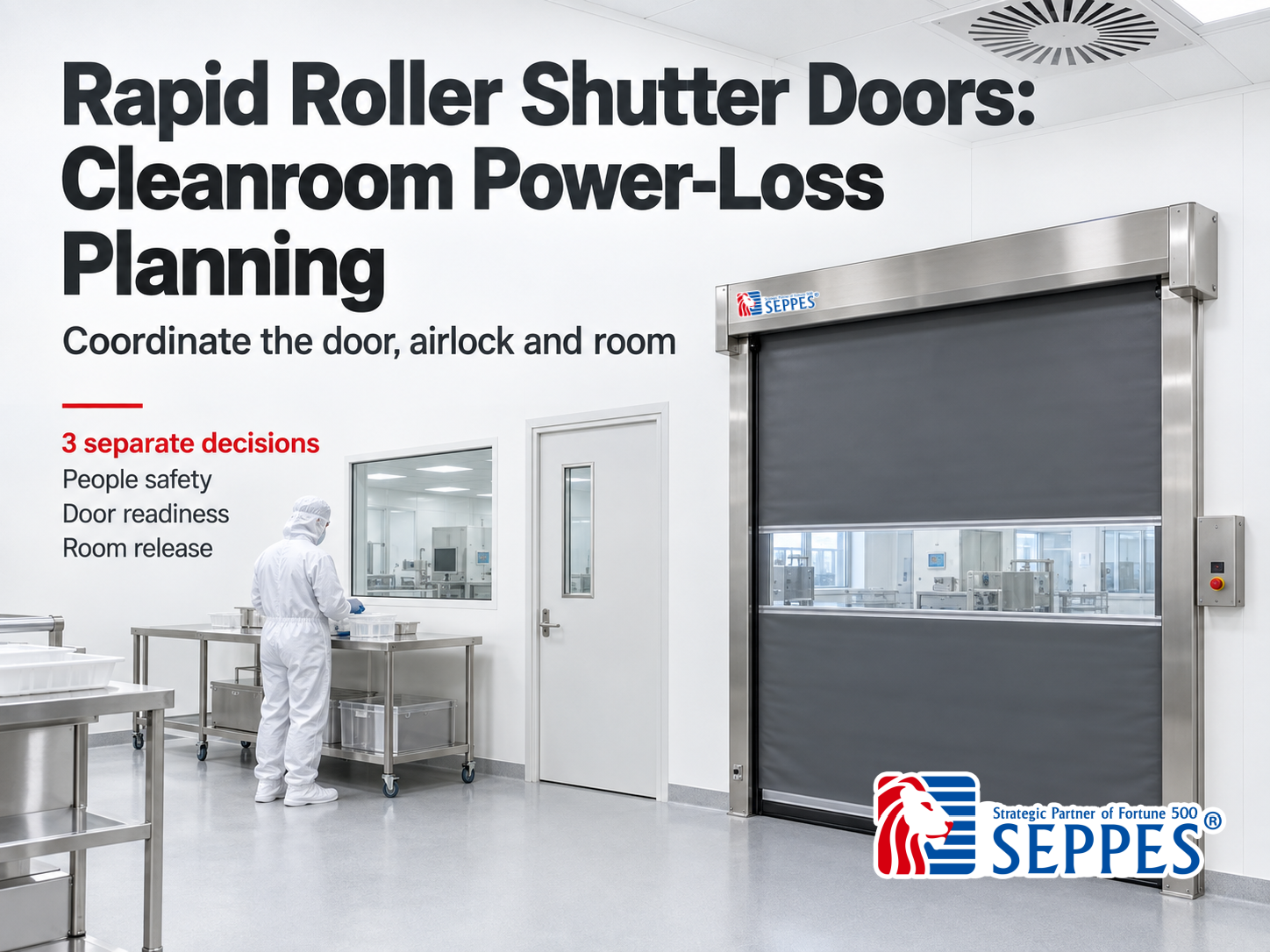

Rapid roller shutter doors need a defined power-loss response in a cleanroom, because restoring door movement does not necessarily restore permission to use the room. The curtain, its controls, the neighbouring door and the ventilation system may not recover together. A useful plan explains what each team must confirm before normal material transfer resumes.
Consider an illustrative situation: the lights return, the door display illuminates and a trolley is waiting outside. The adjacent room is still awaiting environmental review. The doorway may look ready, but the route is not yet released. This is a planning example, not a SEPPES customer incident. It shows why restart decisions belong in the project brief, not only in an emergency conversation.
Start With Three Different Decisions
Separate the response into people safety, door-system readiness and room or process release. These decisions may involve different responsible people and different evidence. A technician can assess the door without having authority to release a pharmaceutical area. A room reading within its usual range does not prove that every protective device on the doorway is ready.
Emergency escape must remain a life-safety matter, not a production-permission decision. Identify the approved escape arrangements and do not assume the goods-transfer opening is a compliant exit. For US workplaces, OSHA specifies inside opening without keys, tools or special knowledge for exit-route doors and requires a side-hinged door connecting a room to an exit route. Other locations need their applicable rules reviewed. OSHA exit-route requirements.
Document who directs people, who controls the affected equipment and who authorizes routine production access. Keeping these responsibilities distinct helps prevent an environmental restriction from being mistaken for an instruction to obstruct evacuation.
What Will These Rapid Roller Shutter Doors Do Without Power?
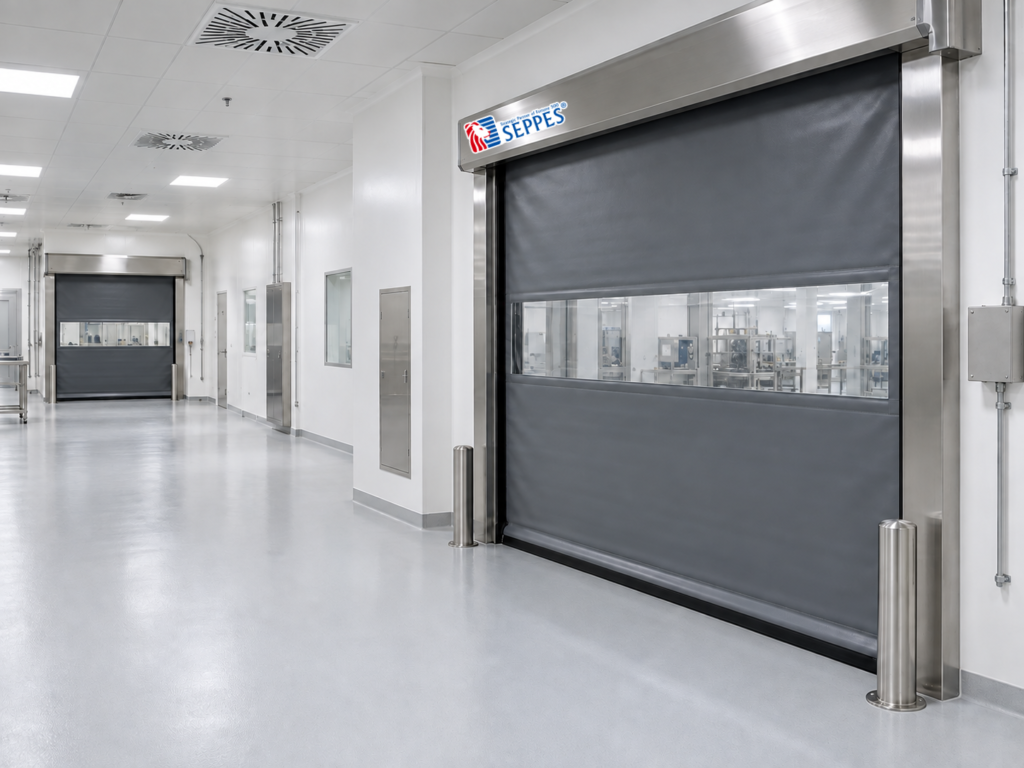
For an electric high speed shutter door, request a model-specific description covering loss of supply during opening, closing and the fully closed condition. Ask what movement, holding or indication is expected in each case and how that behaviour is verified. Neither the curtain material nor normal opening speed answers these questions.
A flexible high speed roll up door must not be assumed to be manually liftable simply because its curtain looks light. Any manual or emergency operation needs instructions for the installed assembly, a clear authorization boundary and appropriate training. This article is not a release, lifting or reset procedure.
The UK HSE emphasizes that powered-door safety depends on the assembled system, its installation and its use, not individual components alone. Apply that system-level review to the proposed outage response. Do not improvise by releasing a drive, opening an electrical cabinet or defeating a protective device. HSE powered-door safety guidance.
Trace Power Across the Entire Airlock
A high speed automatic shutter door may exchange commands with another controller, access system or transport installation. Identify which devices share a supply and which can remain active independently. A powered request device does not establish that the drive, position feedback and required protective functions are available.
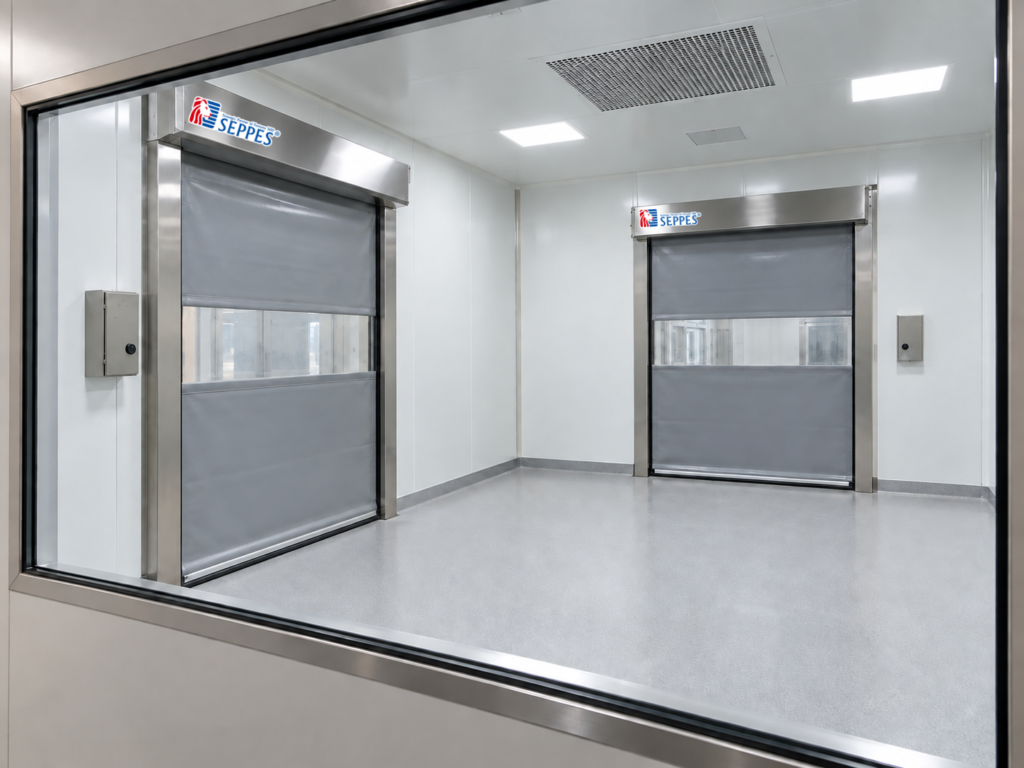
For an interlocked pair, document what the design does when only one controller has power or when communication is unavailable. Specify how an unknown neighbouring-door state is handled; do not let an absent message be casually treated as confirmation that the other opening is closed. The controls team should agree and verify the intended response.
If backup power is proposed, define its purpose. Maintaining control information, completing a specified movement and supporting continued operation are different duties. Ask the responsible designer to confirm the loads, required duration, transfer behaviour, maintenance and test scope. No universal battery runtime follows from a door’s product name, and supplying the door alone does not demonstrate that room ventilation remains available.
Plan a Controlled Return to Service
Treat electrical restoration as an event to assess, not a blanket instruction to resume traffic. Ask the supplier and integrator to document what the controller does when supply returns, including any position-establishing movement, retained opening request or required operator acknowledgement. These are questions to resolve for the configuration, not universal behaviours to assume.
Before releasing normal traffic, the competent team should complete the checks specified in the approved instructions and site procedure. The plan should address the physical opening, protective functions, door-position information and connected-system permissions. Any test movement requires a controlled area; people or loads should never be used as improvised obstruction-test targets.
Keep evidence available for the review. Note the time of the interruption and restoration, the observed curtain position and any displayed message. A blank display is also an observation, not proof that all energy has been removed. Maintenance isolation and stored-energy control require their own approved arrangements. HSE maintenance guidance.
Treat Room Release as a Separate Decision
A mechanically available doorway can still lead to an area awaiting environmental or process review. The facilities and quality teams should determine what the interruption affected and what evidence is needed before the approved route resumes. A working door does not establish that airflow, monitoring or the product-protection arrangements have recovered.
For sterile medicinal-product facilities applying EU GMP Annex 1, section 4.32 includes interruption of air movement affecting the installation among changes to consider for appropriate requalification. Its assessment belongs within the site’s quality system; it is not a rule that every brief door-supply interruption requires the same tests. EU GMP Annex 1.
Return to the opening example. If the door checks are complete but the room has not been released, routine transfer remains pending under the approved procedure. Keep the waiting load in its designated location and communicate the restriction. Do not replace the site’s release criteria with an arbitrary waiting period or a single reassuring indicator.
Rehearse the Gaps Before a Real Interruption
Begin with a tabletop review involving operations, facilities, controls, maintenance and quality where relevant. Walk through the situations below using drawings and approved instructions. They are discussion prompts, not permission to interrupt a live production supply. Any physical test needs an authorized plan, appropriate isolation and coordination with affected activities.
| Scenario | Question the Plan Must Answer |
|---|---|
| Only the door supply is interrupted | Who confirms the door’s condition while neighbouring equipment remains active? |
| The door recovers before ventilation | Who keeps routine transfer pending and authorizes environmental release? |
| One interlock controller remains unavailable | How is the missing state recognized and the approved response communicated? |
| Power returns with an opening request present | How are existing requests handled before routine traffic resumes? |
Record the agreed response, evidence, responsible person and unresolved action for each scenario. A useful rehearsal ends with specific gaps assigned to owners. Revise the plan when the controller, backup-power arrangement, adjoining process or approved route changes.

Give SEPPES a Power-Loss Brief
For a high speed pvc door serving a controlled area, include the opening reference, adjoining rooms, traffic, required outage response and connected systems in the enquiry. Add the proposed power arrangement, local emergency-route requirements and the site’s return-to-service responsibilities. Mark unknown requirements for joint review instead of leaving them implicit.
The SEPPES 2026 catalog describes interlock logic and integration possibilities with ventilation or environmental monitoring on its cleanroom-specific model. Use these as starting points for a configuration discussion, not evidence that every installation has the same outage or restart behaviour. Request the model-specific operating description and an agreed verification scope.
Ask SEPPES and the site integrator to review the interfaces together as part of the cleanroom door solution. The deliverable should explain the door’s response, the conditions for routine passage and who confirms them. That gives the facility a practical basis for coordinated recovery without promising that one door can keep an entire cleanroom operational during a power failure.
