
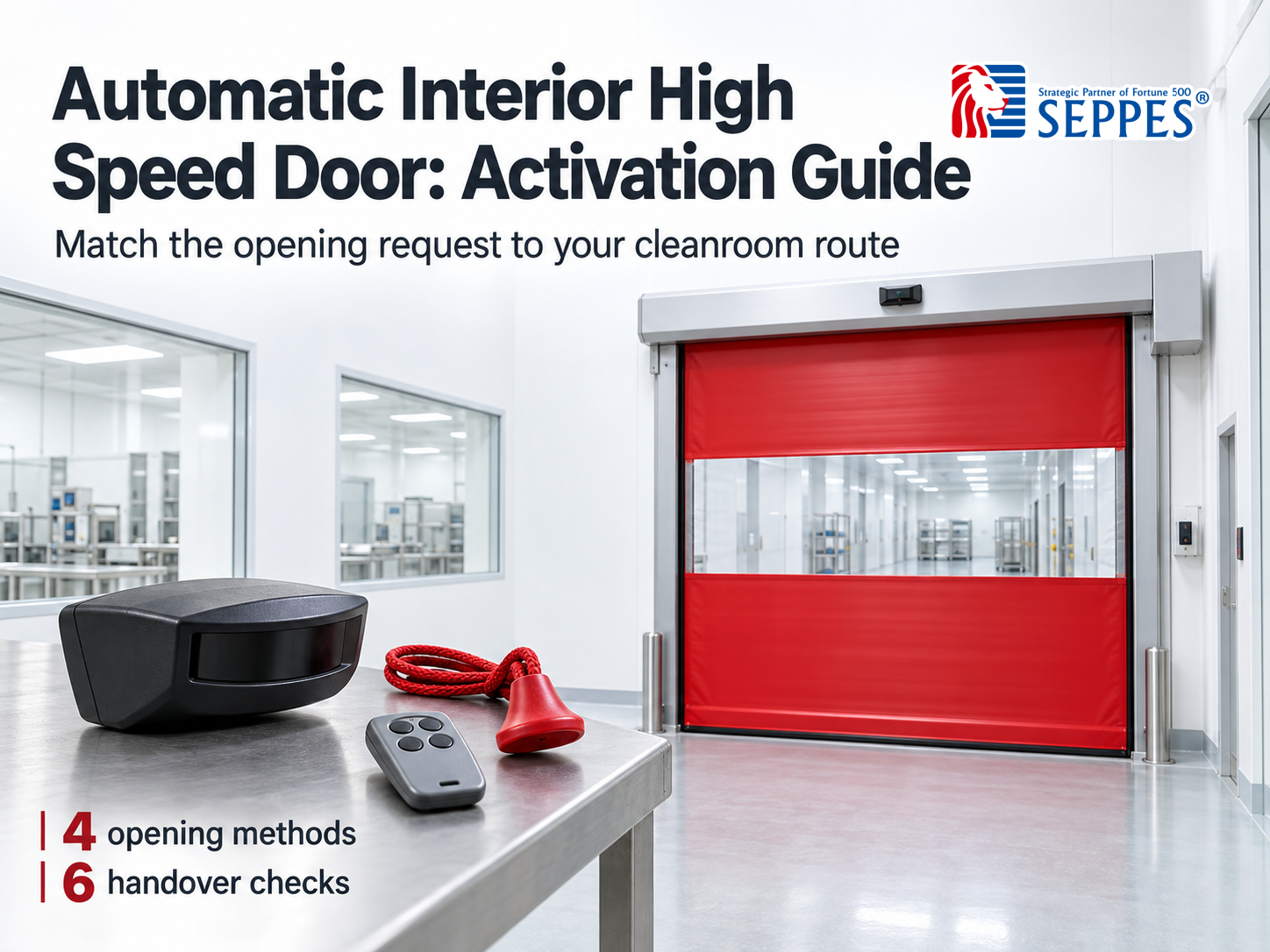

An automatic interior high speed door should open for the movement your cleanroom route is designed to accommodate. That sounds simple until a trolley turns toward the opening, another passes along the corridor and a cleaner works nearby. If all three movements produce the same opening request, the problem may be the activation arrangement rather than the door’s travel speed. Consider a hypothetical material-transfer entrance where staff complain that the curtain opens when nobody intends to cross. Increasing speed will not decide which movements deserve an opening. A useful specification separates the intended request, the permission to proceed and the protective response. This guide compares four request methods, explains what to record when cycles seem unnecessary and sets out six checks to agree before handover.
Start With a Request Map, Not a Sensor List
Mark the intended approaches on the layout: head-on travel, a turn toward the door, reverse travel where permitted, and the return journey with an empty trolley. Then mark nearby movements that should not normally request entry. Include the locations where operators pause to scan a label, check a document or wait for the receiving area. For high speed PVC roller doors at a cleanroom boundary, record the load as well as the vehicle. A different trolley, container height or approach angle can change what a detector sees. Ask whether each direction needs the same request method. An inbound material route and a less frequent outbound service movement need not have identical controls. Keep the opening request separate from authorization. Motion near a doorway does not establish that a person or load is permitted to enter. If access approval or an airlock sequence is required, have the controls team define how that permission interacts with the request. Do not assume that adding a radar sensor supplies those functions.
Compare Four Opening Methods
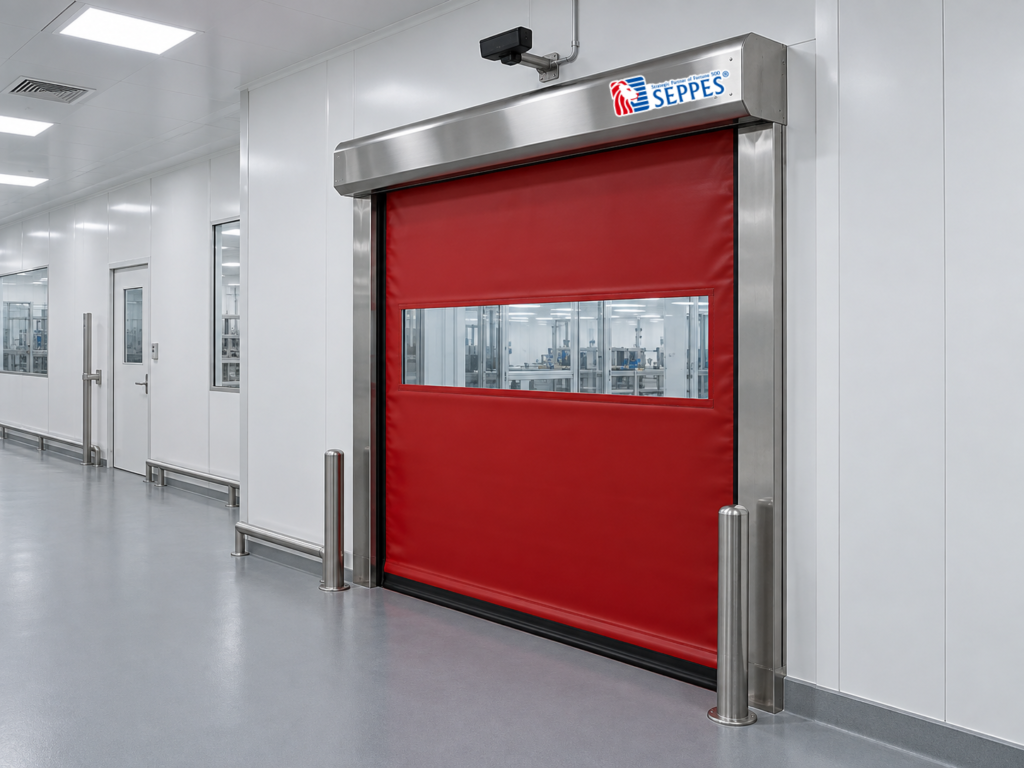
The SEPPES 2026 catalog lists radar activation, magnetic detection, pull-cord switches and remote control among its opening options. These are starting points for a project discussion, not interchangeable upgrades. Confirm the available devices, controller connections and installation requirements for the proposed door.
Radar: Convenient Requests Need a Defined Approach
Radar can suit a route where approaching traffic should request opening without a deliberate hand action. Selection depends on the actual sensor’s detection modes, mounting position and traffic pattern. For example, BEA’s FALCON family offers directional and traffic-filtering options. That is an example of sensor capability, not evidence that every radar has those functions or that SEPPES supplies that model as standard. BEA FALCON specifications. Ask the installer to demonstrate intended approaches and nearby passing movements with the selected device. A filter label alone does not establish reliable behavior for your trolleys and loads.
Induction Loops: Check the Target and the Floor
An induction loop is an option for detecting vehicles or metallic objects at a defined floor location. BEA describes this operating purpose for its MATRIX controller. Do not assume that a predominantly plastic cart, a person or every metal trolley produces the required response; confirm performance with representative equipment. BEA MATRIX overview. Review the floor construction before choosing a loop. In an existing controlled area, installation, sealing and reinstatement need coordination with the facilities and hygiene teams. The detector’s electrical requirements and the finished floor’s cleanability both belong in the proposal.
Pull Cord: A Deliberate Request at a Known Position
A pull cord can make the request intentional rather than dependent on every nearby movement. Its usefulness depends on whether the operator can reach it from the agreed waiting position without entering the travel zone or stretching awkwardly from a vehicle. Review glove use, cleaning, cord condition and the different equipment that will use the route. A suitable position for one vehicle may not work for another. Confirm that the arrangement remains usable when the trolley carries its normal load.
Remote Control: Convenience With Clear Ownership
A remote can provide an intentional request without a fixed contact point beside the opening. For a high speed commercial roll up door serving a controlled production route, agree which door each transmitter operates, where its use is permitted and how devices are assigned, stored and replaced. Confirm coverage during commissioning. Also define the approved alternative when a transmitter is missing or unavailable. Wireless operation is not, by itself, access control or confirmation that the doorway is clear.
Separate Activation From Protection
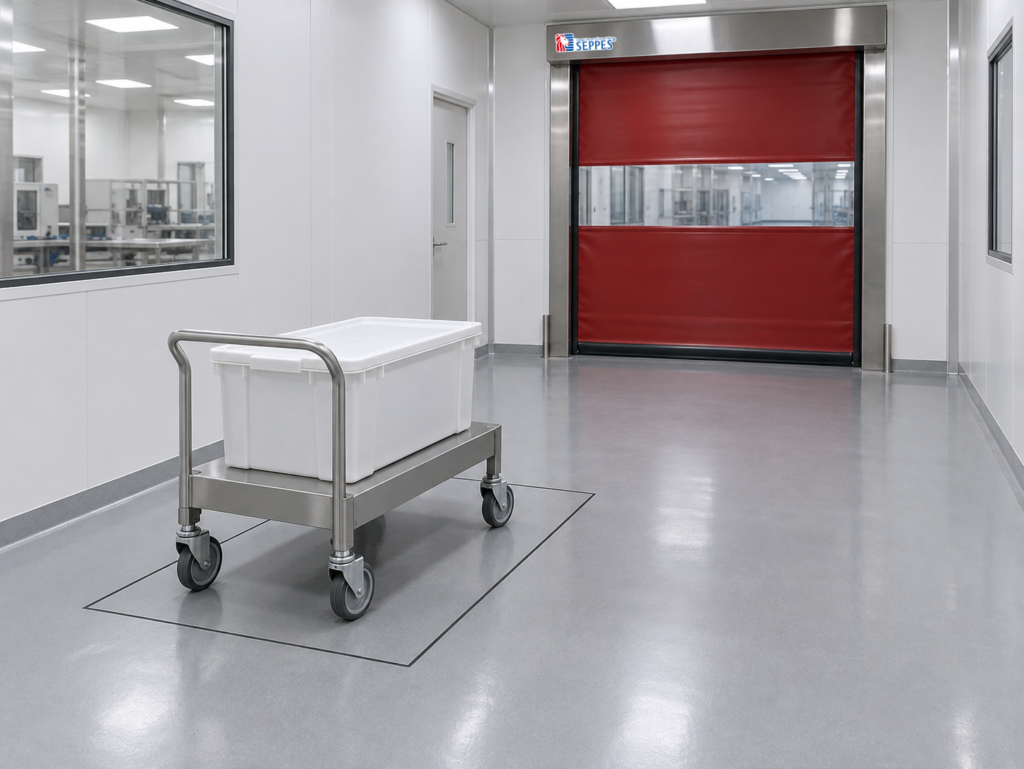
When specifying a high speed automatic PVC door, distinguish a device that requests movement from a function intended to protect people. One sensor may have several outputs, but its protective suitability depends on the actual device, connection and assessed system. Neither a product photograph nor the word automatic answers that question. UK HSE guidance explains that powered-door and gate safety depends on how components work together in their installation, not only on individual parts. Have competent personnel assess the complete arrangement under the applicable local requirements. Do not disable protective inputs, reduce their coverage or shorten closing delays to make an inconvenient route appear faster. HSE powered-door and gate safety guidance.
Investigate Extra Cycles Before Adjusting Timers
A door opening without an intended crossing is not automatically a motor fault. Start with a short observation record: time, movement nearby, request source if available, door response and whether a load actually crossed. Use the controller’s documented indications; do not guess the meaning of an unfamiliar code. Even a heavy-duty high speed door can receive unsuitable requests when its activation arrangement does not match the route. Compare repeated events with the drawing and recent changes. A relocated inspection table, different trolley or new parallel route may be relevant. The following table identifies review areas, not confirmed diagnoses.
| Observed behavior | Review with the responsible installer |
|---|---|
| Door opens for traffic passing along the wall | Activation field, approach direction and device capability |
| A normal trolley does not request opening | Target characteristics, route and selected detection method |
| Door stays open after a load has left | Active inputs, protective detection, approved sequence and downstream conditions |
| The same request sometimes works and sometimes fails | Record conditions and signals before attributing the event to the sensor |
Ask the responsible specialist to approve changes and repeat the affected checks. Record what changed and retain the previous approved settings. A reduction in unnecessary cycles can be assessed from comparable observations, but it does not on its own prove energy savings or a cleanroom performance improvement.
Six Handover Checks for an Automatic Interior High Speed Door
Agree the test plan before commissioning. Use controlled conditions and qualified personnel; never use a person as an obstruction test object. The following checks are an acceptance discussion framework, not a substitute for the supplier’s instructions or the system’s required safety verification.
Intended approaches: Verify the agreed request from each permitted direction using representative vehicles, loads and normal approach paths. Record any condition that was not tested.
Nearby non-crossing movements: Check the agreed behavior for parallel traffic and work beside the route. Investigate an unexpected request without compromising protective functions.
Waiting and passage: Confirm how a request is handled while the receiving area or an agreed permission is unavailable. Verify that an opening request is not mistaken for clearance to travel.
Interrupted operation: Review the documented response to an unavailable request device, power interruption or relevant fault. Qualified personnel should verify the approved recovery procedure.
Cleaning and access: Confirm how housings, cords and reachable controls enter the cleaning and inspection plan, with methods compatible with the supplied components.
Records and responsibility: Retain device identities, approved settings, interface descriptions, test results and outstanding actions. Name who can authorize changes and who receives a recurring-fault report.
Give SEPPES an Activation Brief, Not Just a Door Size
Send SEPPES the opening dimensions, a marked route plan, representative load details and photographs of both approaches. Add the intended request method in each direction, nearby traffic that should not request entry, floor constraints and the site’s cleaning conditions. Identify any access or process permission that another contractor supplies.
Ask the team to confirm the proposed devices and available interfaces for the selected cleanroom door solution, including what is included in the quotation and what requires separate coordination. Compare proposals against the same operating brief rather than the number of accessories listed. The result should be a door arrangement with a clear reason to open, a defined response when it cannot proceed and evidence your site team can review after installation.
