
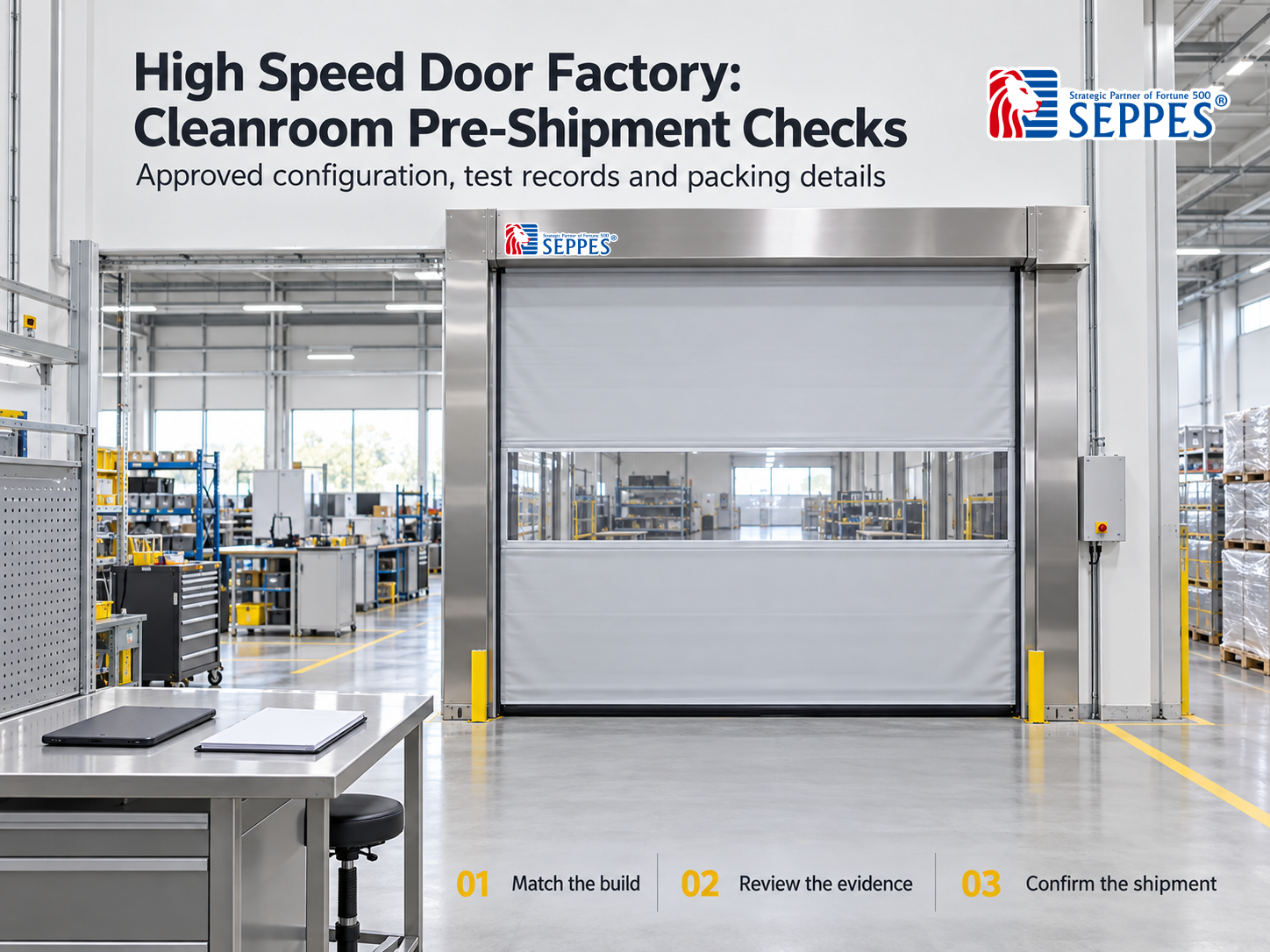

Before a high speed door factory packs your cleanroom order, there should be a clear answer to one question: is this the build your team approved? A photograph of a finished door is useful, but it cannot show every selected component, control function or unresolved item.
By this stage, you have moved beyond browsing high speed doors for sale. The useful reference is the agreed specification and its approved revisions. Even the best high speed doors need clear acceptance criteria. This review is about matching the shipment to the order, with responsibilities recorded before the crate is closed.
Identify the Build Before Reviewing the Evidence
Start with the order reference, door location tag and latest approved drawing. Check the specified opening dimensions, installation orientation, curtain and window arrangement, frame material, supply requirements and selected accessories. Use the same identifiers on photographs and review records so evidence cannot be confused with a similar door from another order.
Treat late changes explicitly. If the project added a different activation device or revised the viewing panel, confirm that the change appears in the approved documents and the proposed shipment. Mark substitutions for review instead of assuming that two components with similar appearances are interchangeable.
Turn Product Features Into Checkable Items
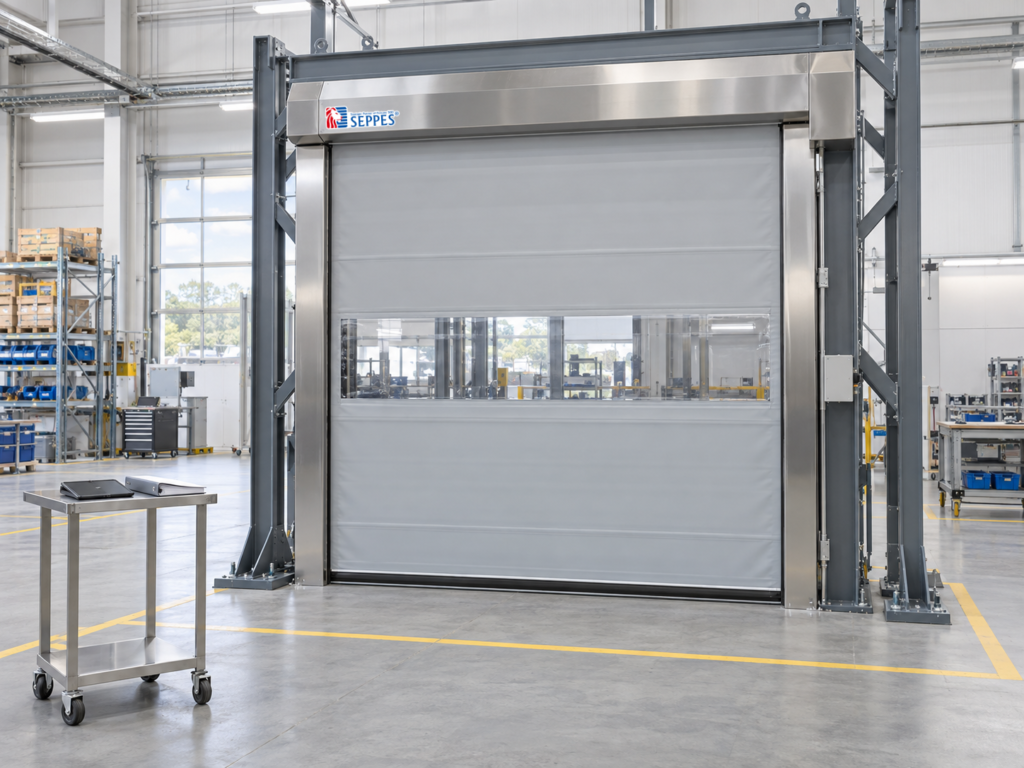
A list of the features of high speed roller shutter doors becomes useful when each ordered feature has an agreed review method. Visible construction may be checked against drawings and photographs. Control functions need an appropriate documented demonstration. Material declarations and performance reports require a check that their scope matches the supplied configuration.
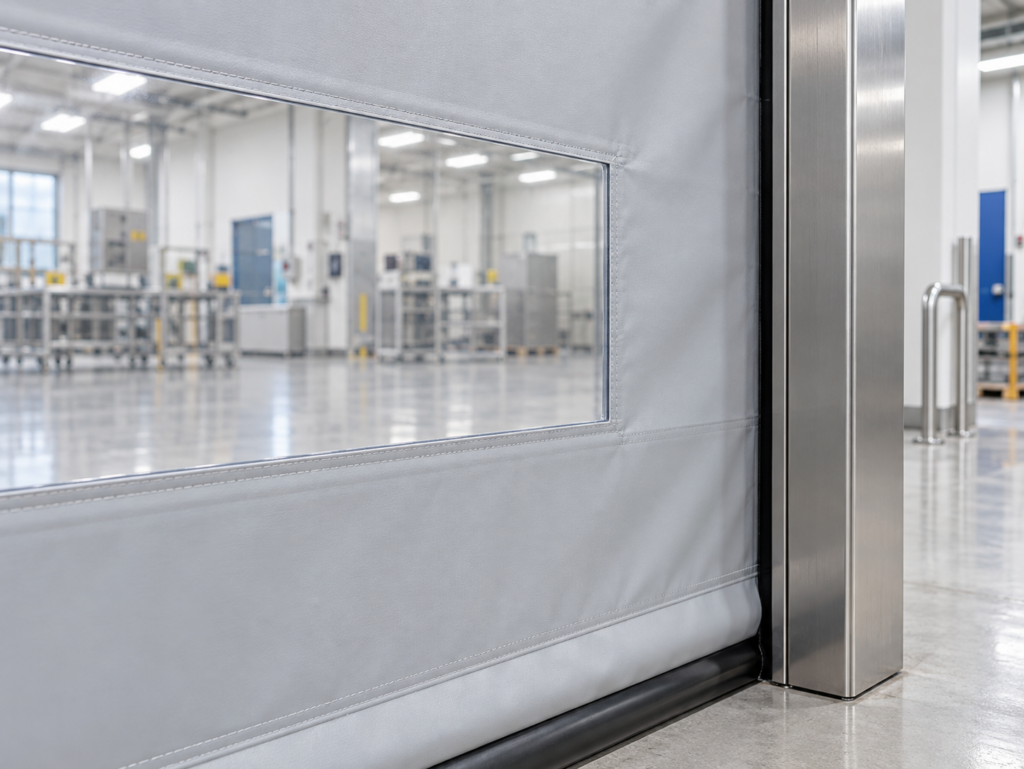
The SEPPES 2026 catalog describes zipper-engaged guides, a tensioning arrangement and a flush vision window for its cleanroom-specific design. Use these details to discuss the ordered construction with SEPPES. Confirm which options are included and what supporting records will be supplied. Do not infer an air-leakage result or cleanliness classification from a close-up photograph.
Agree What the High Speed Door Factory Will Demonstrate
Define the demonstration before it takes place. Record the configuration tested, agreed sequence, expected outcome and actual observations. If a building interface is simulated at the factory, identify that simulation. A successful demonstration with a test signal is not proof that the final connection to the site’s systems has been completed.
For projects governed by EU GMP for human medicines, Annex 15 distinguishes vendor evaluation and factory acceptance testing from subsequent site activities. It allows reliance on some earlier checks where justified and where transport and installation do not affect the function being verified. The site’s qualification team should decide what remains to be verified after delivery. Source: European Commission, Annex 15, sections 3.4–3.7.
For other cleanroom projects, agree the relevant acceptance framework with the project team. Do not describe a factory operating video as room qualification or as a universal compliance certificate.
Close Open Items and Reconcile the Packing List
An incomplete record needs a decision, not a blank space. List each outstanding item, the responsible party and the agreed condition for closure. Keep shipment authorization separate from acceptance for operation. Record any agreed deferred work and its impact through the project’s approval process.
Then reconcile the packing list with the approved configuration. Check that separately packed controls, activation devices, brackets and agreed spares can be identified against the order. Request suitable protection for vulnerable surfaces and components, plus the relevant handling instructions. Photographs before closure can help the receiving team understand what was packed, but they do not prove damage-free arrival.
Prepare the Review With SEPPES
Send SEPPES the approved drawings, configuration changes and the site’s document requirements before the planned review. Ask the team to confirm the review scope, available records and any separately quoted testing or documentation. This keeps expectations clear without assuming that every project includes the same acceptance package.
Keep one agreed release file covering build identity, reviewed evidence, outstanding actions, packing details and the next site checks. For a cleanroom door solution, that file gives procurement, installation and quality teams a shared reference for the door that actually arrives.
