
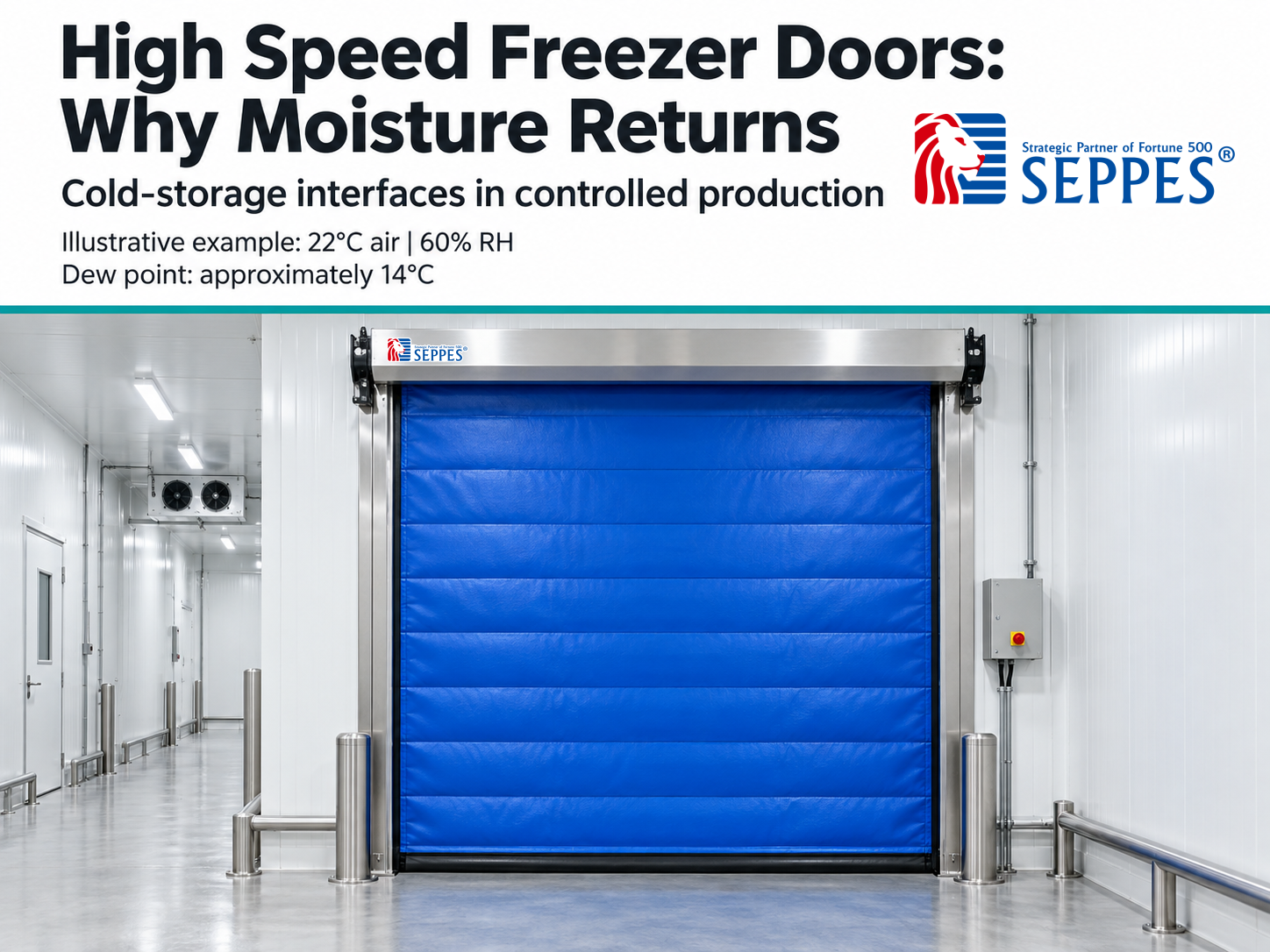

High speed freezer doors are often the first equipment questioned when moisture appears at a cold-storage entrance serving a clean production area. Yet a wet guide, a dripping frame and water carried across the threshold may have different causes. Replacing the door before understanding that pattern can leave the original problem in place. Start by separating condensation from other water sources, then review the door and the surrounding environment together.
Compare the Surface Temperature with the Dew Point
A freezer’s temperature display describes one part of the situation. Condensation depends on the moisture in the air touching a surface and how cold that surface is. The U.S. National Weather Service explains dew point as the temperature at which water vapor begins to condense. A cold frame exposed to warmer, moist air can therefore collect droplets even when the room temperature remains on target. NWS dew-point explanation.
For illustration, air at 22°C and 60% relative humidity has a dew point of approximately 14°C. A surface at 10°C is below that dew point, so condensation is possible. These are calculated example conditions, not SEPPES test results or operating limits. Record air temperature, humidity and relevant surface temperatures at the same time. High speed cooler doors also need this review; an above-freezing room is not automatically free of condensation.
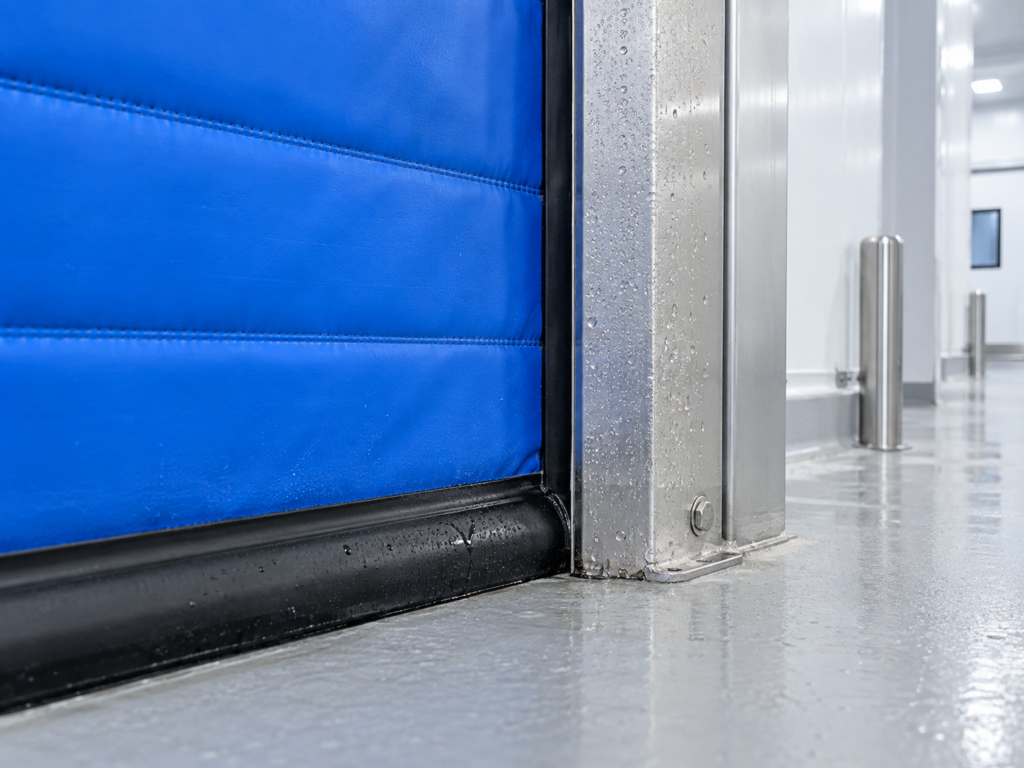
Match the Wet Patch to the Operating Event
For cold storage roll up doors, a simple observation log is more useful than a general report that the door leaks. Photograph where moisture first appears and note whether it follows a transfer, cleaning, defrost operation or a long closed period. Water at floor level may have arrived on wheels or flowed from another source rather than formed on the door.
Ask the facilities team to compare those events with nearby air supply, extraction and refrigeration operation. The Australian Government’s refrigeration guidance notes that gaps around cold-room panels and penetrations can admit warm, moist air. This means the investigation should include the surrounding wall and service openings, not just the moving curtain. Australian Government refrigeration guidance.
Treat the pattern as a lead to investigate, not a diagnosis by itself. Recurring droplets on one closed-frame section warrant a different check from water appearing immediately after floor washing. Keep a wet or icy passage out of normal use until the site has controlled the hazard; do not force a curtain through ice or alter protection settings to keep production moving.

What Sealing, Insulation and Local Heating Can Change
These measures address different parts of the problem. Sealing limits unintended air paths when the door is closed. Insulation reduces heat transfer through the closure. Where specified, local heating is intended to address cold sections of the frame or guide. None of these measures removes the need to manage incoming moisture and the conditions of the adjoining space.
The 2026 SEPPES catalog describes a sub-zero insulated model combining dual-shaft drive, zipper-guided sealing, a multilayer curtain and frame or guide heating. That gives the project team specific features to assess against the observed problem. Ask SEPPES to identify the supplied heating arrangement, its controls and the inspection requirements for the selected configuration.
When comparing high speed insulated roller shutter doors, check which construction and test conditions the thermal information covers. A panel value does not describe every joint in an installed doorway. Equally, a heated guide should not be presented as a guarantee of a dry floor, a humidity-control system or proof of suitability for a particular cleanroom process.

Specify High Speed Freezer Doors for the Actual Interface
A high speed freezer and cooler door needs an application-specific operating brief. State the temperatures on both sides, the measured humidity, the moisture pattern and the traffic route. Include cleaning and defrost schedules, curtain condition and photographs of the frame-to-wall junction. Separate cold-storage requirements from any cleanliness requirements at the adjoining production area.
Bring that evidence to SEPPES before finalizing a replacement or upgrade. The review can then connect curtain insulation, sealing and local heating with the refrigeration and facilities teams’ findings. Agree what will be checked after the work under comparable operating conditions. The objective is a doorway configuration matched to a known moisture problem, with responsibilities clear for the door, the room and the transfer procedure.
