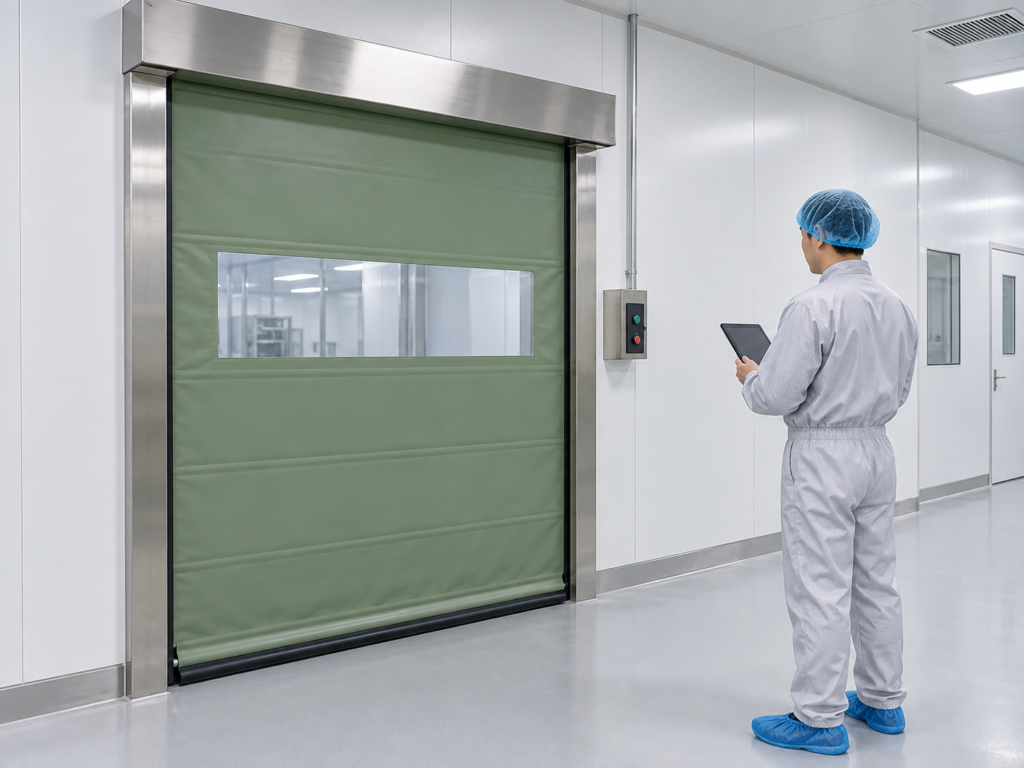

Commercial high cycle doors are easier to specify when a cleanroom project describes actual door movements instead of calling a corridor busy. Daily totals, concentrated traffic and the way loads are grouped can produce very different operating demands. A short usage audit gives SEPPES practical information for matching the drive, curtain guidance and service requirements to the route. It also helps a facilities team distinguish normal use from repeated, unnecessary activation.
Count Door Cycles, Not Just People or Pallets
For this audit, count one cycle as a complete opening and closing. A person going out and returning later may require two cycles. Several carts passing during one permitted opening may require only one. A safety reversal or a partial opening should be logged separately, with its event definition agreed before different records are compared.
Observe a representative production period, including replenishment, empty-container returns and cleaning access. Where an installed controller provides a counter, confirm what it counts and reconcile a sample against observed movements. Do not assume a sensor trigger equals a completed cycle. DASMA’s door-selection guidance likewise distinguishes full cycles from peak-period demand. DASMA selection guidance.
Build a Daily Profile for Commercial High Cycle Doors
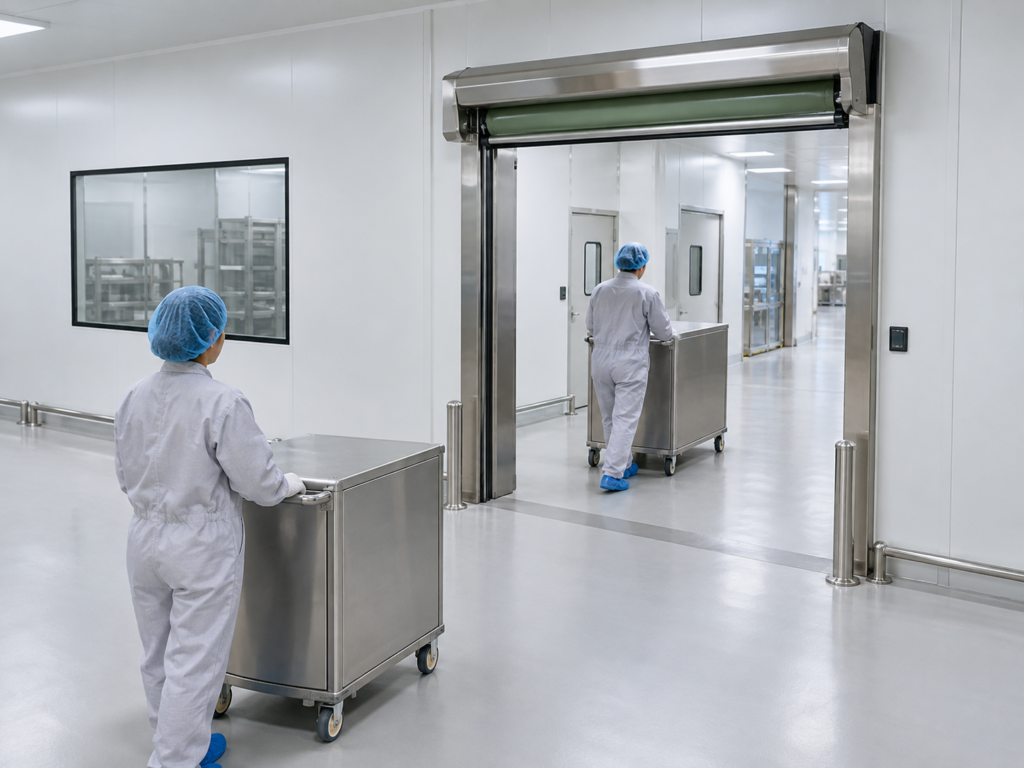
Consider an illustrative planning example, not a SEPPES customer result: a facility records 240 complete cycles on each of two production shifts, plus 60 additional cycles for activities not included in those shift counts. The daily total is 240 + 240 + 60 = 540 cycles. At 250 operating days, that projects to 135,000 cycles per year.
Keep every activity in one counting category so that a delivery or cleaning movement is not counted twice. Add quieter days, seasonal peaks and planned production changes when they affect the route. This projection describes expected use; it is not a product life rating, a warranty period or a prediction of when a part will fail.
Keep the Busiest Hour Visible
Two routes can have the same daily total and very different peaks. A steady flow spreads operations across the shift; a batch release can concentrate movements into a short interval. Record the busiest hour and any shorter burst that matters, together with opening height, travel time and the pauses between movements. Ask the supplier to review this pattern against the proposed drive and controller configuration.
For high speed factory doors serving clean production, also record how long the opening remains exposed. Grouping traffic may reduce cycle count but increase open time or create queues. Do not keep a door open simply to make the cycle total look better. Environmental separation, the approved material route and safety functions remain part of the decision.
Check What the Cycle Claim Actually Covers
When comparing high cycle rolling doors, establish whether a quoted endurance figure applies to the complete assembly, the drive or another component. Request the test conditions and required servicing, including the relevant opening size and operating settings. Do not divide a component’s laboratory figure by annual site cycles and present the result as guaranteed years of door operation.
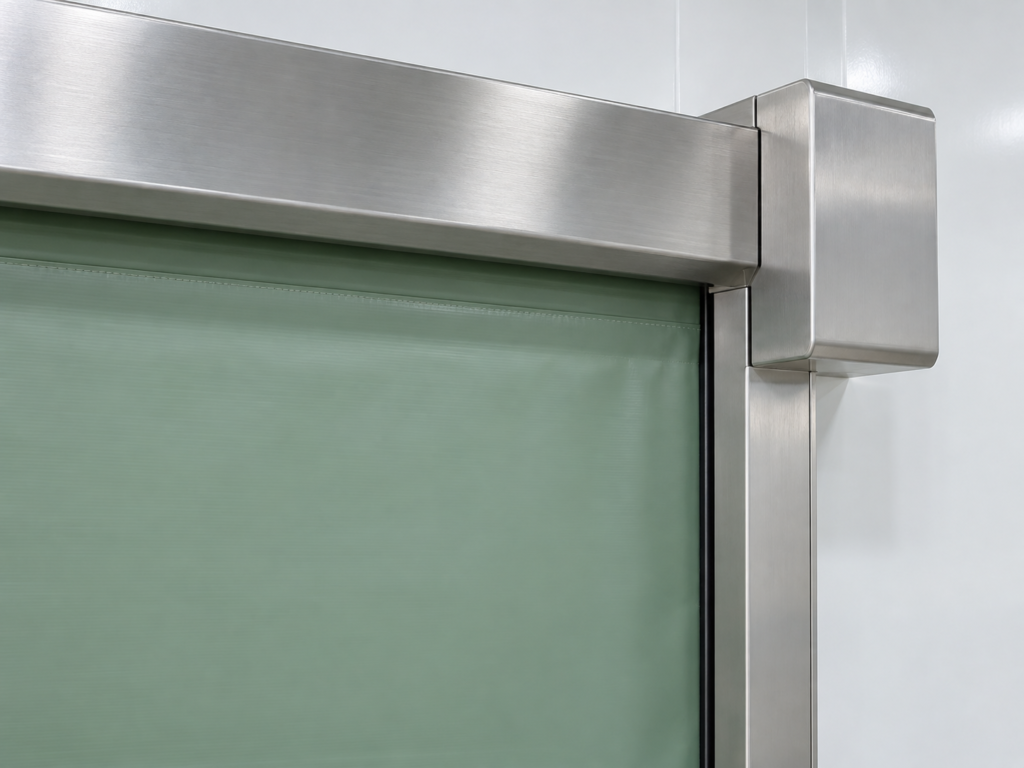
The 2026 SEPPES catalog describes a servo drive, tensioning arrangement and zipper-engaged guidance on its cleanroom-specific model. These are useful starting points for a configuration discussion, alongside the flush window and access for cleaning. A high speed door supplier should confirm the proposed model’s operating limits and supporting evidence; the catalog’s component descriptions alone do not establish whole-door endurance under your conditions.
Turn the Audit into a Working Service Plan
Agree which records the site will retain, who reviews changes and when the service plan needs reassessment. Increased reversals, unusual noise or a changed traffic pattern deserve attention even when the annual cycle projection has not changed. Follow the manufacturer’s instructions for inspection and servicing. HSE’s powered-door guidance emphasizes that continued safety depends on use and maintenance as well as original design. HSE safety guidance.
Reliable high speed door systems depend on matching the assembly to the task and responding to operating evidence. Send SEPPES your daily count, peak-period observations, opening dimensions and cleanroom access requirements. The team can use that brief to review a suitable configuration and discuss service provisions without relying on an undefined heavy-use label.