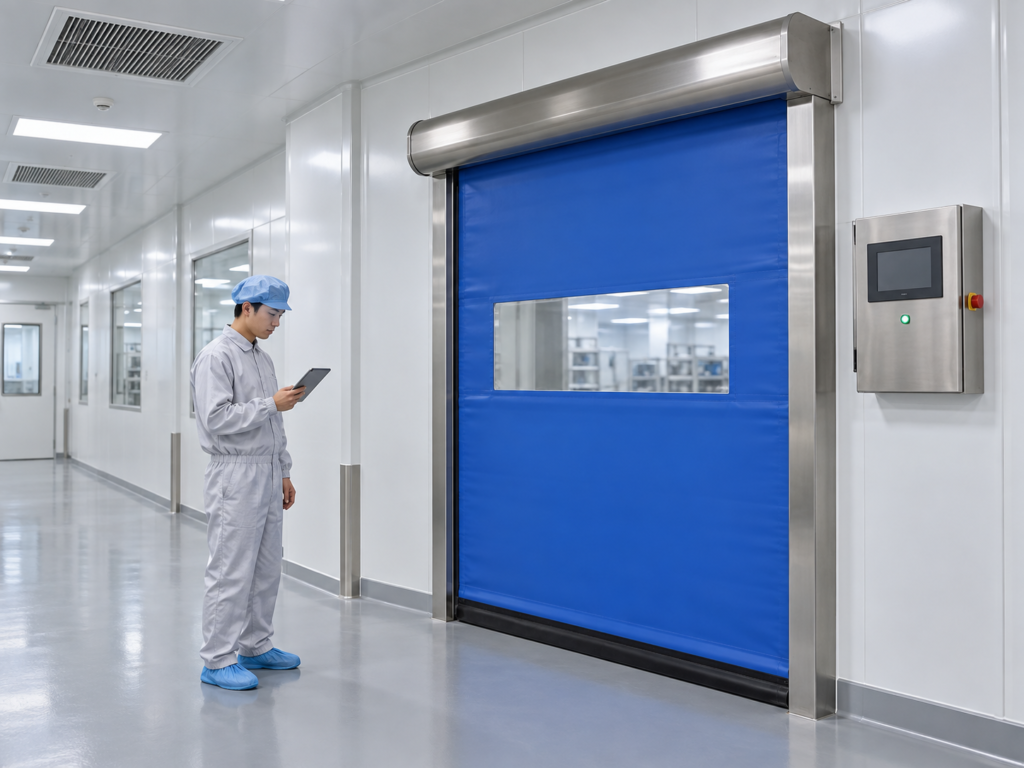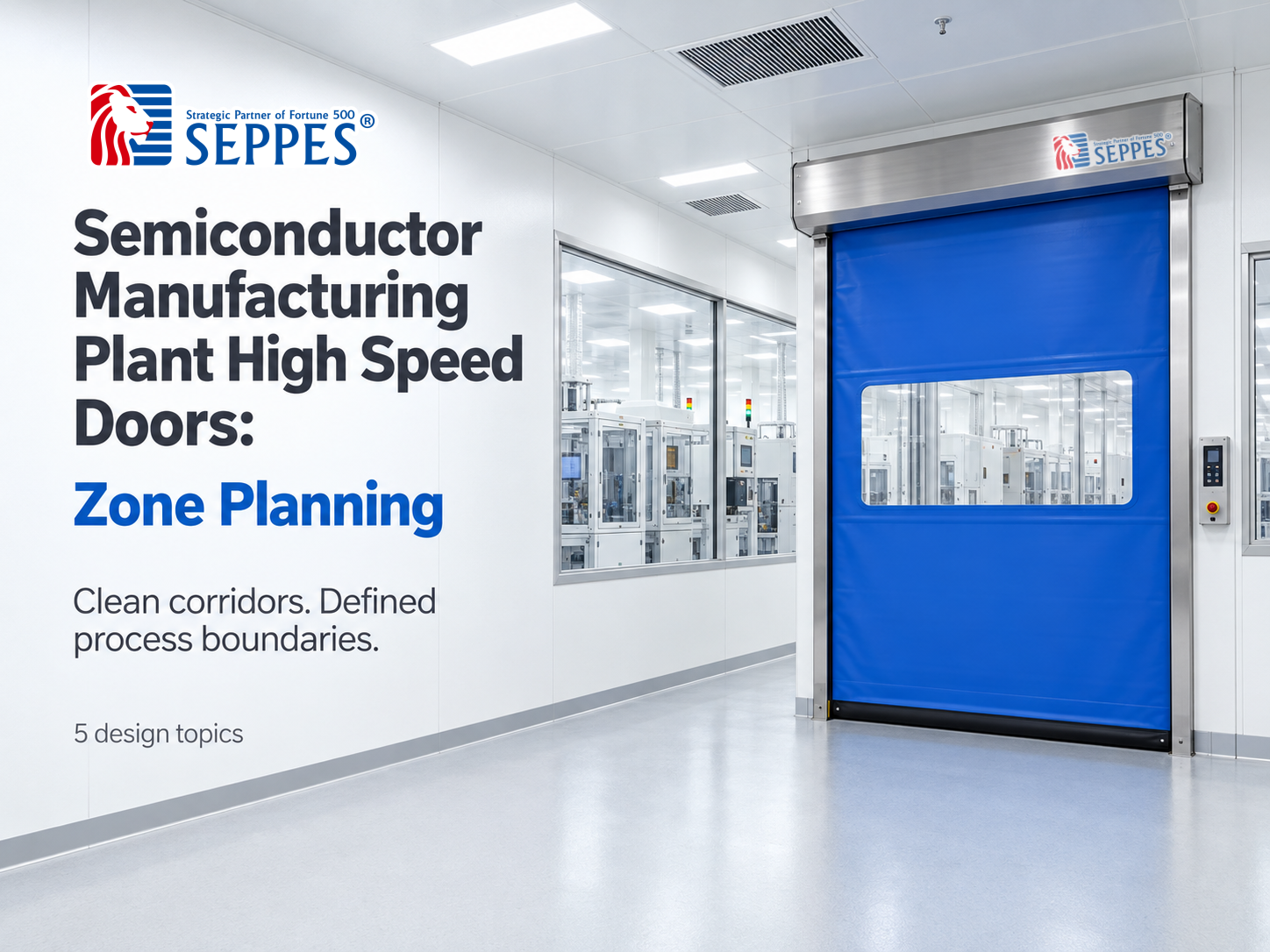

Semiconductor manufacturing plant high speed doors should be specified against a defined boundary, not a general request for a cleaner factory. A supply corridor, an equipment-support area and a process enclosure do different jobs. Treating every opening as the same application can leave important requirements unresolved. The starting point for a SEPPES project is therefore a zone plan that explains what each doorway separates and what must pass through it.
Start with the Process Boundary
Mark where the product is protected by its own enclosure and where the surrounding room must provide the required environment. A corridor door may support room separation without being part of the barrier immediately around a sensitive process. That distinction should appear on the layout before door materials or control options are selected.
Berkeley Lab’s cleanroom guidance discusses integrating minienvironments as a way to address local contamination-control needs. For door planning, the practical implication is to coordinate the room boundary with the process-equipment boundary rather than assume one doorway protects everything downstream. The process and facilities teams should define the responsibilities of each layer. Berkeley Lab guidance on minienvironments.
Treat the Grey-Room Label as a Starting Point
A purchasing note that says “grey rooms high-speed door” still leaves the application open to interpretation. Ask what the site means by grey room: a support space, a service corridor or another locally defined zone. Then record its actual cleanliness requirements, access rules, cleaning method and relationship to neighboring areas. Do not substitute the room’s informal name for approved design criteria.
Also identify what crosses the boundary. Clean supplies, packaged components, service tools and returning transport equipment may need different handling arrangements. The doorway can support an approved route, but it does not clean an incoming object or establish that a container is suitable for entry. Those decisions remain part of the site’s material-control procedure.
Keep Corridor Access Separate from Equipment Access
An internal high-speed door may serve a corridor used by people, carts or automated transport. An opening directly into a machine can involve a different control and safety function. Compare these roles before discussing different types of high speed doors; visual similarity does not make two assemblies interchangeable.
For a corridor, trace the largest load through the approach, opening and exit. Note turning movements, parked equipment and places where traffic could wait. For automated passage, have the controls team define the opening request, permission to travel, door-position feedback and fault response. A generic motion trigger should not be assumed to provide the complete machine interface.
Define What Precision Means in the Specification
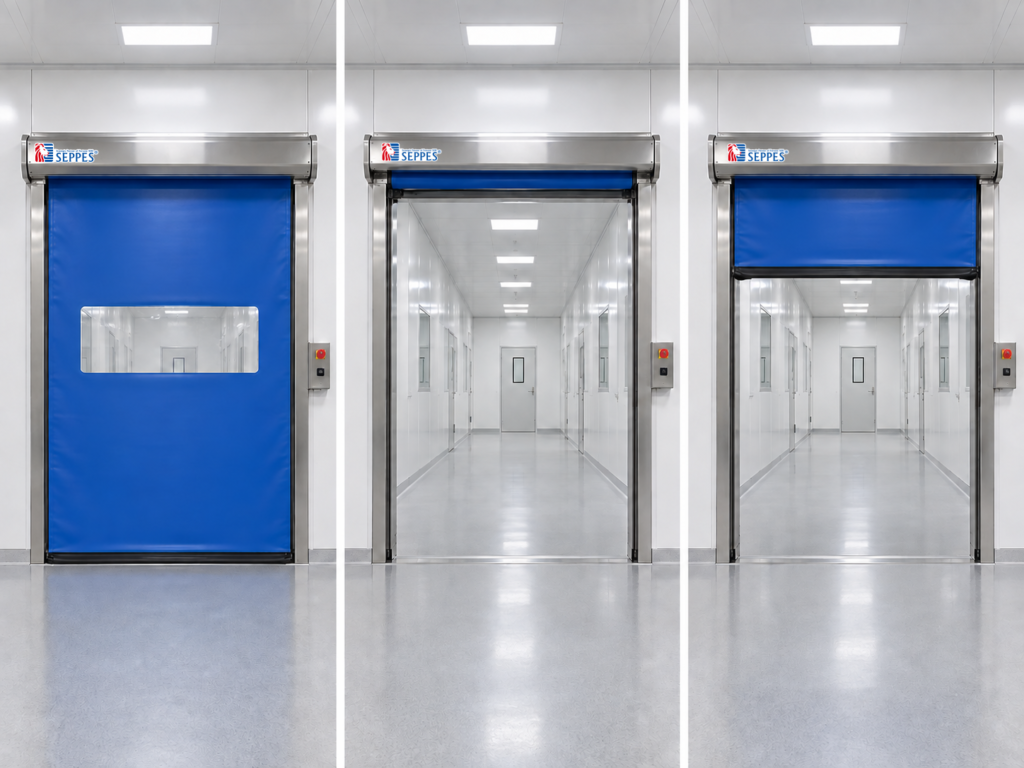
The phrase precision high speed doors is useful only when the project states what must be consistent. That may include repeatable closing, dependable position feedback, an agreed response to an obstruction or access for cleaning. Ask for evidence relevant to the selected model and operating conditions rather than treating the word precision as a particle-performance rating.
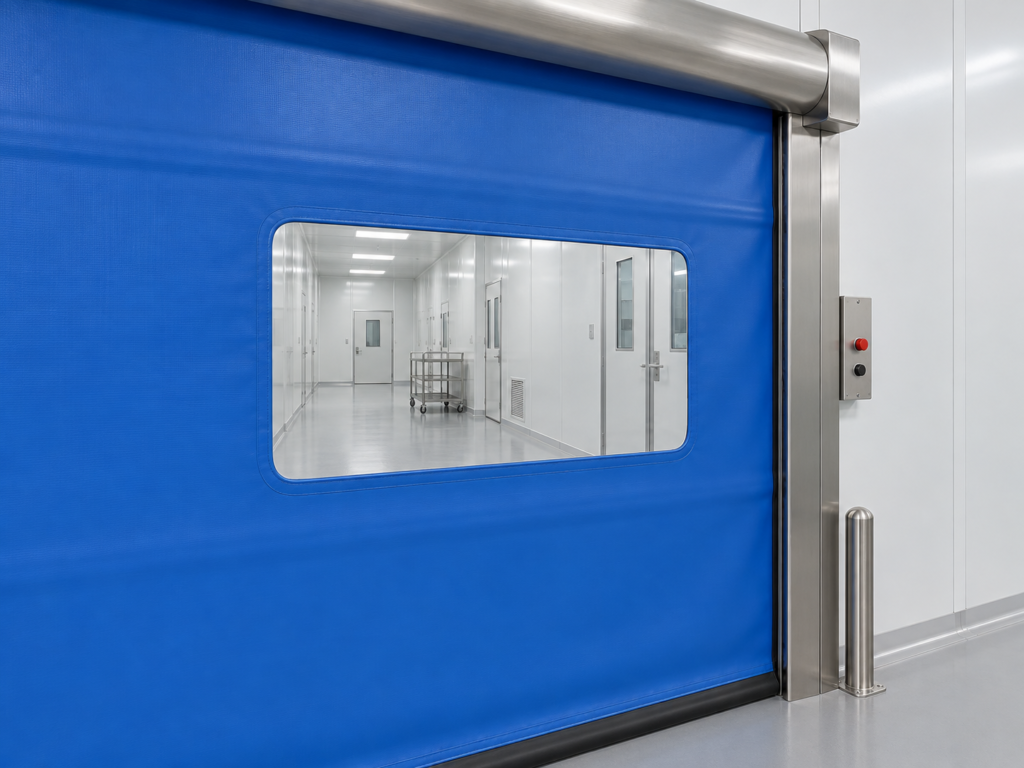
The 2026 SEPPES catalog describes zipper-engaged guides, a tensioning arrangement, a flush vision window and a flexible safety bottom edge on its cleanroom-specific model. These provide concrete points for a configuration review. Confirm the complete assembly, cleaning compatibility and required performance documentation; a catalog photograph alone cannot establish suitability for a particular semiconductor process.
Specifying Semiconductor Manufacturing Plant High Speed Doors
Prepare a marked layout that connects each opening to the two areas it serves. Alongside it, provide the load envelope, traffic pattern, available installation space and required environmental conditions. Identify which requirements belong to the door supplier and which depend on ventilation, process equipment or site procedures. Unresolved interfaces should remain visible for joint review.
Ask SEPPES to review that boundary map and propose a model-specific arrangement. Agree on the checks needed before handover, including actual-load passage, control responses and any specified environmental verification. This keeps the discussion tied to a defined production route and gives the project a clearer basis for selecting, integrating and accepting the door.