
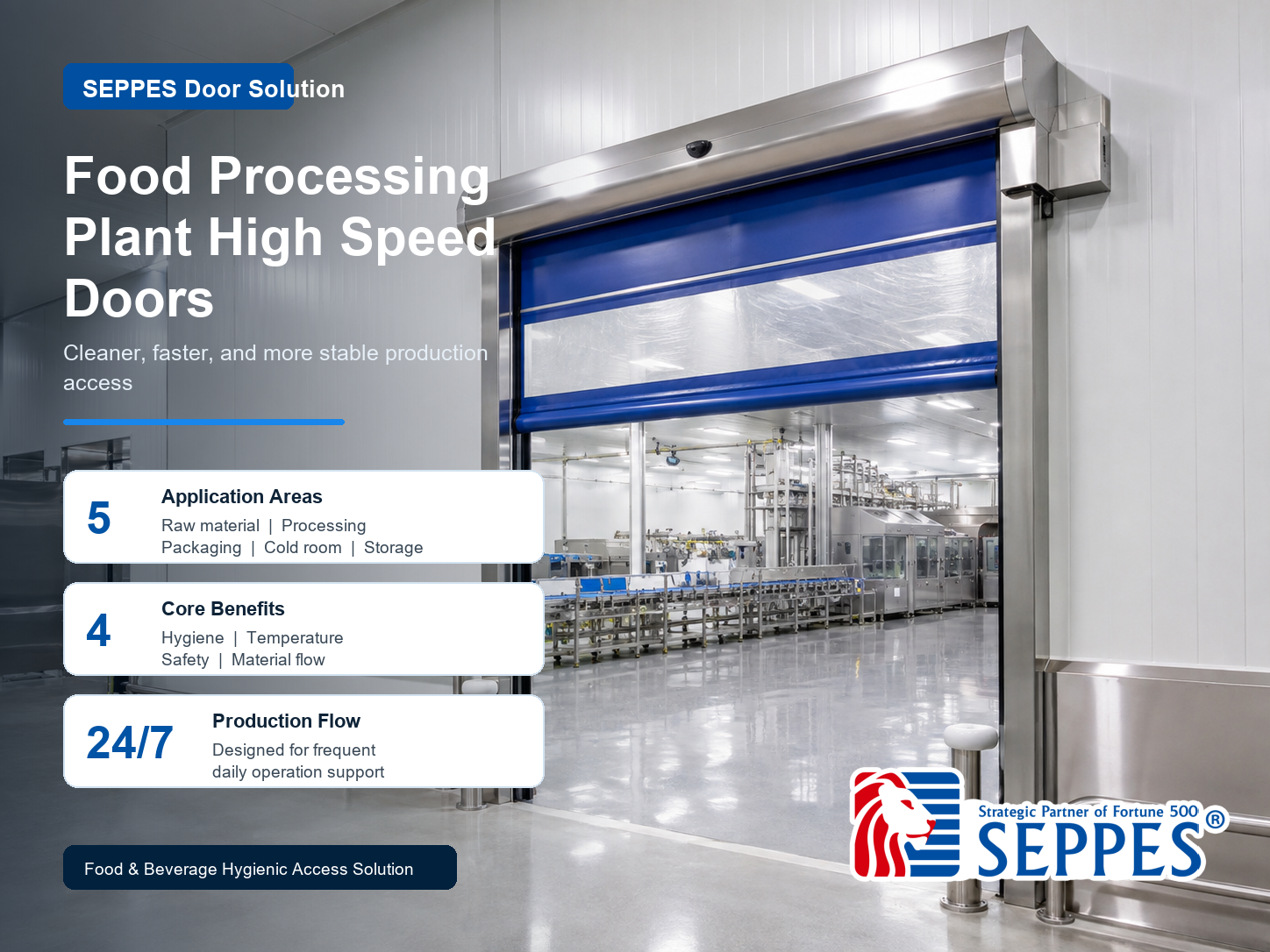

Food processing plant high speed doors are essential for facilities that need to maintain hygiene, control temperature, and move materials efficiently between different production zones. In food and beverage manufacturing, every doorway can influence sanitation, workflow, energy use, and product safety. A slow or poorly sealed door may allow dust, moisture, insects, warm air, or cold air to enter sensitive areas, increasing the risk of contamination and operational loss.
SEPPES provides reliable door solutions for food factories, beverage plants, cold chain facilities, packaging rooms, and clean production areas. As a professional high speed door manufacturer, SEPPES focuses on fast operation, hygienic structure, stable sealing, and long-term performance for demanding industrial environments.
Why Food and Beverage Facilities Need High Speed Doors
High speed doors for food and beverage facilities are designed to support clean separation between different working areas. Raw material zones, processing rooms, packaging lines, washing areas, refrigerated rooms, and finished product storage often have different hygiene and temperature requirements. When these areas are connected by frequently used openings, a fast and well-sealed door becomes an important part of the facility layout.
By opening and closing quickly, automatic high speed doors reduce the time that each doorway remains exposed. This helps limit air exchange, reduce the entry of airborne particles, and support a cleaner production environment. For busy food plants where carts, pallet trucks, and forklifts move throughout the day, fast door operation also improves traffic efficiency and helps avoid bottlenecks.
SEPPES Door Solutions for Hygienic Production Areas
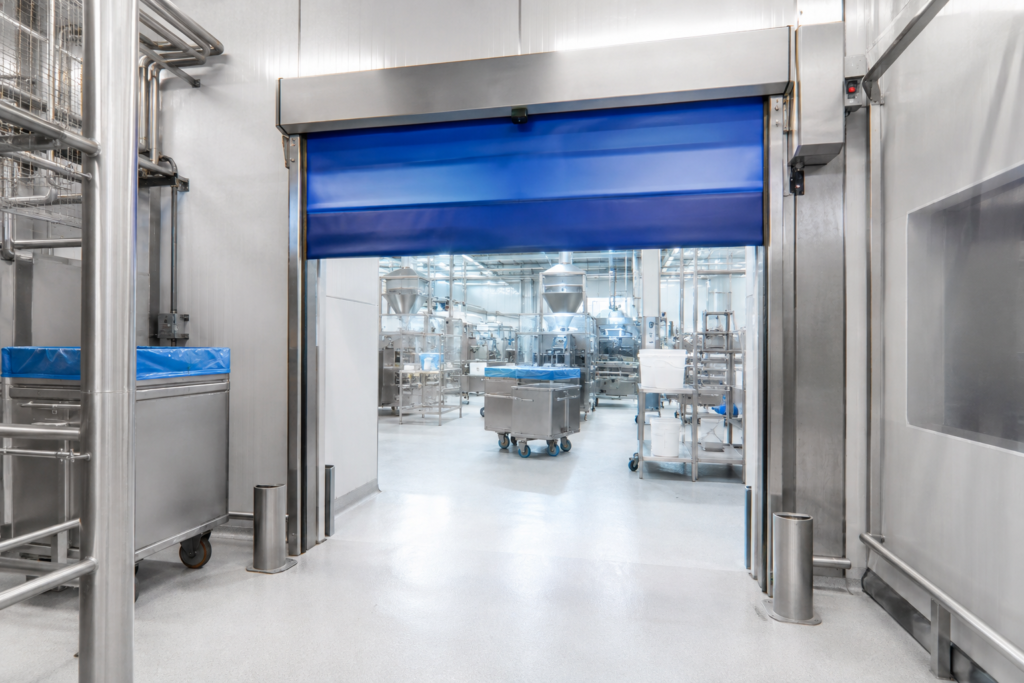
A food processing environment requires equipment that is easy to clean and suitable for repeated daily use. SEPPES high speed doors can be configured with smooth curtain materials, corrosion-resistant structures, safety sensors, and practical control options. Depending on the project, the door system can support radar activation, pull cord switches, push buttons, remote controls, or access control integration.
For areas with strict sanitation procedures, the door structure should reduce places where dirt or moisture can accumulate. Smooth surfaces, reliable side sealing, and durable components help make daily cleaning easier. This is especially valuable in meat processing, dairy production, beverage filling, bakery production, frozen food plants, and prepared food factories.
SEPPES also considers site-specific conditions such as opening size, traffic frequency, cleaning routines, air pressure, temperature difference, and required safety level. The goal is to provide a practical door solution that works smoothly in the real production environment, not just on paper.
High Speed Cold Room Doors for Temperature Control
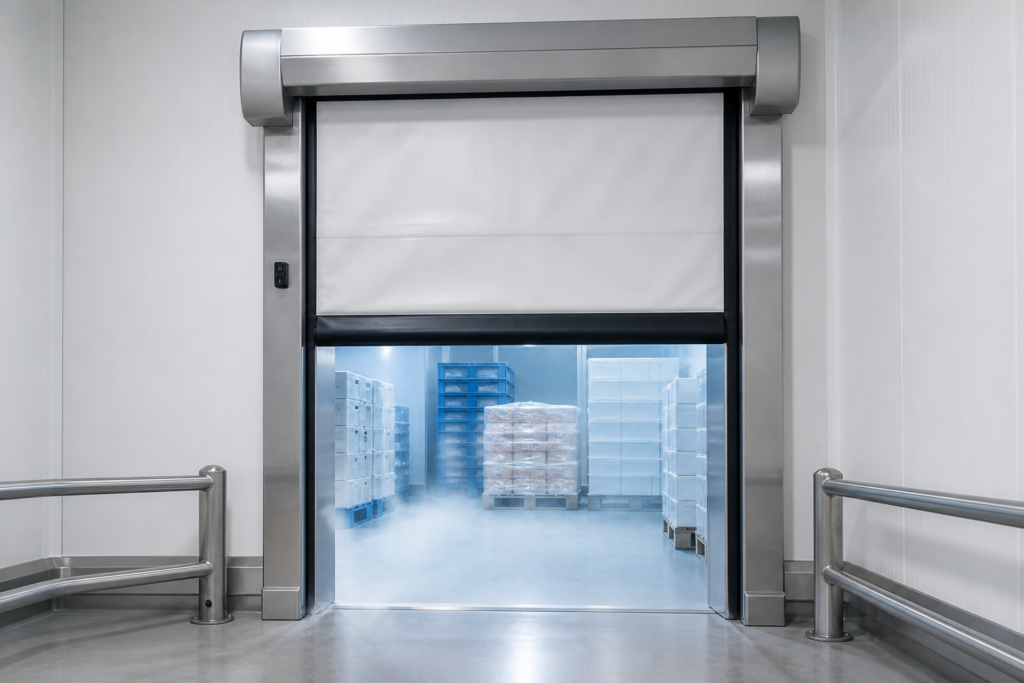
Many food facilities need to protect cold rooms, chilled processing areas, and frozen storage spaces. High speed cold room doors help reduce temperature loss when goods move in and out of refrigerated areas. A traditional door that stays open too long can increase energy consumption, cause condensation, and affect storage stability.
Insulated high speed doors are a strong choice for temperature-sensitive areas. Their fast movement helps shorten exposure time, while insulated curtain or panel configurations help maintain internal conditions. In cold chain operations, this can support product quality, reduce equipment workload, and improve the overall efficiency of the refrigeration system.
Improving Workflow and Safety
Food factories often operate under tight production schedules. Doors that move slowly, break down often, or require manual operation can interrupt production flow. Automatic high speed doors help workers and vehicles pass through smoothly without unnecessary waiting. This is especially useful in logistics corridors, packaging rooms, ingredient transfer areas, and loading connections.
Safety is another important factor. SEPPES door systems can include safety light curtains, bottom safety edges, emergency opening functions, and soft curtain structures depending on the selected model. These features help protect workers, vehicles, and products during frequent daily operation.
A well-designed door also helps protect the building itself. In areas with high traffic, impact-resistant or self-repairing curtain options can reduce downtime after accidental contact, helping the facility maintain steady operation.
Choosing the Right High Speed Door Manufacturer
Selecting the right high speed door manufacturer matters because food processing projects often involve more than a standard product purchase. The door supplier should understand hygiene requirements, traffic flow, installation conditions, and long-term maintenance needs.
SEPPES provides project-based recommendations for food and beverage facilities. The team can help match the right door type to each area, whether the project requires a hygienic interior door, a cold room entrance, a logistics corridor door, or a fast access solution for packaging and storage areas.
With professional manufacturing and application experience, SEPPES supports customers from door selection to production, installation guidance, and after-sales service. This helps food factories build a cleaner, faster, and more stable production environment.
Conclusion
Food processing plant high speed doors are more than access equipment. They help protect hygiene, improve temperature control, reduce energy loss, and keep production moving efficiently. For food and beverage manufacturers, choosing the right door system can directly support product safety and daily operating performance.
SEPPES offers automatic high speed doors, high speed cold room doors, insulated high speed doors, and customized solutions for different food processing applications. With the right configuration, a high speed door can become a valuable part of a safer, cleaner, and more efficient facility.
