SEPPES02 / Food cleanroom solutions

Food processing plant high speed doors

SEPPES food processing plant high speed doors support clean production zones and daily material transfers. Choose zipper-guided or brush-sealed cleanroom high speed doors to match your hygiene and traffic requirements.

Industry challenges

What food processing doors need to solve.

Food production needs clear hygiene boundaries without blocking daily transfers. Focus on what happens at the doorway: exposure, cleaning, traffic and how reliably the door closes.

  1. 01 / Dust and open passages

    Food processing door separation

    Busy internal passages are easily left open. Gaps and unnecessary opening time give dust more opportunities to move between receiving, preparation and packing areas.

    See the brush-sealing solution
  2. 02 / Cleaning and moisture

    Food processing door hygiene

    Wet cleaning, residues and cleaning chemicals make accessible surfaces, compatible materials and protected controls important.

    See the cleaning solution
  3. 03 / People and materials

    High speed door access delays

    Staff, carts and pallets share busy entrances. Poorly placed controls create repeated stops, while unsuitable trigger settings leave the opening exposed unnecessarily.

    See the access solution
  4. 04 / Conveyor transfers

    High speed conveyor door timing

    When door signals and conveyor movement are not coordinated, loads can wait at the opening or the door can stay open between transfers.

    See the conveyor solution

Food & beverage customers

SEPPES industry solutions

High speed doors for food and beverage processes.

Real installations show four practical ways to improve access: brush-sealed separation, cleanable frames, controlled traffic and conveyor integration. Match each configuration to the hygiene requirements of the opening.

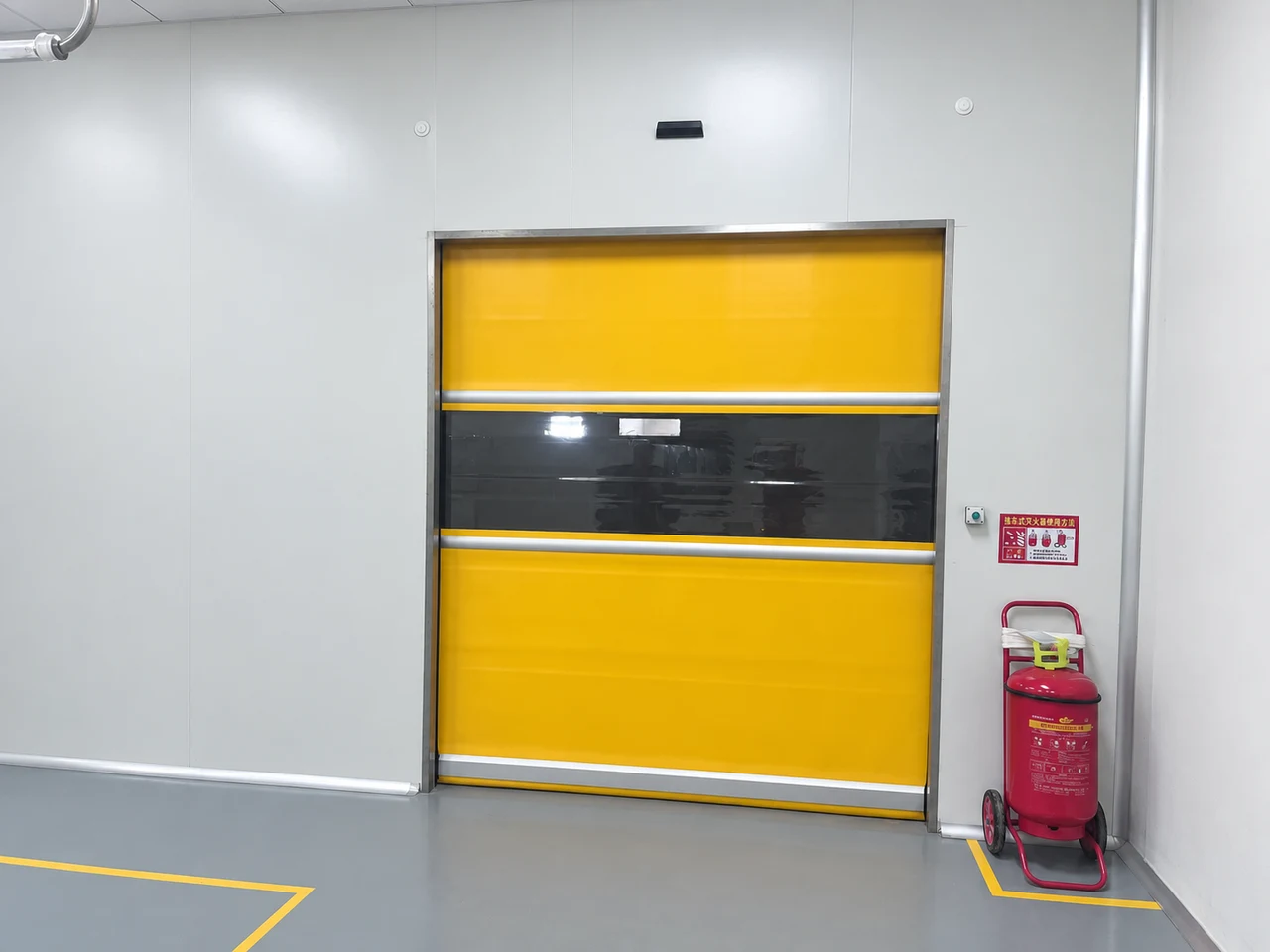
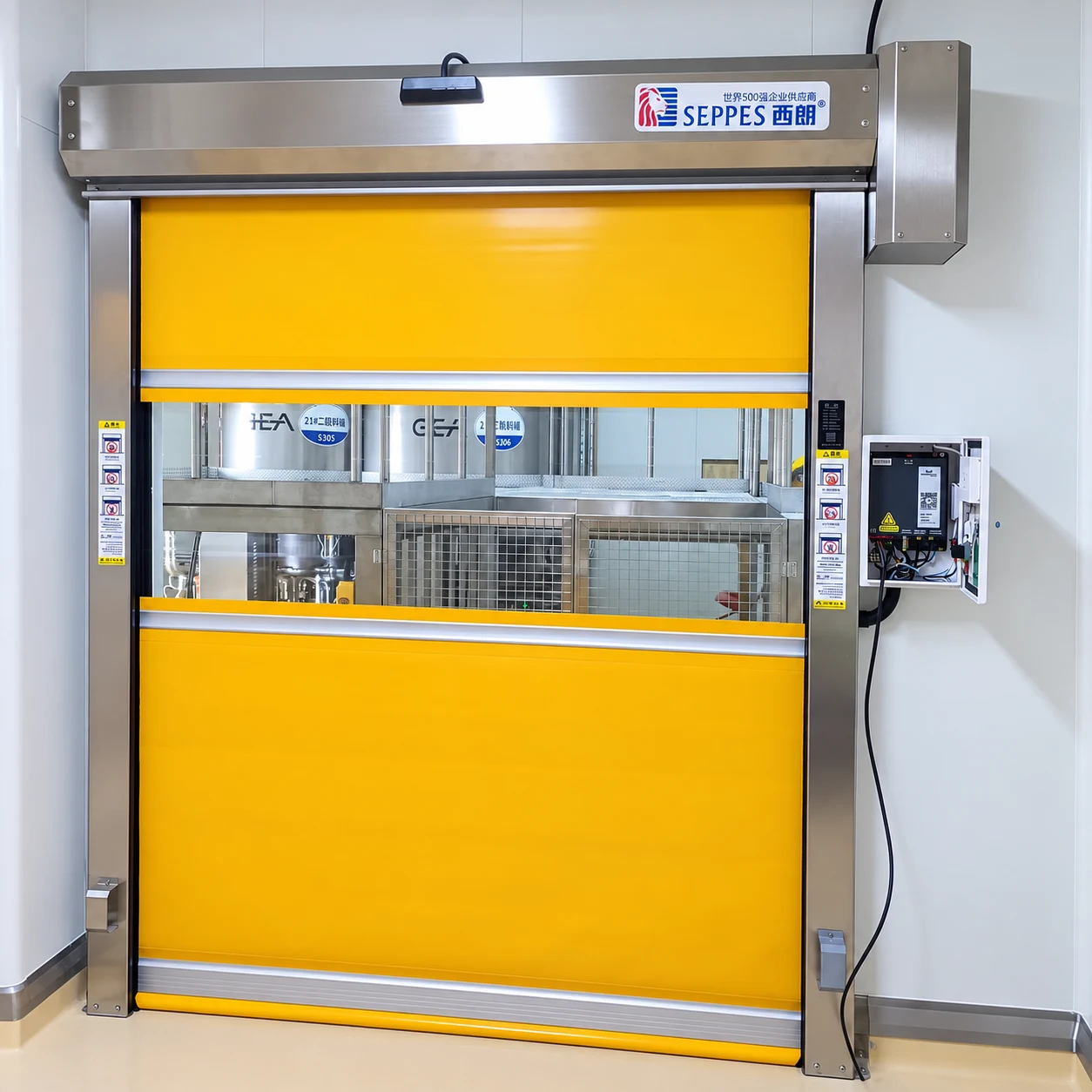
Yellow brush-sealed high speed door with a full-width vision panel at an internal production entrance
Project installation · Brush-sealed internal passage (retouched)

01Reduce doorway exposure

Brush-sealed high speed doors for food processing

High speed fabric doors combine side-guide brushes, a suitable bottom seal and automatic closing to reduce doorway gaps and open time. The yellow-door installation shows a full-width vision panel for visibility across the opening. Include brush inspection and cleaning in routine maintenance.

Best-fit areas: internal receiving routes, ingredient transfer and secondary packaging. For tighter air-control requirements, assess a zipper-guided model and its leakage data.

Learn more about brush-sealed high speed doors
Yellow SEPPES brush-sealed fabric door with stainless steel framing and an open control cabinet during installation
Project installation · Stainless frame and vision panel (retouched)

02Plan for routine cleaning

Stainless steel speed doors for food preparation

Hygienic high speed doors start with surfaces that can be reached and cleaned. This brush-door installation shows the metal frame, curtain and control positions. Specify the steel grade, accessible brush guides and suitable protection for electrical components around your cleaning routine.

Best-fit areas: preparation-room access and frequently cleaned packing entrances. For a washdown high speed door, confirm the complete assembly's cleaning limits; a stainless frame alone is not a washdown rating.

Learn more about stainless steel speed doors
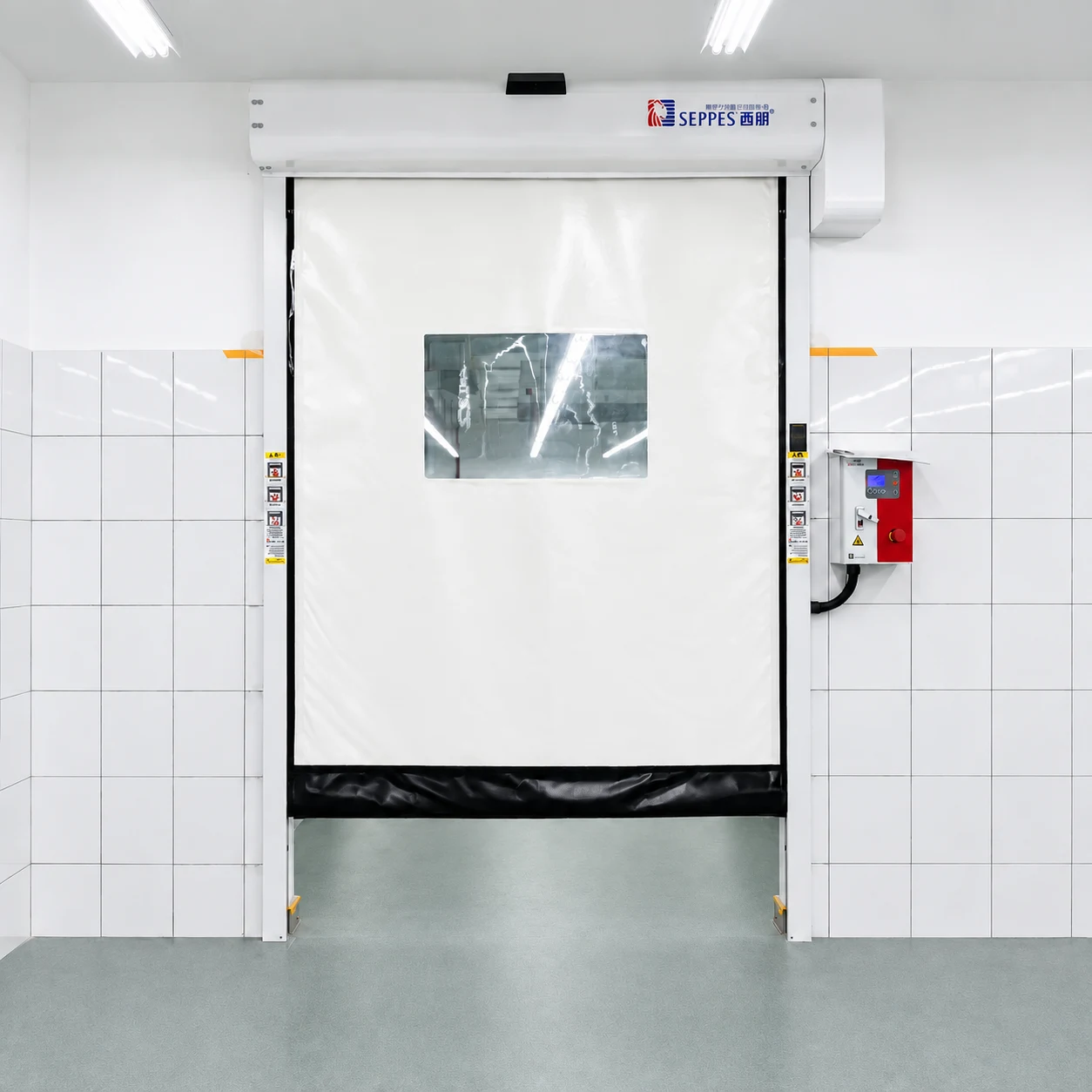
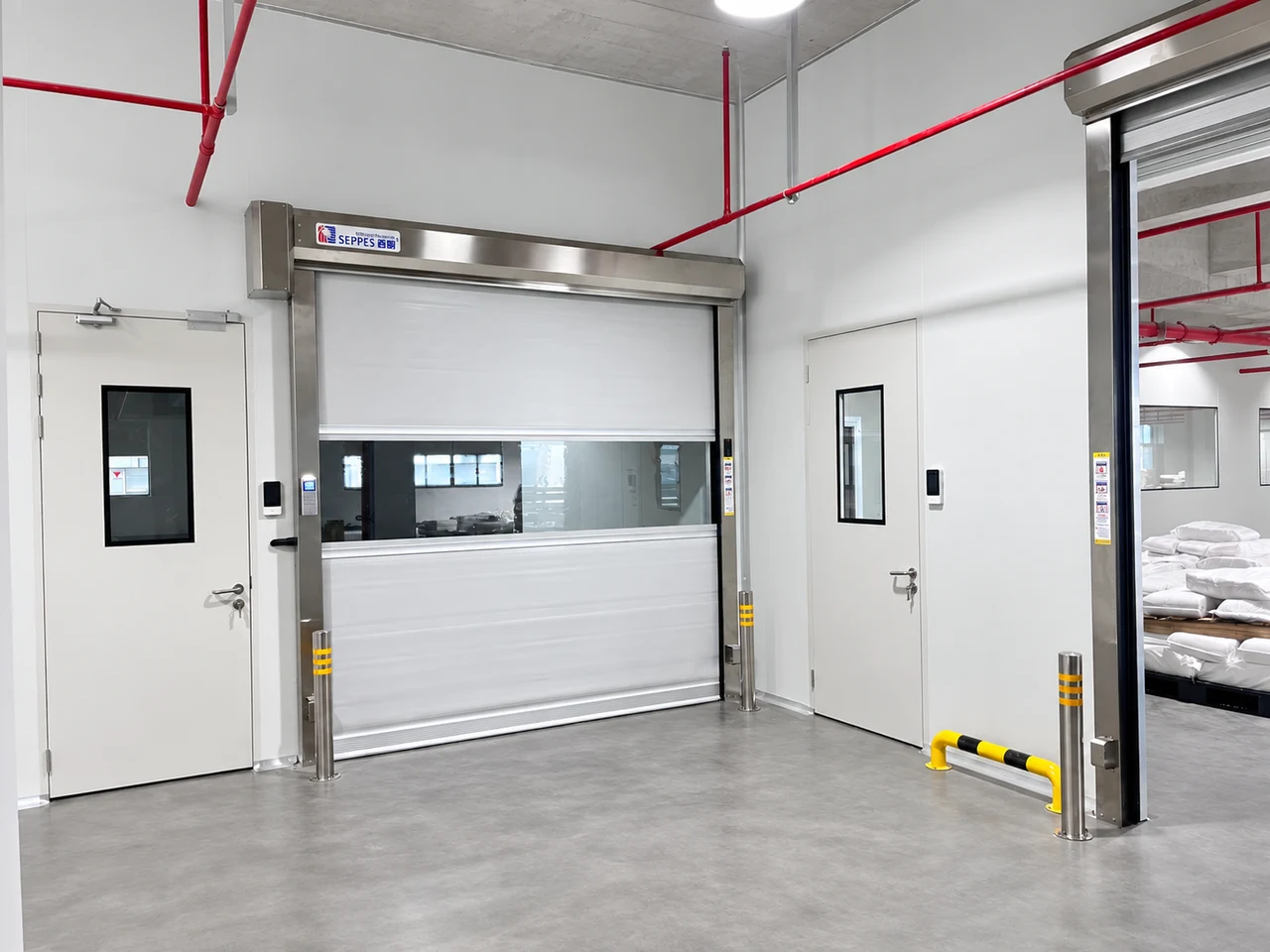
White brush-sealed high speed fabric door beside personnel doors, with a vision panel and protective bollards
Project installation · Material opening beside personnel doors (retouched)

03Coordinate people and material access

Automatic high speed doors for busy food-area routes

The white brush-sealed door sits alongside separate personnel entrances, providing a useful layout for planning people and material routes. Specify radar, touchless switches or access-control signals to suit the approach paths. Set hold-open time and independent safety detection around the actual traffic.

Best-fit areas: ingredient staging, cart transfers and packaging-room access. Confirm activation and safety functions for the selected model.

Learn more about automatic high speed doors
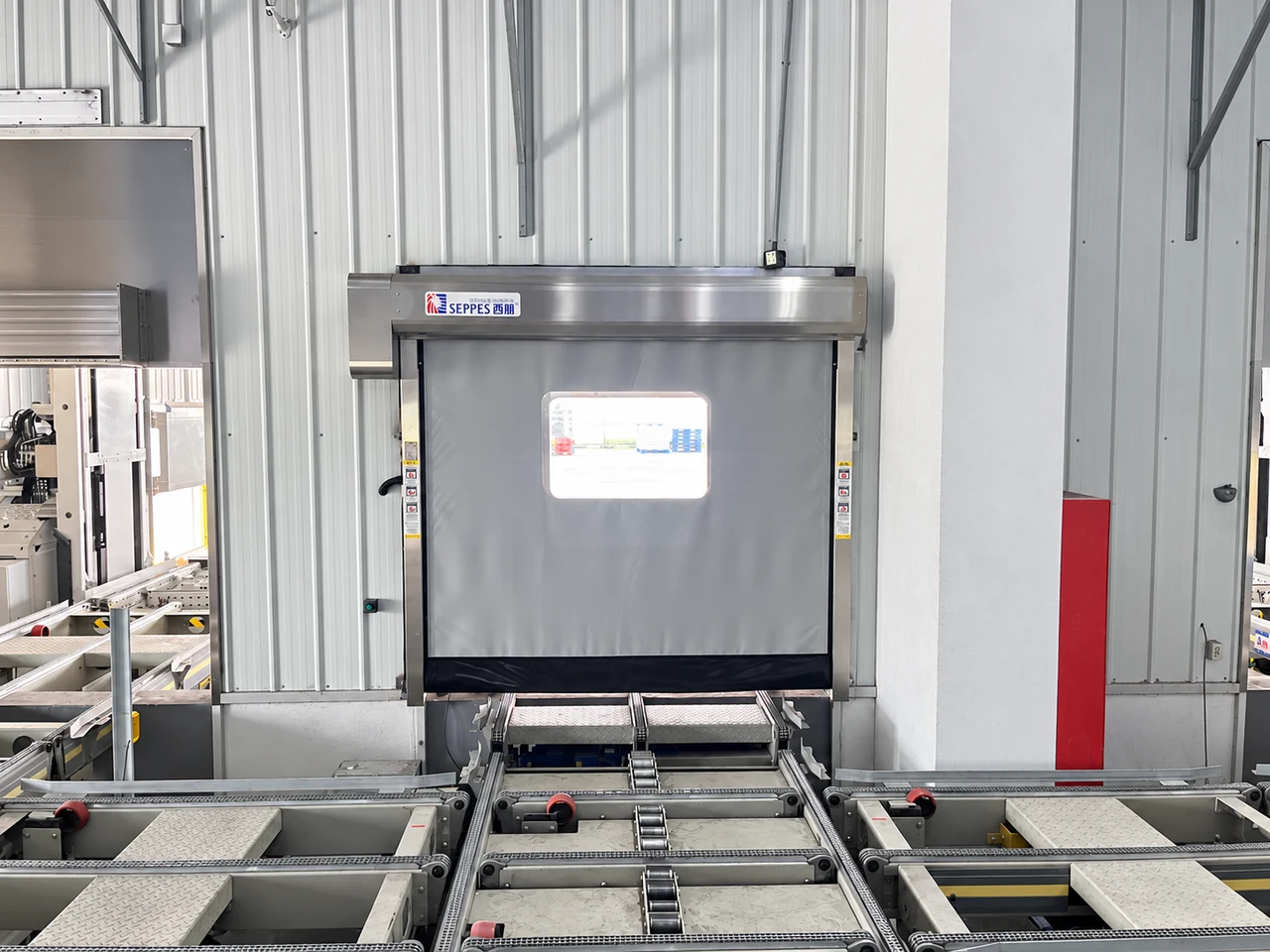
Grey SEPPES fabric roll-up door mounted over a conveyor transfer opening in a production facility
Project installation · Fabric door at a conveyor opening (retouched)

04Match the door to the production line

High speed conveyor doors for food production

The grey door is positioned directly over a conveyor transfer opening. For conveyor-integrated high speed doors, agree the door-open confirmation, load-clear signal and fault response with the line supplier. Close between transfers when the opening is clear, with the operating sequence verified during commissioning.

Best-fit areas: packing-line transfers, pallet conveyors and automated material routes. Machine-guarding requirements need a separate safety assessment.

Learn more about high speed conveyor doors

Applications within the facility

Where food processing plant high speed doors fit.

Map the route from incoming produce to finished packs, then set the doorway requirements at each boundary.

Receiving and sorting

Food processing doors for produce intake

Separate incoming crates from sorting and preparation areas. Review external exposure, traffic frequency and the size of the largest regular load.

Preparation and processing

Food processing doors for wet areas

Match the doorway to moisture, cleaning chemicals and the site's hygiene zoning. Keep service points accessible without obstructing the production route.

Packing and dispatch

Automatic high speed doors for food packing

Plan for pallet trucks, forklifts or conveyors. Position activation and safety devices around actual approach paths and expected stop points.

Discuss your requirements

Specify your food processing high speed door

Send doorway photos, opening dimensions, hygiene-zone requirements, cleaning details and traffic type. SEPPES will help match zipper or brush sealing, frame materials and controls to your facility.

Contact Sales

Food processing high speed door FAQs

Which high speed doors for food and beverage areas: zipper or brush?

Start with the separation requirement. A zipper-guided curtain is an option for openings needing tighter edge sealing; a brush-sealed door can suit general internal transfer routes. Confirm cleaning access, any required pressure or leakage performance, and the chosen model's test data. Neither a door name nor a photograph establishes a cleanroom classification.

Can I pressure-wash a washdown high speed door?

Only within the selected model's documented cleaning limits. A stainless steel frame alone does not establish the washdown rating of the motor, controller, sensors or curtain. Confirm permitted pressure, water temperature, chemicals and cleaning distance before use.

How can high speed fabric doors help with insects and dust?

Suitable seals and prompt closing can reduce open-door exposure and gaps at a closed doorway. They support, rather than replace, the facility's pest-management and housekeeping measures. Check sensor positioning so nearby traffic does not trigger unnecessary opening.

What should I prepare for high speed door installation?

Provide the clear opening size, wall construction, headroom, side clearances and power details. Agree sensor locations, wiring routes and maintenance access. Where the door works with a conveyor, include the agreed operating sequence and safety checks in commissioning.

How much do high speed roll up doors cost for a food plant?

Cost depends on opening size, zipper or brush sealing, frame materials, cleaning requirements and automation. Request an itemized quotation covering the door, controls, delivery, installation and commissioning. Request a food-facility door quote.

Contact Form 在用

Start Customizing Your Industrial Door

Let's have a chat