
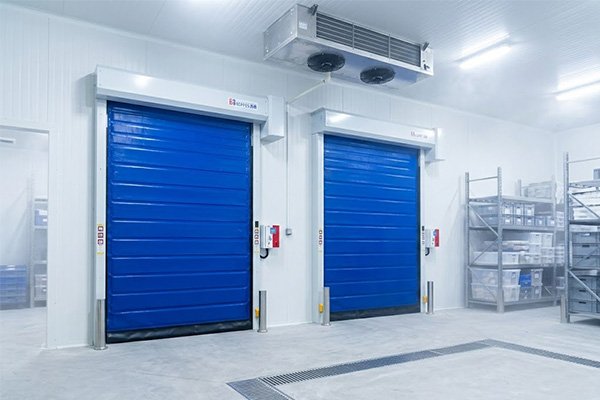

In the demanding environment of modern cold chain logistics, high speed insulated roller shutter doors have become an indispensable asset for maintaining thermal integrity. Cold storage facilities face a constant battle against temperature fluctuations, where every second a door remains open translates directly into energy loss and potential product spoilage. These advanced door systems serve as the ultimate gatekeepers, combining rapid operation with superior thermal resistance to ensure that sub-zero environments remain stable and cost-effective.
Why Cold Storage Demands High-Speed Insulation
Standard industrial doors often fail in cold storage settings because they are either too slow—allowing massive amounts of warm, moist air to enter—or they lack the necessary R-value to prevent heat transfer through the door curtain itself.
High speed insulated roller shutter doors bridge this gap by offering:
Rapid Cycle Times: Opening speeds of up to 1.2m/s minimize the duration of “air exchange” events.
Thermal Barrier: Thick, foam-filled slats or multi-layer curtains prevent “sweating” and frost buildup.
Airtight Sealing: Precision side tracks and bottom gaskets eliminate drafts that compromise climate control.
Key Technical Features of Insulated Rapid Doors
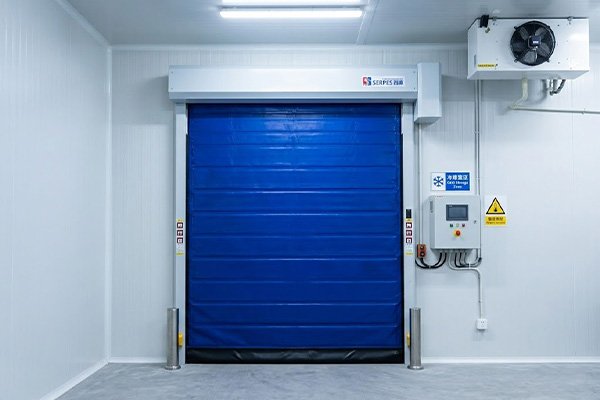
To withstand the rigors of -25°C environments, these doors are engineered with specific components that go beyond standard warehouse equipment.
1. Advanced Insulation Materials
Most high-end models utilize a “sandwich” construction. This typically involves high-density polyurethane (PU) foam injected between aluminum or steel skins. This design offers a high strength-to-weight ratio while maximizing thermal resistance.
2. Heated Guide Rails
In freezer applications, moisture in the air can quickly turn to ice on the door’s tracks, causing the system to jam. Integrated heating cables within the side guides ensure the door operates smoothly 24/7 without ice accumulation.
3. Self-Repairing Technology
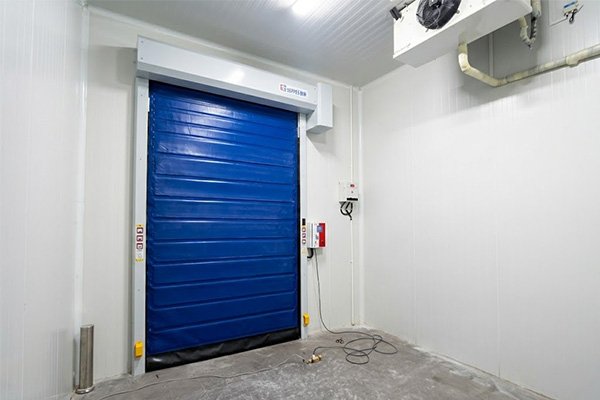
Logistics is a high-contact sport. If a forklift bumps the door, many modern high-speed doors are designed to “break away” from the track without damage and automatically reset themselves on the next upward cycle.
Comparison: Traditional vs. High-Speed Insulated Doors
| Feature | Standard Cold Storage Sliding Door | High Speed Insulated Roller Shutter |
| Operating Speed | Slow (Manual or slow electric) | Very Fast (0.8 – 1.2 m/s) |
| Energy Efficiency | Moderate (Good seal, but slow) | High (Minimal open time) |
| Traffic Flow | Often causes bottlenecks | Seamless “drive-through” experience |
| Maintenance | High (Heavy rollers/tracks) | Moderate (Built for high cycles) |
| Safety | Basic | Advanced (Sensors, Light Curtains) |
The Economic Impact: ROI and Energy Savings
Investing in high speed insulated roller shutter doors isn’t just about convenience; it’s a strategic financial decision.
Pro Tip: In a typical high-traffic freezer warehouse, switching from a standard door to a high-speed system can reduce energy loss by up to 40-50%. This often leads to a full Return on Investment (ROI) within 12 to 24 months based on electricity savings alone.
Beyond energy efficiency, you also reduce the strain on your HVAC and refrigeration compressors. Specifically, when the door keeps warm air out, the cooling system no longer needs to work overtime to compensate for “temp spikes.” Consequently, this protection significantly extends the lifespan of your expensive machinery.
Safety and Automation Integration
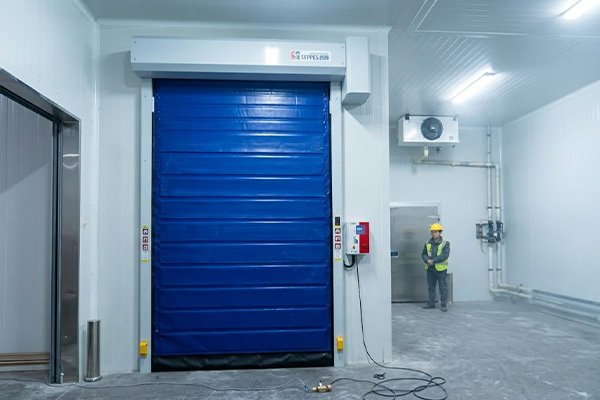
Modern cold storage facilities are increasingly automated. High-speed doors can be integrated with:
Radar & Induction Loops: Detecting oncoming forklifts to open the door automatically and close it the moment they pass.
Safety Light Curtains: Creating an invisible barrier of infrared beams that stops the door instantly if any obstruction is detected.
Remote Monitoring: Allowing facility managers to track cycle counts and maintenance needs via a central dashboard.
Final Thoughts
The integration of high speed insulated roller shutter doors is no longer a luxury for cold storage—it is a requirement for operational survival. By prioritizing speed, insulation, and durability, facilities can protect their inventory, their equipment, and their bottom line.
