
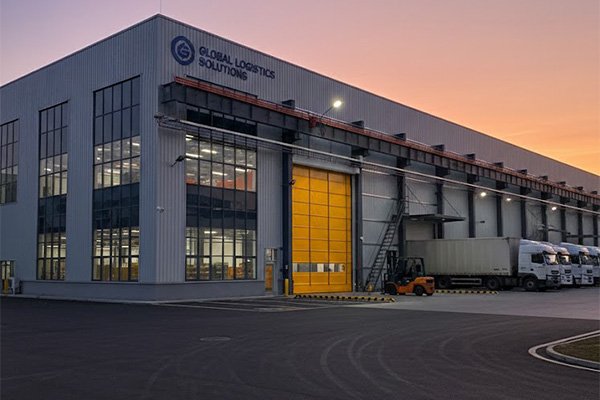

In large-scale logistics centers, coastal warehouses, and heavy industrial plants, the “door” is often the weakest link in the building’s envelope. You’ve likely experienced it: a storm picks up, and your standard high-speed roll-up door begins to rattle, bow, or—worst case—blow right out of its tracks.
When dealing with massive openings and high-pressure environments, a standard door isn’t enough. You need a Class 5 wind load high speed door. At SEPPES, we solved this specific engineering challenge not with more power, but with a smarter stacking (folding) design.
The Real-World Problem: The “Sail Effect”
Large industrial doors act like giant sails. When wind hits a flat surface, it creates immense pressure.
Roll-up doors rely on the tension of the curtain and small end-locks. Under high pressure, the curtain pulls out of the side guides.
The Result: Operational downtime, expensive repairs, and a massive gap in your climate control.
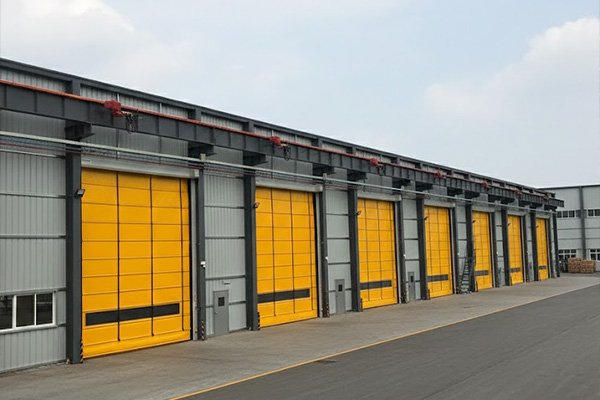
The Feature That Changes Everything: Horizontal Steel Reinforcement
The SEPPES Stacking High Speed Door is engineered specifically for external openings where wind is a constant threat. Unlike doors that roll up onto a drum, the stacking door uses a folding mechanism supported by a series of high-strength horizontal wind-resistant ribs.
1. Reaching Class 5 Wind Resistance
A “Class 5” rating isn’t just a label; it means the door can withstand wind speeds exceeding 110 km/h without structural failure. SEPPES achieves this by embedding galvanized steel or aluminum alloy tubes across the entire width of the curtain.
How it works: These ribs transfer the wind load directly into the heavy-duty vertical tracks, rather than forcing the fabric to bear the weight.
2. The “Stacking” Advantage
Instead of rolling around a top shaft, the curtain folds upward and “stacks” at the top. This allows for:
Larger Dimensions: We can secure openings up to 12 meters wide or more.
Uniform Tension: The folding straps (lifting belts) provide a more stable lift compared to a rolling drum, even when the wind is pushing against the face of the door.
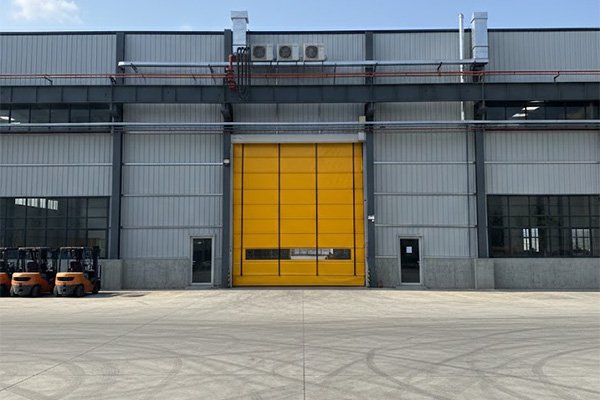
Comparing the Strength: Stacking vs. Standard Roll-up
| Feature | Standard High-Speed Roll-up | SEPPES Stacking High-Speed Door |
| Wind Resistance | Class 2-3 (Moderate) | Class 5 (Extreme) |
| Best Application | Internal partitions | External large-scale gates |
| Reinforcement | Minimal (Fiberglass rods) | Heavy-duty steel/aluminum ribs |
| Max Opening Size | Small to Medium | Extra Large (up to 150m²+) |
| Durability | High cycle, low pressure | High cycle, high pressure |
Beyond Strength: Efficiency and Safety
Choosing a Class 5 wind load high speed door from SEPPES isn’t just about surviving a storm; it’s about daily operational flow.
Fast Cycles: Despite its heavy-duty build, the door operates at speeds up to 1.0m/s – 1.5m/s, ensuring your forklifts don’t have to wait and your internal temperature stays stable.
Safety First: Every SEPPES door is equipped with infrared safety sensors and a bottom wireless safety edge. If an obstacle is detected, the door reverses instantly, protecting your staff and equipment.
Weather Sealing: Double-layer EPDM rubber seals at the bottom and brushes in the tracks ensure that even when the wind isn’t blowing, the dust, rain, and pests stay out.
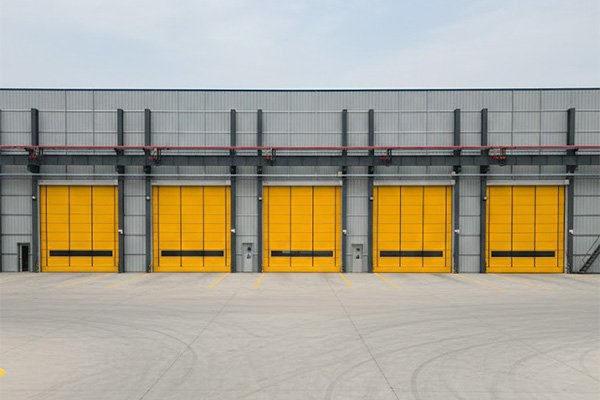
Is a Stacking Door Right for You?
If your facility faces any of the following, a SEPPES Stacking Door is the professional choice:
Coastal Locations: Where high-velocity sea breezes are a daily occurrence.
Wide Openings: Any door over 5 meters wide that serves as an external entrance.
Pressure Differentials: Facilities with heavy HVAC systems that create significant internal “suction” or pressure.
Expert Note: Don’t wait for a “blow-out” event to upgrade. A door that fails during a storm is a safety liability and a security breach.
Get a Custom Wind-Load Analysis
Would you like me to help you determine the specific wind load requirements for your facility’s location or provide a technical specification sheet for the SEPPES Stacking High Speed Door?
