


When you’re looking for a new door for your industrial facility, the decision might seem simple: it just needs to open and close, right? But if you dig a little deeper, a door is actually one of the most critical components of your operation. Among the many options available, the Insulated Sectional Door stands out as the top choice for most commercial and industrial settings. But what exactly is it, and is it truly worth the investment?
Starting with the Basics: What is a Sectional Door?
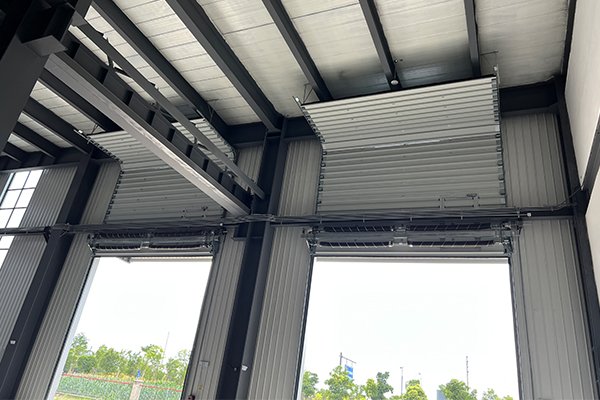
Before we dive into the “insulated” part, let’s clarify what a “sectional door” is. Unlike traditional one-piece overhead doors, a sectional door is made up of multiple horizontal panels (sections) hinged together. When the door opens, these panels bend along tracks positioned overhead, smoothly sliding back into the ceiling space of your facility. When closed, they align tightly to form a solid vertical barrier. This design not only saves valuable interior space but also allows for the installation of automatic door openers, enabling seamless, automated control. Sectional doors are a proven, reliable, and space-efficient technology, providing the perfect foundation for advanced insulation upgrades.
The Core Evolution: What Makes a Sectional Door “Insulated”?
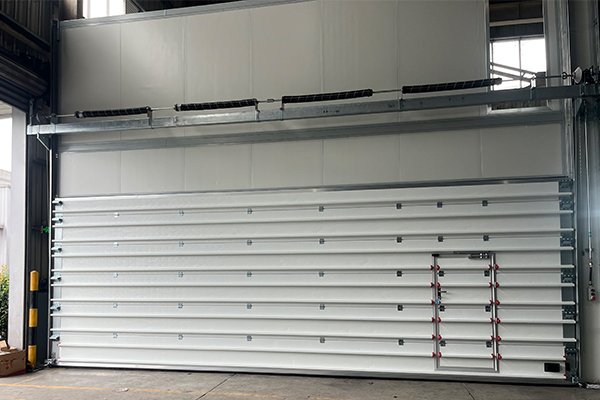
So, what transforms a standard sectional door into an “insulated” sectional door? The answer lies in its layered construction. Unlike traditional single-skin steel doors, insulated sectional doors feature a “sandwich” design:
Outer and Inner Skins: Typically made from steel or aluminum panels.
Core Filling: Between these two skins lies the crucial layer of insulating material.
The primary purpose of this structure is to create an effective thermal barrier, significantly reducing heat transfer between the interior and exterior of your facility. This isn’t just about adding more material; it’s a fundamental redesign of the door’s physical properties, transforming it from a passive barrier into an active environmental shield.
A Deeper Dive into Insulation Technology: Polyurethane vs. Polystyrene
Not all insulation materials are created equal. The performance and cost of an insulated sectional door largely depend on the core insulation technology used. There are two main types:
Polyurethane Foam Insulation: This is a liquid foam injected into the cavity between the outer and inner panels. It expands and cures, forming a dense, seamless, and high-strength insulating layer. Polyurethane’s insulating properties (typically measured by its R-value) are far superior to polystyrene, often providing more than double the R-value for the same thickness. Furthermore, the expansion process creates a strong bond between the foam and the door skins, significantly enhancing the door’s structural rigidity and resistance to dents.
Polystyrene Foam Insulation: This material typically comes as pre-cut foam boards placed within the door panel’s layers. While it does offer some insulation, its R-value is lower, and the presence of seams can lead to thermal bridging (points where heat can escape). Structurally, it doesn’t provide the same level of reinforcement to the door panels as polyurethane.
In-depth thought: Choosing polyurethane isn’t just about a better number; it represents an investment in overall performance—quieter operation, superior durability, and enhanced long-term energy efficiency. When you see a door advertised with a “high R-value,” it’s most likely referring to polyurethane foam fill.
Beyond Temperature: The Comprehensive Value Proposition of Insulated Sectional Doors
Many assume insulated doors are only necessary in extremely cold climates. This is a common misconception. The value of an insulated sectional door is multifaceted and provides benefits regardless of the climate.
Energy Efficiency & Cost Savings
This is the most direct benefit. Industrial facilities often have large openings. An uninsulated door can turn your workspace into an oven in the summer and a freezer in the winter, forcing your HVAC systems to work overtime. A high R-value insulated door effectively stabilizes interior temperatures, reducing the thermal load and directly translating into lower energy bills.
Structural Integrity & Security
As mentioned, the injection of polyurethane foam significantly enhances the door’s overall structure. Thicker panels and a foam core make it more resistant to impacts and dents. A robust door is inherently a strong security barrier, more effectively deterring intrusion attempts. Its weight and rigidity also make it much harder to pry open from the outside.
Noise Reduction & Privacy
The insulating layer acts as an excellent sound dampener. It can significantly reduce noise entering or exiting your facility. This is beneficial for facilities located near residential areas or for maintaining a quieter, more productive internal environment.
Durability & Property Value
High-quality insulated sectional doors are typically manufactured to higher standards, using premium materials and coatings that resist wear, corrosion, and fading. This not only means a longer service life but also enhances the overall appearance and value of your property—a high-return investment in facility improvement.
How to Choose the Perfect Insulated Sectional Door for Your Facility
Step 1: Understand R-Value—But Don’t Stop There
R-value is the standard measure of a material’s thermal resistance; the higher the number, the better the insulation. Typical non-insulated doors have an R-value of around 0-2, while premium insulated doors can range from R-6.5 to R-18 or even higher.
Step 2: Evaluate Materials and Finishes
Steel: The most popular choice, offering durability, low maintenance, and a wide variety of colors and faux wood finishes.
Aluminum: Lighter and rust-resistant, but generally more prone to dents. Often used for modern, full-view designs.
Step 3: The Integrity of the Sealing System
Even the best door will underperform if it’s not properly sealed. Ensure the door comes equipped with high-quality bottom seals and perimeter weatherstripping to thoroughly block airflow, moisture, and pests.
Installation & Long-Term Maintenance: The Foundation for Decades of Reliable Performance
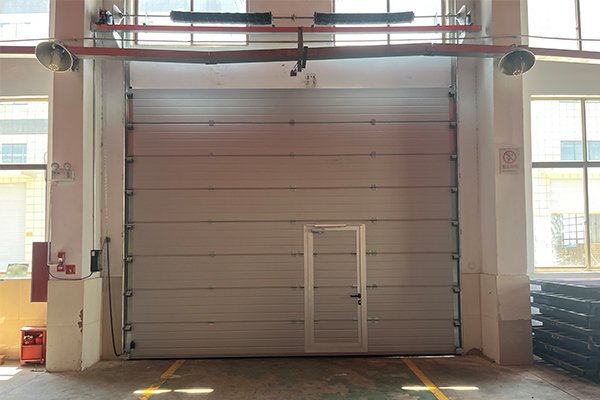
Even the best door will falter if installed incorrectly. Professional installation is critical, ensuring tracks are aligned, springs are properly tensioned, and seals are tight for smooth, safe, and efficient operation. Never attempt a DIY installation, as the heavy components and high-tension springs of sectional doors can be extremely dangerous.
In terms of maintenance, insulated sectional doors are relatively low-maintenance:
Regularly clean the surface with mild soap and water.
Every few months, inspect and lubricate moving parts (hinges, rollers, tracks).
Annually check the balance and safety reverse function of your automatic opener.
Inspect weather seals for wear and replace them as needed.
A Smart, Comprehensive Investment
Choosing an Insulated Sectional Door is far more than just buying a cover for a facility opening. It’s a comprehensive upgrade to your operational efficiency and structural security. Through advanced material science and engineering design, it addresses many pain points associated with traditional industrial doors. If you’re considering this type of door, feel free to consult with the professional team at SEPPES; they can provide sound advice and the optimal choices for your specific needs.
