

When it comes to high-speed doors (rapid doors), precision is everything. Because these doors operate at high velocities and are often custom-built for specific warehouse or cleanroom environments, a measurement error of just a few centimeters can lead to air leakage, mechanical strain, or even installation failure.
In this guide, we break down the essential data points required for a successful order and the critical precautions you must take before submitting your measurements.
Key Data Points Required for Your Order
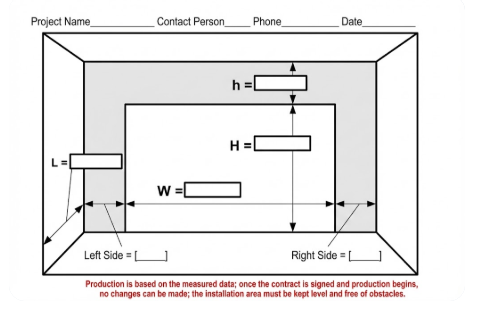
To ensure your high-speed door fits perfectly and operates safely, you must provide the following five primary dimensions (as referenced in our standard measurement chart):
W: Opening Width
This is the clear horizontal distance between the left and right inner edges of the door opening.
Pro Tip: Measure the width at the top, middle, and bottom of the opening to check for any inconsistencies in the wall structure.
H: Opening Height
The vertical distance from the finished floor to the underside of the lintel (the top of the opening).
Requirement: Ensure the floor is level before taking this measurement.
h: Header Space (Top Clearance)
The distance from the top of the door opening to the nearest ceiling obstruction or structural beam.
Why it matters: This space is required to house the door’s roller barrel, motor assembly, and hood. High-speed doors typically require more header space than standard industrial doors.
Left & Right Side Room
The space available on the sides of the opening.
Left Side / Right Side: You must measure the distance from the edge of the opening to the nearest wall or obstruction. This space is needed to mount the vertical tracks (guide rails) and the motor (usually mounted on one side).
L: Depth (Projection Space)
The distance extending back from the wall into the room.
Why it matters: This ensures there is enough “swing” or “depth” room for the motor and any safety sensors or activation devices (like radar or pull cords).
Professional Measurement Precautions
Before you finalize the data, keep these industry-standard precautions in mind to avoid costly delays:
Check for Levelness: The installation area must be a horizontal plane. If the floor is slanted or uneven, the bottom seal of the high-speed door will not close properly, compromising the door’s wind resistance and climate control.
Identify Obstacles: Look for pipes, electrical conduits, fire sprinklers, or lighting fixtures that might interfere with the tracks or the header.
Structural Integrity: Ensure the mounting surface (steel frame, concrete, or brick) is strong enough to support the weight and the vibration of a high-speed motor.
“The Point of No Return”: As noted in our production policy, once the contract is signed and the measurements are submitted to production, they cannot be changed. Double-check every figure.
Why Accuracy Saves You Money
High-speed doors are an investment in efficiency. Accurate measurements ensure:
Energy Savings: A tight seal prevents conditioned air from escaping.
Safety: Properly aligned tracks reduce the risk of the curtain jumping the rails.
Longevity: When a door fits perfectly, the motor doesn’t have to work overtime to compensate for friction caused by misalignment.

Ready to Upgrade Your Facility?
Our team of experts is here to help you navigate the technical specifications of your project. If you have questions about specific clearances or motor placement, contact SEPPES today.
