
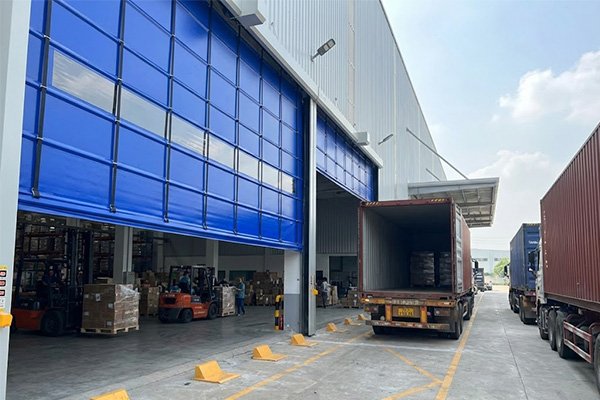

For a warehouse manager, an open door is essentially a “hole” where profit leaks out. When dealing with large-scale logistics centers or cold storage facilities, maintaining a stable internal temperature is the biggest contributor to operational costs.
While standard high-speed doors focus on speed, the SEPPES High Speed Stacking Door focuses on a more critical factor for your bottom line: Thermal Integrity in Large Openings.
How to Improve Warehouse Energy Efficiency with High Speed Doors
The logic is simple: the faster a door opens and closes, the less air is exchanged. However, for large exterior openings, speed isn’t the only variable. If the door material is paper-thin or the seals are loose, you are losing energy even when the door is closed.
Here is how SEPPES Stacking Doors solve the energy efficiency puzzle through specialized Thermal Barrier Technology.
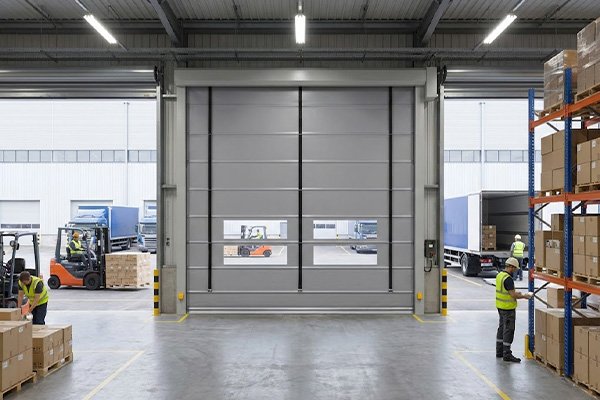
The Feature: Multi-Layer Insulated Folding Curtains
Most standard roll-up doors use a single layer of PVC. While effective for dust, they have the thermal resistance of a tent. In contrast, SEPPES High Speed Stacking Doors are engineered with a unique folding mechanism that allows for much thicker, more robust materials.
1. The “Sandwich” Insulation Effect
Because stacking doors fold upward rather than rolling around a tight drum, they can utilize double-layered curtains with an internal air gap or insulating foam layer. This creates a thermal break between the harsh outdoor elements and your climate-controlled interior.
In Winter: It keeps the expensive heat inside.
In Summer: It prevents the “oven effect” from sunlight hitting the door and radiating heat into the dock area.
2. Eliminating the “Chimney Effect” with Precision Sealing
Energy efficiency isn’t just about the curtain; it’s about the perimeter. Large doors often suffer from the “chimney effect,” where pressure differences suck cold air in through the gaps at the sides and bottom.
SEPPES addresses this with:
Double-Row Encapsulated Brushes: These track-mounted brushes create a tight friction seal against the curtain, preventing drafts.
Flexible Bottom Weighted Seal: The bottom of the door features a soft, heavy-duty “U-shaped” seal that contours to uneven warehouse floors, ensuring no light (or air) escapes at the base.
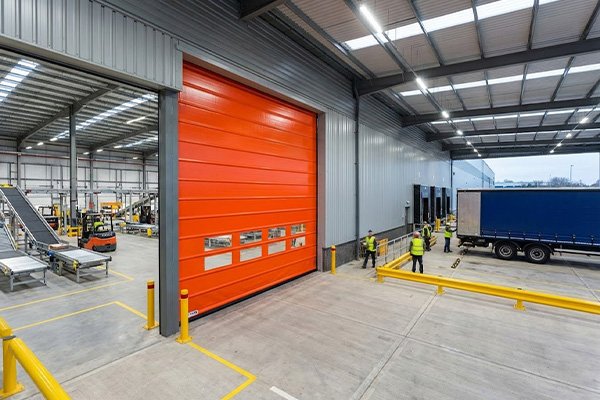
Stacking Doors vs. Standard Roll-Ups: Energy Edition
When your goal is reducing your carbon footprint and electricity bill, the hardware choices look very different:
| Energy Feature | Standard High-Speed Roll-Up | SEPPES High Speed Stacking Door |
| Curtain Thickness | Typically 0.8mm – 1.2mm | Up to 2.5mm+ (Double-layer options) |
| Thermal Resistance | Low (Single layer PVC) | High (Multi-layer air-pocket design) |
| Sealing Density | Standard side zippers/guides | Heavy-duty dual-layer brush system |
| Large Opening Performance | Prone to air leakage under pressure | Maintains tight seal even in high-pressure zones |
The “Smart” Side of Efficiency: Logic Control
Energy is also saved through intelligent cycling. A door that stays open longer than necessary is a liability. SEPPES doors utilize advanced G-Drive control systems that allow for:
Partial Opening Heights: If a pedestrian is passing through, the door only opens halfway, keeping the top half of the thermal barrier intact.
Automatic Induction: Using radar or loop sensors to ensure the door is open only when a vehicle is present and closes immediately afterward.
Industry Insight: In a typical 8-hour shift, a SEPPES High Speed Stacking Door can reduce air exchange by up to 80% compared to traditional sectional doors or slow-moving metal shutters.
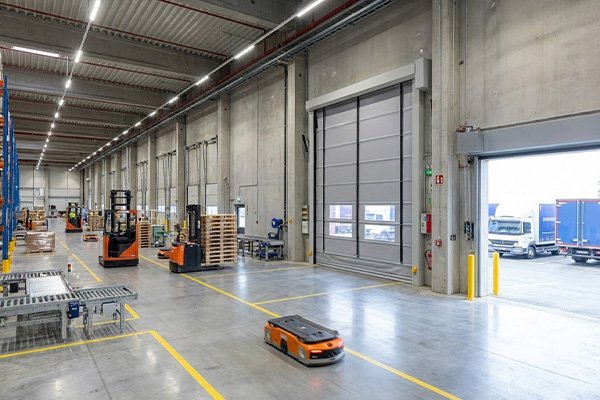
Why SEPPES is the Choice for Green Warehousing
As a brand serving over 60 Fortune 500 companies, SEPPES understands that energy efficiency is a long-term investment. Our stacking doors are designed for high-frequency use (up to 1,000+ cycles per day) without compromising the seal or the insulating properties of the curtain.
By choosing a door specifically designed to stack—rather than roll—you gain the ability to use thicker, more energy-efficient materials that would otherwise be too bulky for a standard motor.
Optimize Your Facility Today
The difference between a “standard” door and an “efficiency-first” door can manifest as thousands of dollars in annual energy savings.
