


Foreword: Embracing Change in 2025
If one word could summarize the experience of foreign trade professionals in 2025, it would be “Change”.

From fluctuating tariffs and exchange rates to unstable logistics costs and shifting global demand, the industry can no longer rely solely on past experience or inertia. Simultaneously, new tools like Artificial Intelligence (AI) are rapidly penetrating the front lines of trade, reshaping everything from customer acquisition and communication to operations and decision-making.
On December 22, at the Alibaba International Station “Digital Foreign Trade” Awards in Hangzhou, industry leaders gathered to debate the future of global expansion. Among them was Yang Yuanjia, Chairman and General Manager of Suzhou-based SEPPES Door Industry. He shared how, over five years, he transformed from a novice in foreign trade into a leader taking “Smart Manufacturing in China” to the world.
1. Opportunity Amidst Volatility
Suzhou represents one of the most fertile grounds for Chinese manufacturing. With a complete supply chain and a high acceptance of new models, it was the starting point for Yang Yuanjia’s entrepreneurial journey. A former soldier and journalist, Yang realized through interviewing entrepreneurs that a long-term business must be rooted in addressing real demands.
He chose industrial doors as his entry point.
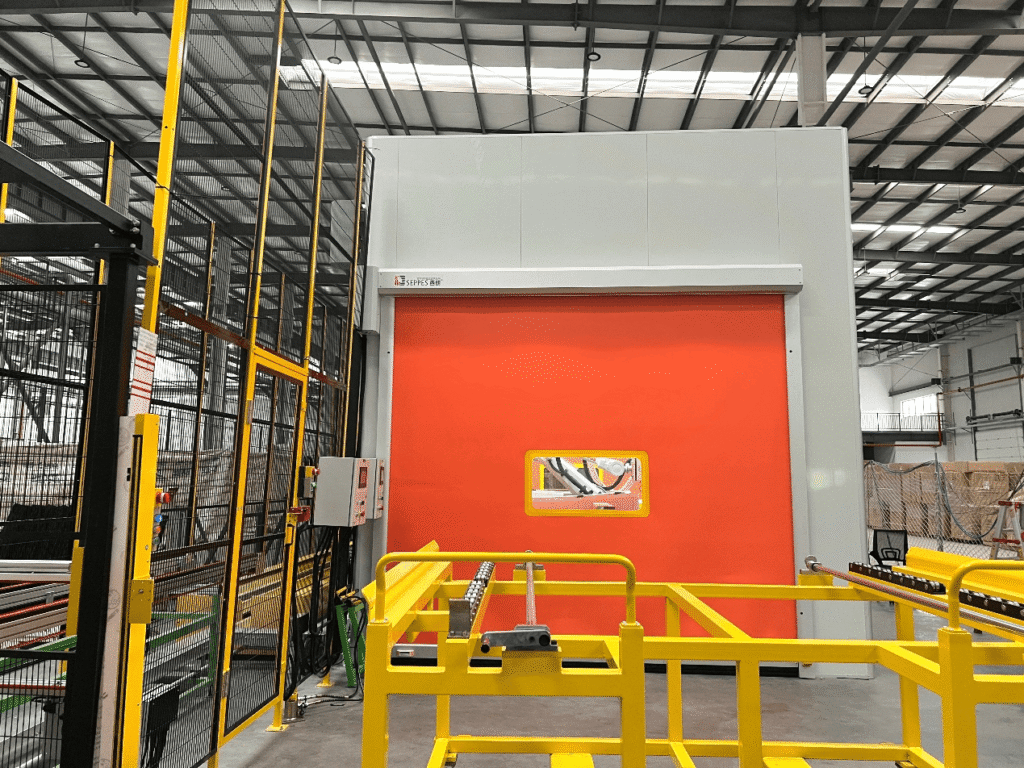
Yang viewed industrial doors not just as building fixtures, but as essential infrastructure for manufacturing. As factories automate, doors are no longer just for the exterior; they are integrated into production lines, robotic cells, and welding rooms, ensuring safety and isolation.
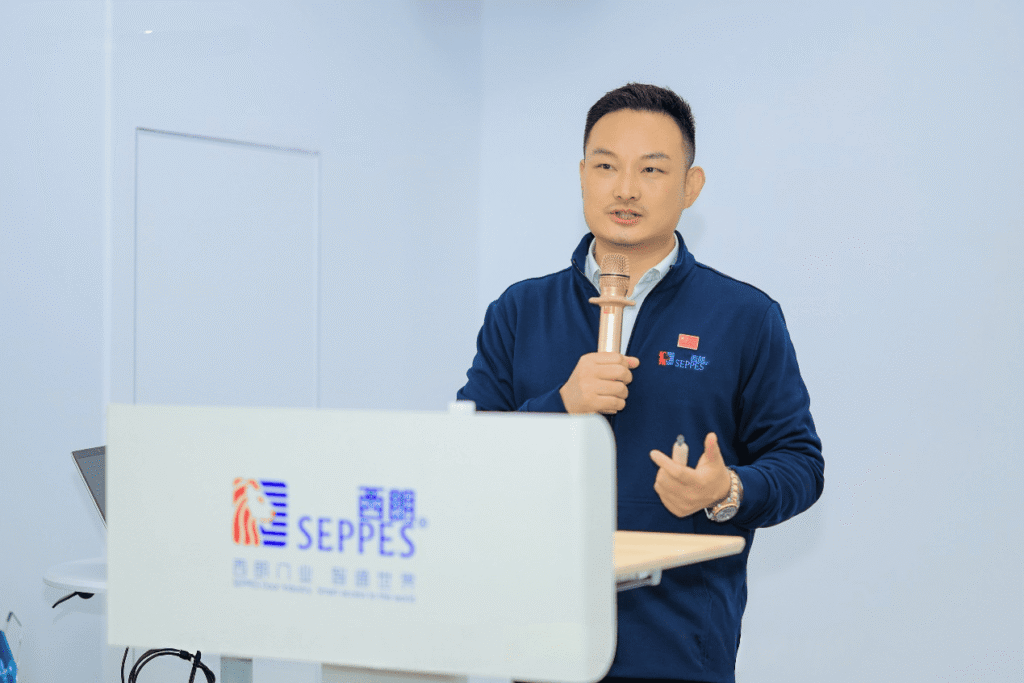
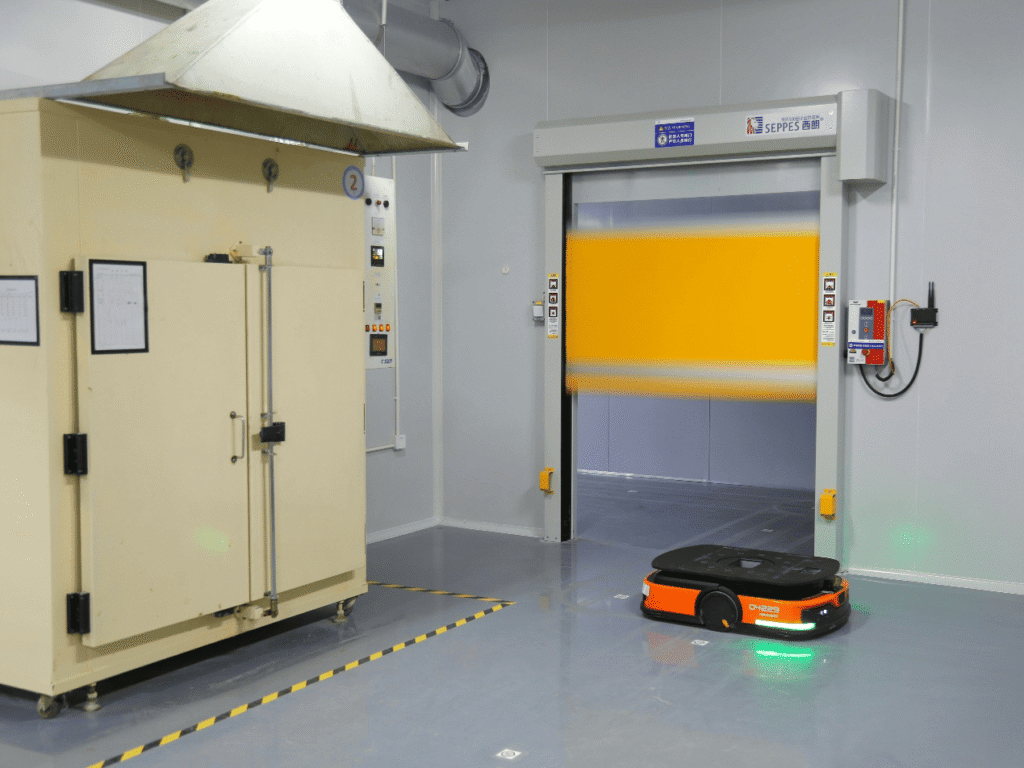
“If a door takes two minutes to open and close, it becomes a bottleneck. But a smart door that operates in seconds truly serves a high-efficiency modern factory,” Yang noted.
Based on this insight, SEPPES positioned itself to produce high-quality industrial doors, establishing its own brand to face international competition directly. Utilizing Suzhou’s mature supply chain, SEPPES integrated radar, photoelectric, and geomagnetic sensors into their products, allowing the doors to interact seamlessly with factory equipment. Today, SEPPES has grown into a “Hidden Champion” in the industry, holding over 50 patents.
2. The Evolution of a Trade Novice
Despite domestic success, Yang initially avoided overseas markets, describing himself as a “Three-No” boss: no language skills, no platform knowledge, and no understanding of export processes.
The turning point came in late 2019, when the team noticed domestic middlemen were buying SEPPES products to export them. This signaled that there was a global market for their products. To find a second growth curve, Yang decided to start from scratch on online platforms like Alibaba International Station.
Just as the overseas business started, the global pandemic hit, halting offline exhibitions. However, following platform advice, SEPPES seized the opportunity of the global shift from offline to online procurement.
Yang discovered that industrial doors have natural cross-market potential. Whether in Europe or Asia, any facility with a workshop or automated line needs industrial doors, regardless of cultural differences.
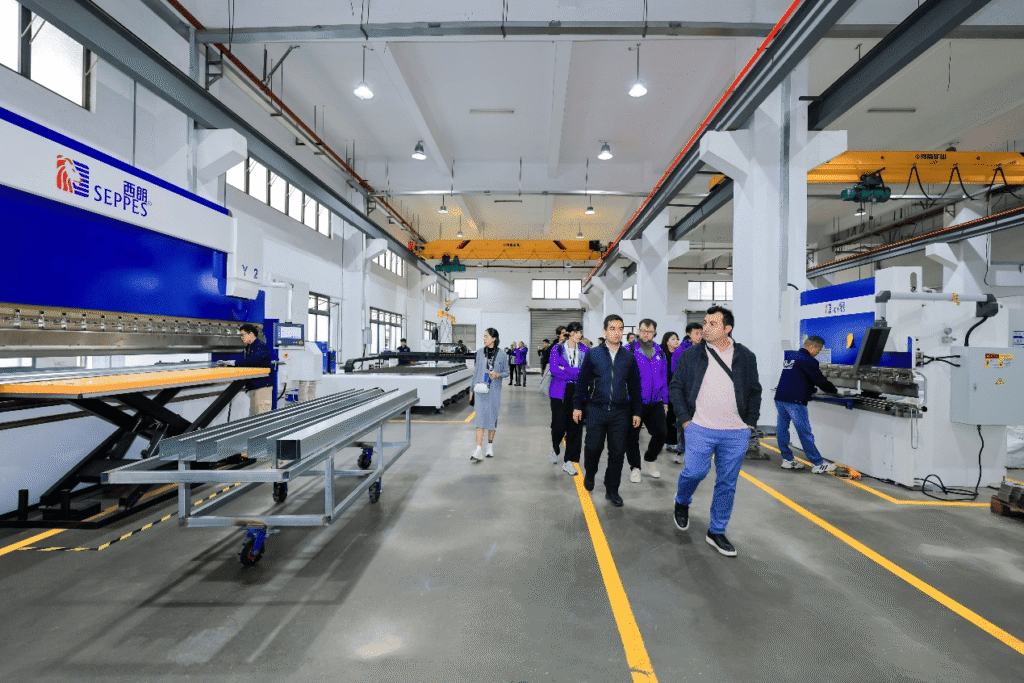
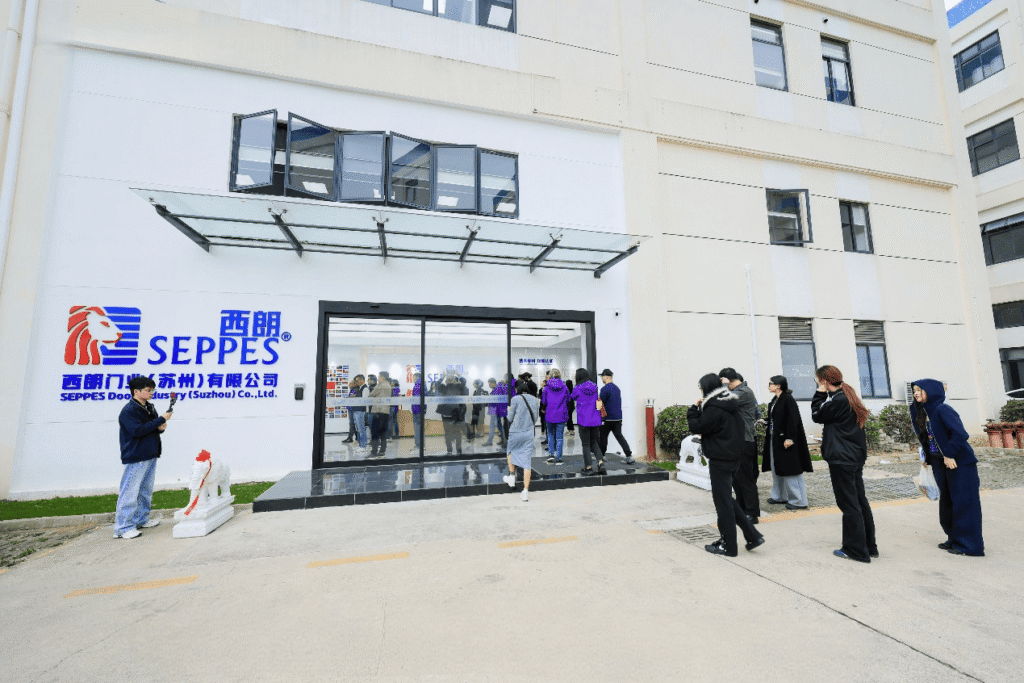
(Image: Foreign guests visiting the SEPPES factory and production line)
With “accompanying services” from the platform, the SEPPES team mastered operations, data analysis, and platform rules. Their first major breakthrough came from a standard inquiry that turned out to be from a top Southeast Asian seafood processing enterprise with over 20 factories worldwide.
Through the “Verified Supplier” (Jin Pin Cheng Qi) certification, a third-party agency audited SEPPES’s R&D and quality systems. This provided the client with verifiable background information, reducing trust costs. After a successful trial order, the client placed a second order worth over one million RMB, becoming a stable long-term partner.
Today, SEPPES products are sold in over 70 countries, a diverse layout that helps mitigate risks from tariff fluctuations.
3. How AI Leverages Growth
As the business expanded globally, new challenges emerged. Inquiries arrived from different time zones and industries, with high customization requirements. The most valuable inquiries often came at 2:00 or 3:00 AM, forcing the team to sacrifice sleep for efficiency—a model that was unsustainable.
To solve this, SEPPES adopted AI tools introduced by Alibaba International Station. These “AI Agents” handle reception, product posting, and operations, embedding themselves into the daily workflow.
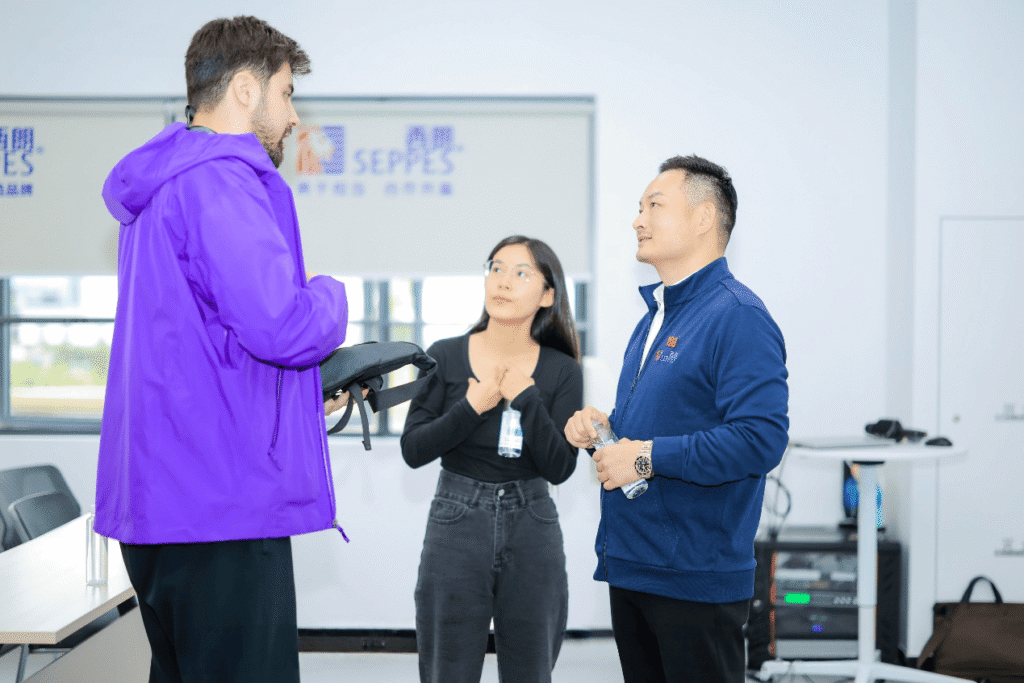
(Image: Chairman Yang Yuanjia communicating deeply with foreign guests)
Even experienced sales staff have embraced these tools. One senior salesperson, stuck in a negotiation for a million-RMB order, used the AI system to generate new communication strategies based on historical data. The AI suggested a fresh approach, which she sent to the client. Two days later, the client confirmed the order.
“AI doesn’t replace people,” Yang believes. “It helps us maintain stable judgment and efficiency during high-intensity, long-cycle cross-border communication.”
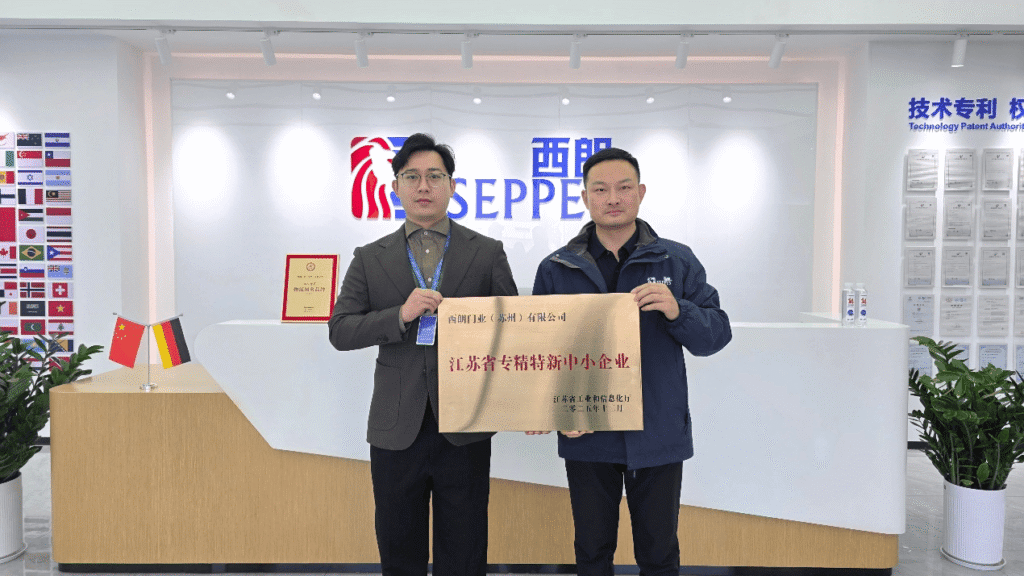
(Image: SEPPES awarded as a specialized and sophisticated “Little Giant” enterprise in Jiangsu Province)
Conclusion
The story of SEPPES and Yang Yuanjia reveals the true face of Chinese manufacturing going global: rebuilding capabilities amidst uncertainty and using long-termism to counter short-term volatility.
Going global is more than just expanding into new markets. It is a long-term journey. Companies must understand global rules and reshape their internal capabilities. As the industry faces deeper challenges, low costs and speed are no longer enough. True success now depends on systematic strength and sustainable growth.

For SEPPES, partnering with platforms that provide technology, AI tools, and cognitive support is key to walking further and more steadily in the new round of global competition.
