
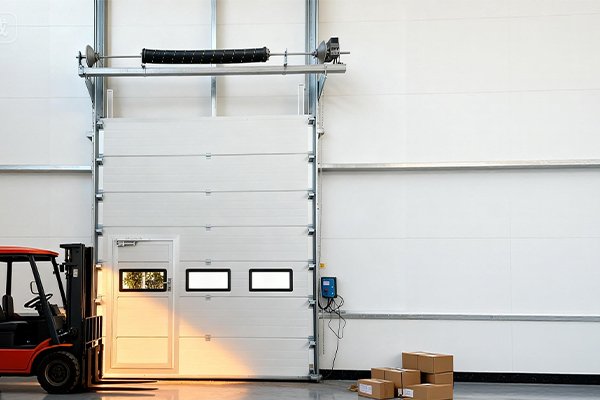

Industrial sectional doors are the “dynamic façades” of modern logistics, manufacturing, and warehousing facilities. This article dives deep into their core components, the selection process, professional installation steps, and a scientific maintenance regimen. We’ll break down how components like door panels, hardware, and operators work together, detail the necessary tools and steps for installation, and outline maintenance frequency and best practices. Our goal is to help you maximize your return on investment and ensure safe, efficient operations.
Industrial Sectional Doors: More Than Just an Opening – A Hub of Efficiency and Safety
In today’s fast-paced industrial environment, the main door is the primary gateway for material flow, personnel access, and vehicle entry/exit. A well-designed, reliable industrial sectional door is far more than a simple opening cover. It’s a critical component for energy management, the first line of internal security, and a direct influencer of overall operational efficiency.
Compared to traditional swing or sliding doors, industrial sectional doors open vertically upwards, smoothly gliding along ceiling tracks. This maximizes both interior and exterior space, allowing vehicles and equipment to park closer to the door, optimizing space utilization. Understanding their construction, making the right choice, ensuring professional installation, and performing regular maintenance are essential for every facility manager.
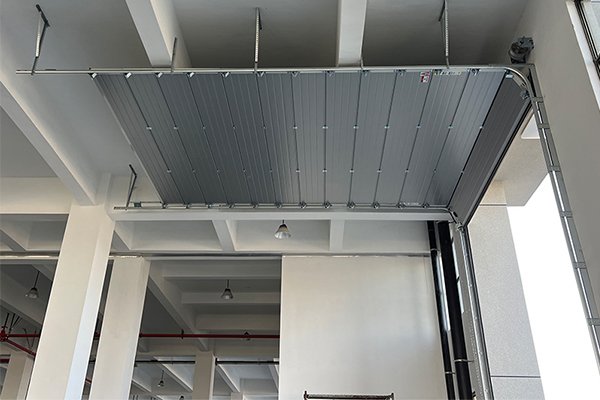
Core Components: Deconstructing the “Bones” and “Muscles” of an Industrial Sectional Door
To understand industrial sectional doors, you first need to know its core components and how they interact.
Door Panels:
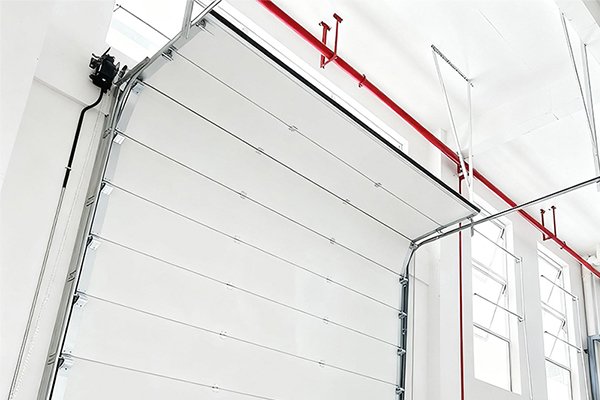
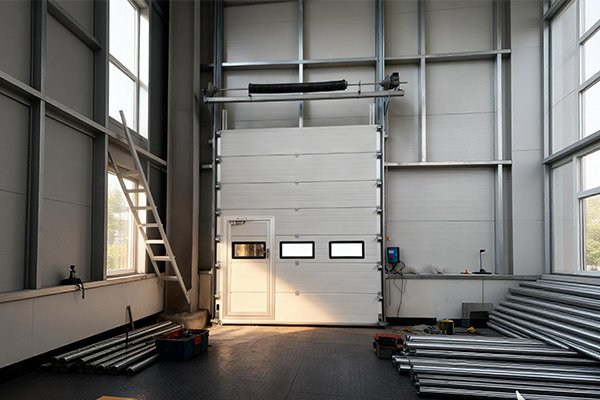
Description: The door body itself, typically constructed from double-layer steel panels with high-density polyurethane foam insulation. This directly determines the door’s thermal insulation, soundproofing, and impact resistance.
Relationship: Panels are connected by hinges, forming a flexible, continuous door system.
Hardware & Mechanical System:
Torsion Spring System: A set of high-strength springs mounted on a shaft. They provide precise torque to counterbalance the entire weight of the door, allowing for easy opening with minimal force, whether manual or electric.
Track System: Composed of vertical and horizontal tracks, usually made from heavy-gauge galvanized steel. It guides the door panels smoothly along a predetermined path.
Rollers (or Wheels) & Hinges: Rollers connect the door panels to the tracks, while hinges connect individual panels. Together, they ensure the door flexes and moves smoothly and effortlessly.
The torsion spring system provides counterbalancing power, and the rollers glide within the track system, moving the hinge-connected door panels as a single unit. Failure of any single component can lead to system malfunction.
Operating System:
Motor/Operator: Receives commands from the control unit and drives the door open and closed via a chain or belt.
Control Unit: Includes wall switches, remote controls, radar or photoelectric sensors, etc., which send operational signals to the motor.
Safety Devices: Such as a bottom safety edge that immediately reverses the door if it encounters an obstruction during closing.
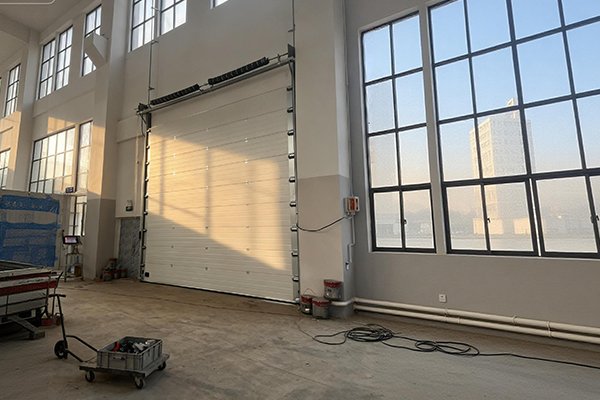
Selection & Procurement: Matching the Perfect Industrial Sectional Door to Your Facility
Choosing the right industrial sectional door is a systematic decision-making process.
Step 1: Needs Analysis & Specification Determination
Measure Opening Dimensions: Precisely measure the width and height of the door opening.
Assess Usage Frequency: This is critical for selecting the appropriate hardware and motor class. Frequencies can be categorized as:
Low Frequency: Fewer than 10 cycles (one complete open/close) per day.
Medium Frequency: 10-25 cycles per day.
High Frequency: More than 25 cycles per day.
Identify Safety Requirements: Does the door need to integrate with a fire alarm system (e.g., close automatically upon receiving a fire alarm signal)?
Step 2: Core Component Selection
Spring System: Calculate and match the appropriate size, quantity, and grade of torsion springs based on the door’s dimensions, weight, and usage frequency. High-frequency applications require higher-grade springs.
Motor Power & Model:
Torque: Select based on door size and weight to ensure sufficient power.
Voltage: Commonly 220V or 380V .
Backup Power: Do you need the door to operate during a power outage? Consider a battery backup system.
Step 3: Vendor Evaluation & Procurement
Use specification comparison charts and a vendor qualification checklist. Seek quotes from reputable suppliers. Evaluate their industry experience, case studies, after-sales service response times, and spare parts availability.
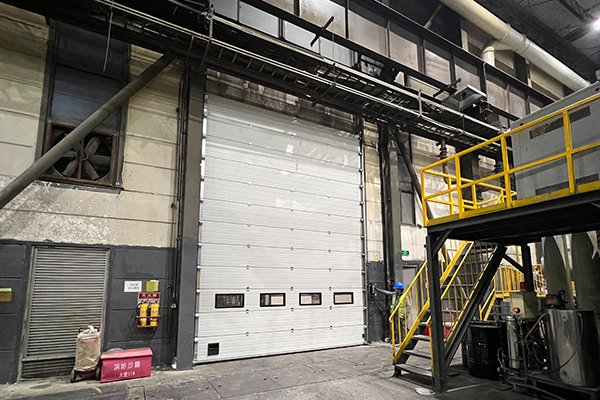
Professional Installation: Precision Engineering from Parts to Reliable Operation
Incorrect installation is the root cause of most door problems. Here are the core steps for professional installation.
Common Tool List:
Measuring Tools: Laser distance meter, level, plumb bob.
Power Tools: Impact drill, hammer drill (for securing tracks and brackets to walls), screwdrivers, wrenches.
Lifting Equipment: Scaffolding or aerial work platform, jacks.
Safety Gear: Hard hat, gloves, safety glasses.
Detailed Installation Steps:
Site Preparation & Inspection: Confirm door opening dimensions, levelness, and plumb. Clear the installation area of obstructions.
Track Installation: Using a laser level and plumb bob, install vertical and horizontal tracks with extreme precision. The verticality and horizontal alignment of the tracks are absolutely essential for smooth door operation.
Torsion Spring System Installation: This is the most dangerous step and must be performed by experienced technicians using specialized winding bars. Pre-tension the springs by winding them to precisely counterbalance the door’s weight.
Door Panel Assembly: Starting from the bottom panel, connect each panel using hinges and install the rollers, placing them into the tracks.
Motor & Control System Installation: Install the motor according to the manufacturer’s instructions. Connect control wiring, safety sensors, and the bottom safety edge. Perform wiring and functional tests.
Balance Adjustment & Fine-Tuning: Manually test the door without the motor connected. A perfectly balanced door should stay in place at any open position. If necessary, fine-tune the spring tension.
Final Testing & User Training: Conduct multiple full electric open/close cycles to verify all safety functions (e.g., safety edge, photo-eye beams) are working correctly. Demonstrate basic operation and emergency manual override procedures to the end-users.
Scientific Maintenance System: Preventing Failures, Extending Lifespan
“Heavy on installation, light on maintenance” is a primary reason for premature industrial door failure. Establishing a systematic maintenance plan is crucial.
Maintenance Frequency & Specific Tasks:
Daily/Weekly Checks:
Visual Inspection: Observe the door for any unusual wobbling, shaking, or strange noises during operation.
Safety Function Test: During door closing, use your hand or a cardboard box to trigger the bottom safety edge, confirming the door immediately reverses.
Monthly Checks:
Tools: Lubricant, cleaning cloth, screwdriver, wrenches.
Tasks:
Clean Tracks: Use a dry cloth to remove dust and debris from the tracks, ensuring rollers move freely.
Inspect Hardware: Manually check for any loose bolts, nuts, and brackets, and tighten them as needed.
Lubrication: Apply a small amount of lithium-based grease or silicone spray to hinges and roller bearings. Important: Never lubricate the tracks or torsion springs! This will only attract more dust and accelerate wear.
Annual Professional Maintenance:
Tools: Professional spring tension gauge, comprehensive hand tool kit, diagnostic software.
Comprehensive Inspection: Systematically inspect all mechanical and electrical components.
Spring Inspection: Carefully check torsion springs for cracks, rust, or signs of fatigue. For high-frequency doors, proactive spring replacement every 3-5 years is recommended, regardless of appearance, as they are wear-and-tear components operating under high stress.
Motor & Gearbox Check: Inspect motor operating current and gearbox lubrication.
Investing in Quality, Professionalism, and Continuous Care
A high-quality industrial sectional door is a long-term investment. It creates value daily by boosting operational efficiency, reducing energy loss, and ensuring personnel safety. The secret to success lies in:
Smart Initial Selection: Choose reliable, quality products based on precise needs analysis.
Professional Installation: Entrust the job to qualified installation teams – this is the foundation for all subsequent performance.
Continuous Maintenance: Establish and strictly follow a preventive maintenance plan to avert problems before they arise.
By following this guide, you will not only own a door but also a reliable partner that ensures the smooth operation of your business. Contact SEPPES’ professional industrial door consultants today for a customized sectional door solution!
