
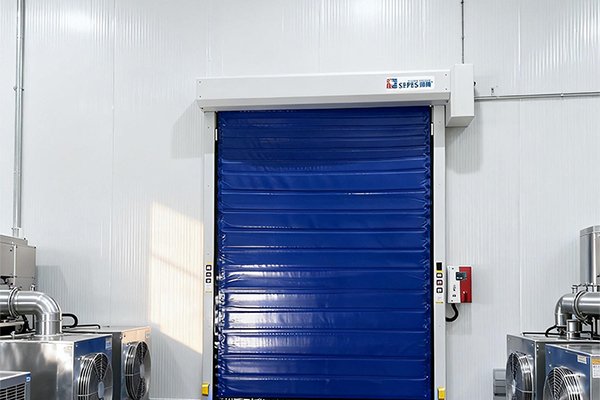

In industries like cold chain logistics and food processing, cold storage facilities are critical hubs. Traditional cold room doors cause temperature changes every time they open. This directly leads to soaring electricity bills. Product quality can be jeopardized. Safety can also be compromised. This happens during high-frequency inbound and outbound movements. Maintaining stable temperatures and operational efficiency is crucial. A high-speed insulated door might just be the perfect solution.
The Drawbacks of Traditional Manual Doors
Energy Waste: Long opening times cause significant cold and warm air exchange, leading to frequent compressor cycling and massive energy consumption. A poorly designed cold storage door can account for over 30% of a cold room’s total energy loss.
Temperature Fluctuations & Product Risk: Frequent temperature swings accelerate product dehydration, affect ice crystal structures, degrade quality, and can even trigger food safety issues.
Low Operational Efficiency: Slow opening and closing speeds create bottlenecks in the logistics chain, hindering forklift and personnel movement and extending operational times.
Condensation & Ice Buildup: The door frame and surrounding areas are highly prone to condensation and icing due to the cold/hot air interface. This not only impairs door function but also poses slip hazards and can damage building structures.
The Advantages of High-Speed Insulated Doors
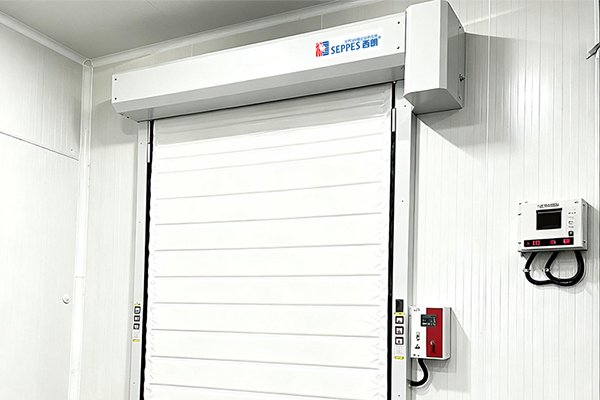
High-speed insulated doors cleverly combine the efficiency of “rapid doors” with the insulation properties of “cold storage doors.”The design principle is simple. Access is needed, so the system opens and closes quickly. This minimizes cold air loss. When closed, it acts as a thermal barrier, strictly guarding the internal temperature.
Door structure
Speed: Opening speeds can reach 2.6 – 3.9 ft/sec (0.8-1.2 m/s), completing a full open and close cycle in just a few seconds.
Drive System: Utilizes high-performance motors and intelligent control systems to ensure smooth, rapid starts and stops.
Curtain Structure: Typically features double-layer, high-density polyester fabric with a polyurethane foam core, offering low thermal conductivity to effectively block heat transfer.
Sealing System
Sides: The curtain edges are equipped with dual-side sealing brushes, ensuring a tight fit against the door frame.
Bottom: An airbag-style bottom seal or flexible PVC bottom panel adapts to uneven floors, creating an effective seal.
Top: Sealing strips between the shaft and door frame eliminate all potential leakage points.
Safety & Durability
Safety Photo Sensors: If personnel or vehicles pass through during the door’s descent, it immediately stops and reverses, preventing collisions.
Safety Bottom Edge: The bottom edge of the curtain contains pressure-sensitive material that triggers the safety system to reverse upon encountering an obstacle.
Impact-Resistant Design: The curtain material has a degree of impact resistance; even minor forklift bumps allow it to return to normal operation.
All materials are treated for low temperatures. They can withstand extreme environments down to -22°F (-30°C). This treatment prevents embrittlement. It ensures flexibility and strength in the cold.
The Return on Investment for High-Speed Insulated Doors
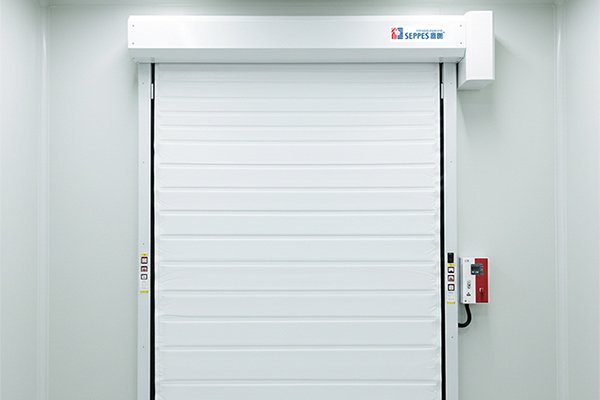
Energy Savings & Reduced Costs: This is the most direct benefit. By significantly reducing cold air loss, the refrigeration unit’s workload is drastically cut.
To protect product quality and reduce spoilage, stable storage temperatures are essential for frozen and refrigerated items. These stable temperatures effectively prevent dehydration and spoilage losses, which are often caused by temperature fluctuations.
Boost Logistics Efficiency: Rapid throughput eliminates logistical bottlenecks, making forklift operations smoother and improving overall warehouse turnaround efficiency.
Lower Maintenance Costs: The robust and durable design reduces the frequency of repairs and downtime caused by icing, condensation, or collisions.
Improved Working Environment & Safety: Less condensation and ice buildup inside and outside the cold room create a safer, drier working environment for employees.
How to Choose the Right High-Speed Insulated Door for Your Cold Storage
Temperature Range: Clearly define whether your cold room is for chilled, frozen, or blast-freezing applications to ensure all materials are suitable.
Opening Dimensions: The width and height of the door opening determine the door’s specifications; ensure it can accommodate your largest passing equipment.
Safety Requirements: Configure appropriate safety photo sensors, warning lights, and safety bottom edges based on whether it’s a mixed-traffic (people and vehicles) or vehicle-only area.
Brand and After-Sales Service: Select a brand with a strong reputation in the industrial door sector and ensure they can provide timely, professional installation and maintenance services. If you’re selecting doors for your facility, SEPPES’ team can provide expert solutions.
