


In today’s highly automated industrial, logistics, and food processing sectors, controlling internal environments has become paramount. A seemingly simple doorway actually plays a critical role. It effectively isolates dust, pests, moisture, and odors, maintains stable temperatures and humidity, thereby safeguarding product quality, boosting energy efficiency, and ensuring safe operations.
While traditional high-speed roll-up doors offer rapid opening and closing, they often suffer from inadequate sealing at the gaps between the door curtain, frame, and floor. This is where high-speed brush seal doors excel. They perfectly blend the efficient traffic flow of high-speed doors with the superior sealing performance of a brush seal system, making them the preferred solution for many demanding applications.
This article provides a comprehensive overview of high-speed brush seal doors, from core concepts to practical applications, offering a complete guide from selection and installation to ongoing maintenance.
Chapter 1: Understanding High-Speed Brush Seal Doors – Core Concepts & Components
1.1 What is a High-Speed Brush Seal Door?
A high-speed brush seal door is a technologically advanced door specifically designed for industrial passages requiring extremely high levels of sealing. Essentially, it’s a standard high-speed roll-up door augmented with high-density fiber brush seals installed on both sides (and optionally, the top) of the door curtain. This system ensures that when closed, the door forms a tight, flexible seal with uneven walls, floors, or equipment, effectively blocking air drafts, dust intrusion, and pest entry.

1.2 Core Components and Their Interrelationships
To fully grasp high-speed brush seal doors, we must understand their core components and how they work together.
Core Components:
Door System:
Door Curtain: Typically made from high-strength PVC polyester fiber fabric, known for its tear resistance, durability, and ease of cleaning. Thicker or double-layer insulated curtains are used for cold storage applications.
Guide Rail System: The track along which the door curtain moves, ensuring smooth, high-speed operation.
Drive Motor: The power source, usually a brake motor, ensuring the door can stop precisely at any position.
Control System: Includes the control box, buttons, radar sensors, loop detectors, etc., responsible for receiving commands and directing door movement.
Brush Seal System (Key Differentiating Component):
Brush Strips: The core sealing element, typically made of nylon, polypropylene, or specially treated animal bristles, offering flexibility, wear resistance, and anti-static properties.
Mounting Base: Usually aluminum alloy or stainless steel profiles, used to securely attach the brush strips to the sides and bottom of the door frame.
Pressure Adjustment Mechanism (Optional but Important): Some advanced designs allow for fine-tuning the brush pressure against the contact surface to achieve optimal sealing without excessive wear.
Auxiliary Components:
Door Frame & Building Structure: The supporting structure for the brush seal door. Its flatness and perpendicularity directly impact the final sealing effect.
Operating Environment: Includes temperature (ambient/cold storage), humidity, dust concentration, chemical substances, traffic frequency, etc. These factors dictate the choice of door curtain and brush materials.
Traffic Type: Personnel, hand carts, forklifts, Automated Guided Vehicles (AGVs), etc. Their size and speed determine the door’s dimensions and opening trigger methods.
Relationships Between Components:
Synergistic Relationship: The door system provides rapid opening and closing, while the brush seal system offers continuous sealing when the door is closed. Both are essential, collectively achieving the blend of “speed” and “seal.”
Adaptation Relationship: The specifications of the brush seal system (e.g., brush density, length) must match the actual conditions of the door frame and building structure (e.g., wall unevenness). Similarly, the door system configuration (e.g., motor power, curtain material) must meet the demands of the operating environment and traffic type.
Control Relationship: The control system is the “brain” of the entire door. Based on signals triggered by traffic (e.g., radar detecting a vehicle), it directs the drive motor to move the door curtain within the guide rail system, ultimately bringing the brush seal system into contact with the surface.
Chapter 2: Key Advantages and Applications of High-Speed Brush Seal Doors
2.1 Why Choose a High-Speed Brush Seal Door? Five Core Advantages
Superior Sealing Performance: This is its most significant value. Brushes can fill millimeter-sized gaps, effectively blocking dust (e.g., flour mills, pharmaceutical plants), lint, insects (e.g., food processing areas), preventing cold air leakage from cold storage (saving over 90% in energy), and keeping out humid, hot air.
Enhanced Energy Efficiency: In cold chain logistics and temperature/humidity-controlled environments, excellent sealing directly translates to significant energy savings, substantially reducing operating costs for refrigeration or heating equipment, with a quick return on investment.
Maintained Cleanliness Levels: For cleanrooms, electronic assembly workshops, medical device manufacturing, and similar areas, brush seal doors are a crucial barrier for maintaining pressure differentials and preventing cross-contamination.
Increased Operational Efficiency: Opening speeds can reach 1.0-2.5 meters/second, reducing waiting times. Coupled with sensors for hands-free automatic passage, they are ideal for high-frequency, fast-paced logistics channels.
Enhanced Safety and Durability: Most products come equipped with infrared light curtain safety edges that immediately reverse if an obstruction is detected. The brushes themselves are elastic, cushioning minor impacts and reducing damage to the door and equipment.
2.2 Typical Application Scenarios (Specific Manifestations of Component-Environment Relationships)
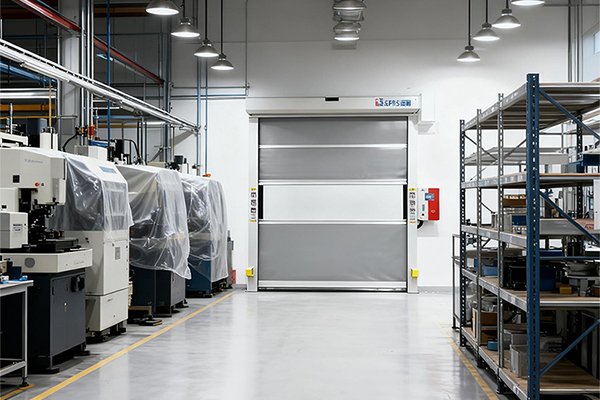
Cold Chain & Food Processing: Cold storage entrances, quick-freeze tunnel exits. Prevents frosting, condensation, saves energy, and ensures food safety.
Logistics & Warehousing Centers: Connecting loading docks to indoor passages. Dustproof, windproof, energy-saving, and accommodates continuous automated passage for AGVs.
Cleanrooms & Pharmaceutical Industry: Buffer zones between different cleanroom classifications. Maintains pressure differentials and prevents particulate contamination.
Automotive & Painting Workshops: Spray booths, sanding areas. Prevents paint dust and particulates from spreading to other areas.
Electronics & Precision Manufacturing: Assembly workshops, warehouse entrances. Anti-static brushes prevent dust from adhering to precision components.
Chapter 3: How to Select and Install a High-Speed Brush Seal Door – Steps, Tools, and Considerations
Selecting and installing the right high-speed brush seal door for your facility is a systematic process. Here’s a detailed step-by-step guide.
Step 1: Needs Analysis & On-Site Survey
Frequency: Initial project phase, a one-time but extremely meticulous process.
Entities Involved: End-user, equipment procurement manager, door manufacturer’s sales/technical engineer.
Define Usage Goals:
What is the primary object to be sealed against? (e.g., dust, cold air, pests)
What is the expected traffic frequency?
What are the main types of traffic? (e.g., forklifts, personnel)
Precisely Measure Door Opening Dimensions:
Tools: Laser distance meter, tape measure, spirit level.
Measurements:
Clear opening width (W) x clear opening height (H).
Header height (height from the top of the opening to the ceiling, for roller installation).
Width of the side walls, ensuring enough space for guide rails and brush mounts.
Special Attention: Use a spirit level to check the flatness and perpendicularity of the floor and walls. Record the maximum unevenness; this data will directly determine the required brush strip length and sealing effectiveness.
Evaluate Environmental Parameters:
Temperature Range: Ambient? Cold storage? Environmental temperature dictates the choice of door curtain material and motor (may require a low-temperature motor).
Environmental Cleanliness: Are there corrosive chemicals, grease, or significant moisture? This influences the choice of brush material (e.g., requiring corrosion resistance) and curtain coating type.
Step 2: Product Selection & Configuration
Specific Steps:
Determine Door Size and Speed:
The actual door size is usually 8-12 inches (200-300mm) wider on each side than the clear opening to ensure adequate coverage.
Select opening speed based on traffic frequency; a standard speed is generally 4-6 feet/second (1.2-1.8 meters/second).
Choose Door Curtain Material:
Standard PVC: Suitable for general industrial environments.
Low-Temperature Impact-Resistant PVC: For cold storage, prevents brittleness.
Transparent Vision Panels: Increase safety and allow visibility.
Anti-static/Antibacterial Curtains: For electronics, pharmaceutical, and food industries.
Customize Brush Seal System:
Brush Material: Standard nylon (general purpose), anti-static nylon (electronics), food-grade PP (food plants), high-temperature resistant materials (drying rooms).
Brush Density & Length: Based on the wall unevenness measured in Step 1, choose longer brushes to compensate for larger gaps. Higher density means better sealing but slightly more resistance.
Installation Position: Standard is on both sides. For extremely high sealing requirements, choose three-sided (sides + top) or four-sided (sides + top + bottom) sealing.
Select Opening Method (Control System):
Radar Sensor: Suitable for vehicle passages, detects moving objects.
Loop Detector: Detects metal objects (e.g., forklifts), highly resistant to interference.
Pull Cord Switch: Manual control, cost-effective.
Remote Control: Convenient for management.
Interlock/Card Access System: Integrates with access control systems for permission management.
Step 3: Professional Installation & Commissioning
Frequency: One-time after purchase.
Entities Involved: Professional installation team.
Required Tools: Electric drill, hammer drill, spirit level, wrenches, screwdriver set, ladder, laser line level.
Specific Steps:
Preparation: Clear the site, ensure the installation area is free of obstructions. Double-check door opening dimensions, levelness, and perpendicularity.
Secure Door Shaft and Guide Rails: Using a laser line level and spirit level, precisely position and secure the side guide rails and top shaft plate to the building structure. This is fundamental for smooth door operation and effective brush sealing will lead to serious problems.
Install Motor and Control System: Wire according to the circuit diagram and ensure proper grounding.
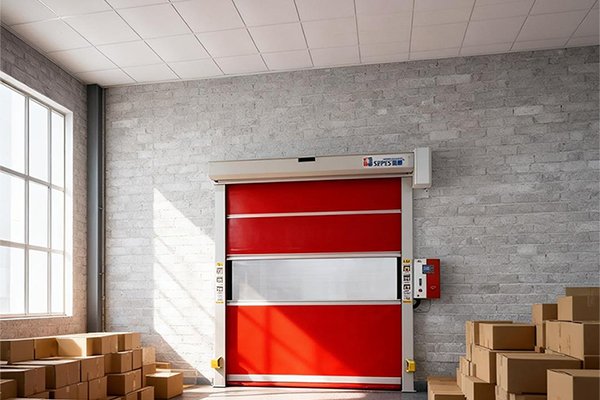
Mount Door Curtain and Connect Brushes: Carefully secure the door curtain to the roller shaft and embed its side edges into the guide rails. Subsequently, install the pre-fabricated brush seal strips into the designated slots on the inner side of the guide rails.
System Debugging:
Set the door’s upper and lower limits to ensure accurate positioning when fully open and closed.
Adjust the pressure of the brush strips so they make full contact with the wall without significant resistance.
Test all sensors and safety features (e.g., light curtain) to ensure sensitivity and reliability.
Perform multiple test runs, observing for smooth operation and any abnormal noises.
Chapter 4: Maintenance and Upkeep of High-Speed Brush Seal Doors – Ensuring Long-Term Performance
Even the best equipment requires regular maintenance. A standardized maintenance plan can significantly extend the door’s lifespan and maintain its optimal performance.
Maintenance Plan: Frequency, Tools, and Specific Operations
1. Daily Inspection
Entities Involved: Operators.
Specific Operations:
Visually inspect the door curtain surface for scratches, tears, or dirt accumulation.
Observe if the door makes any abnormal sounds or vibrations during operation.
Check if the brush strips are noticeably entangled with foreign objects or deformed.
2. Weekly/Monthly Maintenance
Entities Involved: On-site maintenance engineers.
Tools: Clean cloths, neutral detergent, soft brush, lubricant.
Specific Operations:
Clean Door Curtain: Wipe the door curtain with a damp cloth and neutral detergent to remove stains and maintain its cleanliness and transparency.
Clean Brush Seal System:
Carefully remove accumulated dust, fibers, and other debris from the brush strips using a soft brush or vacuum cleaner. This is crucial for maintaining brush elasticity and sealing effectiveness.
If heavily soiled, wipe with a damp cloth soaked in neutral detergent, then dry thoroughly. Never use strong acid or alkaline cleaning agents, as they may damage the brush material.
Inspect Guide Rails: Clear debris from inside the guide rails to ensure smooth door curtain movement.
3. Quarterly/Annual Maintenance
Personnel Involved: Professional service personnel or trained senior engineers.
Tools: Full set of hand tools, multimeter, spirit level.
Specific Operations:
Fastener Check: Inspect and tighten all screws, bolts, and other fasteners, especially on load-bearing components.
Mechanical Component Lubrication: Apply specified lubricant to moving parts such as chains and bearings.
System Performance Test: Comprehensively test motor torque, braking performance, sensor sensitivity, and safety protection devices.
Brush Wear Assessment: Carefully inspect the brush strips for wear. If brushes show significant flattening, breakage, or wear exceeding 1/3 of their length, leading to a noticeable decrease in sealing effectiveness, a replacement plan should be made.

Chapter 5: Frequently Asked Questions
Q1: What is the biggest difference between a high-speed brush seal door and a regular high-speed door?
A1: The biggest difference lies in the sealing system. A regular high-speed door relies on the door curtain itself fitting against the door frame, leaving inherent gaps. A high-speed brush seal door uses flexible brush strips to fill these gaps, achieving a dynamic, adaptive, tight seal, especially effective on uneven contact surfaces.
Q2: Are the brush components prone to damage? Is replacement complicated?
A2: High-quality brush strips are designed to be very wear-resistant and durable. The primary causes of damage are external pulling (e.g., forklift scrapes) or long-term neglect leading to debris entanglement. Replacement is usually not complicated; most designs allow the old brush strips to be pulled out of the mounting base and new ones pressed in, without needing to disassemble the entire door.
Q3: Our cold storage entrance often experiences ice buildup. Will this affect the brush door’s seal?
A3: Ground ice buildup can prevent the bottom brushes of the door curtain from making full contact. There are two solutions: first, choose a brush system with a U-shaped heating de-icing device at the bottom to prevent ice formation; second, enhance cold room management to promptly clear any standing water at the entrance. A professional door manufacturer can recommend the most suitable solution for you.
Q4: How do I calculate the Return on Investment (ROI) for a high-speed brush seal door?
A4: ROI primarily comes from the following areas:
Energy Savings: (Reduced cold/hot air leakage due to improved sealing × energy unit price) ÷ total door investment cost.
Efficiency Improvement: Reduced waiting time for door opening × labor/equipment time cost.
Quality and Waste Reduction: Reduced product spoilage or rework costs due to dust or temperature/humidity fluctuations.
Maintenance Costs: Typically lower maintenance costs compared to traditional doors.
Conclusion
A high-speed brush seal door is far more than just a “door”; it’s a highly specialized, systematic solution for industrial environment control. By cleverly integrating a high-speed operating door system with a flexible sealing brush system, it resolves the core conflict between efficiency and cleanliness, and openness and enclosure, in modern industry.
From precise needs analysis and on-site surveys to scientific product selection, professional installation, and a rigorous preventive maintenance plan, every step is crucial for the door’s ultimate performance and lifespan. Investing in the right high-speed brush seal door and providing it with proper care will undoubtedly reward your business with continuous energy savings, enhanced production efficiency, superior product quality, and long-term stable operation.
If you are looking for a reliable and efficient passage sealing solution for your factory, warehouse, or cleanroom, a high-speed brush seal door is undoubtedly a top choice you should not overlook.
