
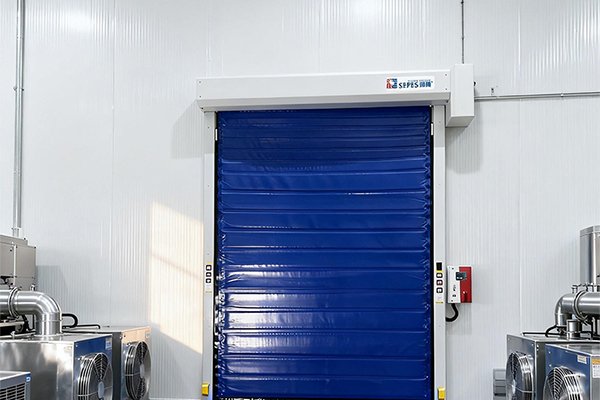

In today’s industrial and logistics landscape, where efficiency and cost-effectiveness are paramount, factory doors are no longer just entry and exit points. They’ve become critical components influencing overall operational performance. Insulated high speed door, an advanced evolution of traditional roller shutters and standard high-speed doors, are rapidly becoming the preferred choice for industries like cold chain, food processing, pharmaceuticals, and high-precision manufacturing, thanks to their unique blend of features.
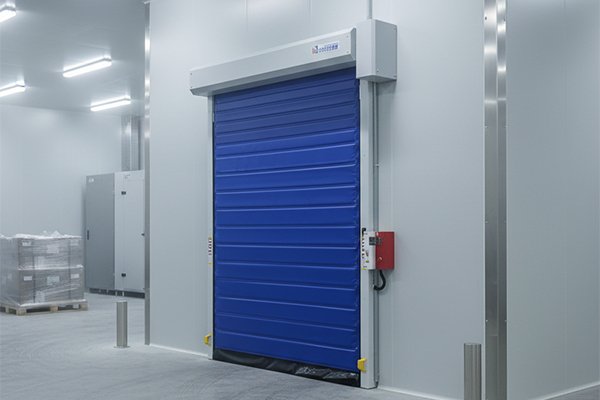
Key Advantages of Insulated High Speed Doors
1. Superior Energy Efficiency & Cost Savings
This is arguably the most compelling benefit. The door panels typically feature a thick, rigid polyurethane foam core with a dense, closed-cell structure, creating a highly effective thermal barrier. This design significantly minimizes indoor-outdoor air exchange, preventing cold air escape or hot air intrusion, and can reduce energy consumption by up to 30% or more. This translates directly into substantial long-term operational cost savings and a notable reduction in carbon footprint, offering a clear and attractive return on investment.
2. Simultaneous Space Isolation & Efficient Traffic Flow
Insulated high-speed doors can achieve opening speeds of 2.6-3.9 feet per second (0.8-1.2 meters/second), far surpassing conventional doors. For busy logistics hubs, this means vehicles and personnel can move through quickly, dramatically boosting internal logistics efficiency and eliminating bottlenecks. Furthermore, their rapid opening and closing cycles keep the doorway open for minimal durations, effectively maintaining temperature, humidity, and air quality isolation between different areas. This achieves a perfect balance between operational efficiency and environmental control.
3. Enhanced Safety & Hygiene Standards
Modern insulated high-speed doors integrate a range of advanced safety features. For instance, a bottom safety edge airbag will immediately reverse upon contact with an obstruction. Light curtain safety systems can detect any object within the door opening, preventing pinching or crushing injuries. From a hygiene perspective, smooth door panel surfaces and seamless designs prevent dust and bacterial accumulation, making them easy to clean and maintain.
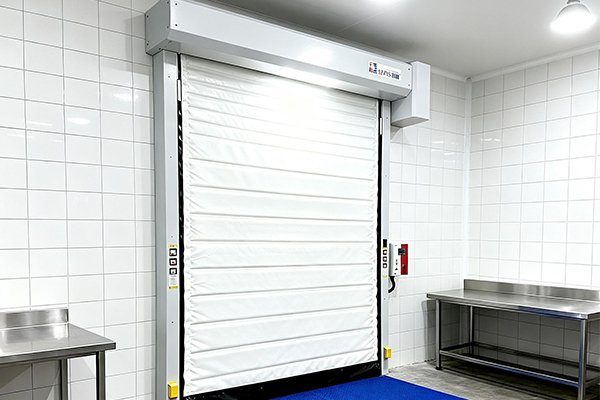
Technical Challenges Insulated High Speed Door Must Overcome
Despite their clear advantages, designing and manufacturing a high-performance, durable insulated high-speed door requires overcoming several complex technical hurdles.
1. Balancing Insulation with Speed/Flexibility
Achieving superior insulation often requires thicker, denser door panels. However, this increases the overall weight of the door, demanding more powerful drive motors and more sophisticated inertia control. This can potentially impact acceleration and deceleration performance, and even increase operational noise. The ongoing challenge for material science and mechanical engineering is to optimize designs that maintain high insulation values without compromising the “high-speed” core characteristic.
2. Stable Operation in Extreme Environments
In environments ranging from -22°F (-30°C) freezers to scorching outdoor temperatures of 104°F (40°C), every door component faces rigorous demands. Extreme cold can cause sealing strips to stiffen and lose elasticity, leading to compromised seals. Tracks may jam due to ice buildup. Ensuring reliable operation of motors and electronic components across such a wide temperature range is also a significant challenge. This necessitates that all materials—from door panels and seals to electronic components—possess broad temperature adaptability, placing extremely high demands on supply chain management and quality control.
3. Precision in Drive Systems and Controls
A high-speed door in motion carries substantial kinetic energy. Achieving smooth starting and stopping is crucial. This means avoiding “hard starts” and “abrupt stops.” This is not just for user comfort. It also directly impacts the door’s lifespan and safety. This requires highly precise servo motors or variable frequency drive (VFD) control systems. These systems utilize sophisticated software algorithms. They accurately control motor torque and speed profiles. Additionally, they can intelligently initiate safety reversals upon detecting resistance.
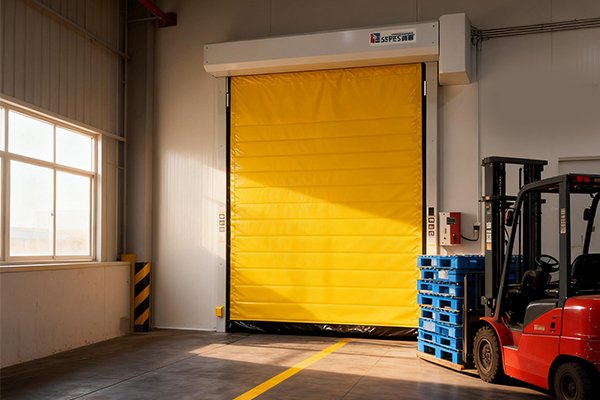
How to Choose Your Door
Insulated high-speed doors represent a microcosm of modern industrial door technology, perfectly addressing the market’s pressing needs for energy efficiency, speed, and intelligent operation. However, their performance largely depends on the manufacturer’s comprehensive technical expertise across material science, mechanical engineering, automatic control, and software algorithms.
Therefore, when making a selection, businesses shouldn’t focus solely on initial purchase costs. Instead, prioritize factors like official certifications for insulation performance, the brand and configuration of core components, and the manufacturer’s proven track record and reputation for successfully addressing the technical challenges outlined above. If you’re in need of such a door, please contact us at SEPPES; our professional team is ready to assist you.
